
Start here
The Horrific Case of Jennifer Cave

Coffeehouse Crime's 22-minute breakdown, the fullest single telling on file.
Watch on YouTubeSolved case · 2005
Also known as Killing of Jennifer Cave · Jennifer Cave's murder
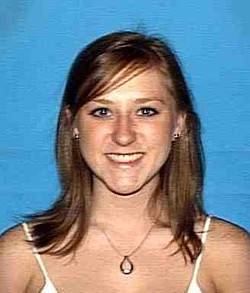 Jennifer CaveCredit: English WikipediaEditorial useSource
The short answer
Jennifer Cave, a 21-year-old legal assistant, was shot and killed in August 2005 in the Austin, Texas apartment of Colton Pitonyak, who then partially dismembered her body. Pitonyak was convicted of murder in 2007 and sentenced to 55 years; his former girlfriend Laura Ashley Hall was convicted of tampering with evidence and hindering apprehension.
The Horrific Case of Jennifer CaveCoffeehouse Crime · 22 min1 piece from 1 creator: ranked, with duplicates removed and short clips set aside.
Start here
Coffeehouse Crime's 22-minute breakdown, the fullest single telling on file.
Watch on YouTubeTitles and descriptions are the creators’ own and may not reflect current legal status. The sourced facts are in the file below. Players load only when you press play. Suggest coverage we’re missing.
Jennifer Rae Cave (born March 12, 1984) was a Corpus Christi, Texas native who had moved to Austin to attend Texas State University before dropping out and enrolling briefly at Austin Community College's Riverside Campus. She had recently been hired as a legal assistant at an Austin law firm at the time of her death.
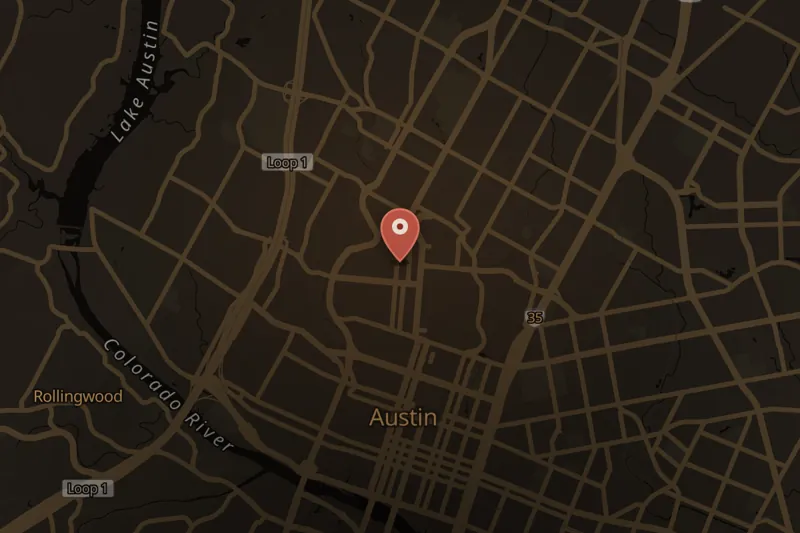
On August 16, 2005, Cave and her friend Colton Aaron Pitonyak, a University of Texas at Austin finance major, went out on Sixth Street in Downtown Austin to celebrate Cave's new job before having dinner together. While the two were at Pitonyak's apartment in the Orange Tree Condominiums in the West Campus area, Pitonyak shot Cave through the arm; the bullet traveled into her chest and through her heart, killing her almost instantly. According to Travis County prosecutor Bill Bishop, the shooting itself was "clean," but Pitonyak's subsequent actions were what made the case notably grotesque: he partially dismembered Cave's body, inflicted numerous stab wounds and a further post-mortem gunshot to the head, and left a hacksaw on her abdomen. Toxicology testing found alcohol, marijuana, and methamphetamine in Cave's system at the time of her death.
Cave's body was discovered on August 18, 2005, after her employer reported she had not shown up for work and her mother, Sharon Sedwick, and stepfather, Jim Sedwick, traveled to Austin to search for her. After police said they could not enter Pitonyak's apartment without a warrant, Jim Sedwick broke in himself and found Cave's body, prompting a second call to 911.
On the day the body was discovered, Pitonyak and his former girlfriend, Laura Ashley Hall, a fellow UT Austin student, fled the United States in Hall's car, crossing into Mexico. Five days later, on August 23, 2005, a Mexican SWAT team located the pair at a Holiday Inn in Piedras Negras, across the border from Eagle Pass, Texas. Mexican authorities transported them to the border, where U.S. Marshals arrested Pitonyak; Hall was permitted to leave on her own. Pitonyak was formally charged with murder that same day, and Hall was arrested in September 2005.
On January 29, 2007, a jury convicted Pitonyak of murder and recommended a 55-year prison sentence, which he received. He would become eligible for parole after serving 50% of the term. Later in 2007, Hall was convicted of tampering with evidence — stemming from the dismemberment of Cave's body — and hindering apprehension of Pitonyak, receiving concurrent sentences of five years and one year. In February 2009, the Texas Third Court of Appeals found her sentencing hearing unfair and ordered re-sentencing, releasing her on bond. In 2010, a Travis County jury resentenced Hall to the maximum available terms — 10 years for tampering and one year for hindering, served concurrently — plus fines, with credit for time already served. Hall was denied parole in 2011 and again in 2014, and was released on parole under GPS monitoring and contact restrictions in March 2018. As of 2023, Pitonyak remained incarcerated in the Texas Department of Criminal Justice's Memorial Unit.
The case drew sustained media attention, including a 2008 true-crime book by Kathryn Casey, a 2011 CBS News "48 Hours" special focused on Hall, and a 2020 podcast examining the case in depth.
Jennifer Cave and Colton Pitonyak went to Sixth Street in Downtown Austin to celebrate Cave's new job, then had dinner together.
Cave's employer called her family after she failed to show up for work.
Cave's body was discovered at Pitonyak's Orange Tree Condominiums apartment after her stepfather broke in; Pitonyak and Laura Hall fled the U.S. into Mexico the same day.
Pitonyak and Hall were located by a Mexican SWAT team in Piedras Negras; Pitonyak was arrested by U.S. Marshals at the border and charged with murder.
Laura Ashley Hall was arrested.
Pitonyak was convicted of murder and sentenced to 55 years in prison.
Laura Hall was convicted of tampering with evidence and hindering apprehension, sentenced to five years and one year, concurrent.
The Texas Third Court of Appeals ordered re-sentencing for Hall, finding her original sentencing hearing unfair; she was released on bond.
A Travis County jury resentenced Hall to the maximum terms of 10 years for tampering and one year for hindering, plus fines.
Hall was taken into Texas Department of Criminal Justice custody.
Hall was denied parole by the state.
Hall was again denied parole by the Texas Board of Pardons and Paroles.
Hall was released on parole under GPS monitoring and contact restrictions.
Victims first. Every legal label is set from public records and court outcomes, not from the prose.
21-year-old legal assistant shot and killed in Austin, Texas in August 2005[3]
Convicted of murder on January 29, 2007, and sentenced to 55 years in prison[3]
Convicted in 2007 of tampering with evidence and hindering apprehension of Pitonyak; resentenced in 2010[3]
From the record
Coverage is not a source: every fact in this file rests on the records below.
Are you family of someone named in this file? Corrections and removal requests from victims’ families are prioritized.
 Image recordEditorial useSourceSOLVEDListen
Preservation Square condominiums, 904 W. 21st Street, West Campus, Austin, Texas · 2000s
John Goosey and Stacy Barnett, two recent University of Texas at Austin graduates, were shot to death in Barnett's West Campus apartment on July 21, 2009. Investigators concluded the killings stemmed from a drug-deal debt; James Richard "Ricky" Thompson Jr. and two accomplices, Roy M. Renick and Samuel Hadden Gifford, all pleaded guilty to murder.
 Credit: University StudiosPublic domainSourceSOLVEDListen
University of Texas at Austin Main Building (Tower), Austin, Texas · 1960s
On August 1, 1966, Charles Whitman killed his mother and wife, then opened fire from the University of Texas Tower observation deck in Austin, killing 15 more people and wounding at least 31 before being shot dead by police roughly 96 minutes later.
 Image recordEditorial useSourceSOLVEDListen
Austin, Texas · 2020s
Moriah Wilson, a 25-year-old professional cyclist, was shot and killed at a friend's residence in Austin, Texas, on May 11, 2022, and Kaitlin Armstrong was later convicted and sentenced to 90 years in prison for the killing.
 Credit: CBS News / Travis Alexander (personal photo)Editorial useSourceSOLVEDListen
Mesa, Arizona, United States · 2000s
Travis Alexander, 30, was stabbed, slashed, and shot to death in his Mesa, Arizona home on June 4, 2008. His ex-girlfriend, Jodi Arias, was convicted of first-degree murder in 2013 and sentenced to life without parole in 2015 after two juries deadlocked on the death penalty.
 Credit: Prugna at Italian WikipediaCC BY-SA 4.0SourceSOLVEDListen
Via della Pergola 7, Perugia, Italy · 2000s
British exchange student Meredith Kercher was found murdered in her Perugia flat on 2 November 2007. Rudy Guede was convicted of her sexual assault and murder in a fast-track trial. Kercher's roommate Amanda Knox and Knox's boyfriend Raffaele Sollecito were separately convicted, then acquitted, reconvicted, and finally acquitted and declared innocent by Italy's Supreme Court of Cassation in 2015.
 SOLVEDListen
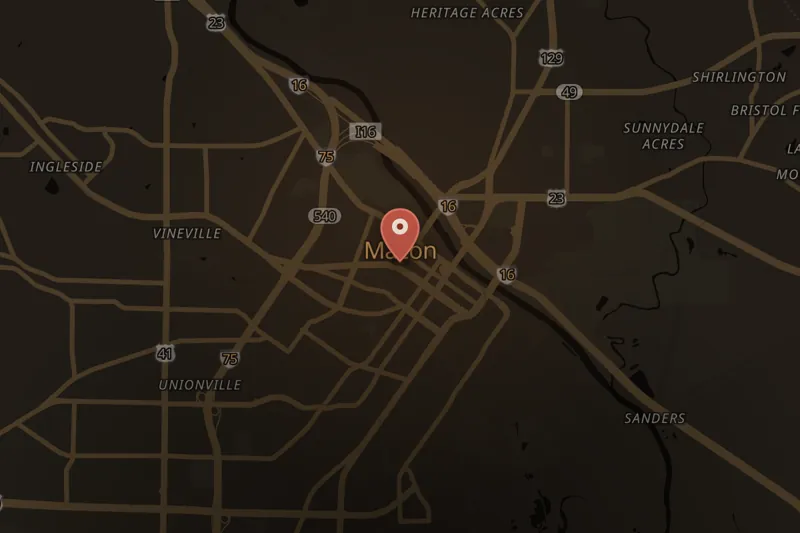
Macon, Georgia, United States · 2011
Lauren Giddings, a recent Mercer University School of Law graduate studying for the bar exam, was strangled and dismembered in Macon, Georgia, in June 2011 by her neighbor and former classmate Stephen Mark McDaniel, who pleaded guilty in 2014.
Credit: CBS News / Travis Alexander (personal photo)Editorial useSourceSOLVEDListenMesa, Arizona, United States · 2000s
Travis Alexander, 30, was stabbed, slashed, and shot to death in his Mesa, Arizona home on June 4, 2008. His ex-girlfriend, Jodi Arias, was convicted of first-degree murder in 2013 and sentenced to life without parole in 2015 after two juries deadlocked on the death penalty.
 Credit: Family/Instagram photograph, widely distributed in press coverageEditorial useSourceSOLVEDListen
Moscow, Idaho · 2022
Four University of Idaho students—Madison Mogen, Kaylee Goncalves, Ethan Chapin, and Xana Kernodle—were fatally stabbed inside an off-campus house in Moscow, Idaho, in the early morning hours of November 13, 2022. Bryan Kohberger, a criminology PhD student at nearby Washington State University, was arrested that December and pleaded guilty in 2025, receiving four consecutive life sentences.
Image recordEditorial useSourceSOLVEDListenAustin, Texas · 2022
Moriah Wilson, a 25-year-old professional cyclist, was shot and killed at a friend's residence in Austin, Texas, on May 11, 2022, and Kaitlin Armstrong was later convicted and sentenced to 90 years in prison for the killing.
 Credit: Wikimedia Commons, photo by Glenn Francis (PacificProDigital.com)Editorial useSourceSOLVEDListen
Hollywood Hills, Los Angeles, California · 2014
Amie Harwick, a Los Angeles marriage and family therapist and author, was strangled and thrown from her third-floor Hollywood Hills balcony on February 15, 2020, by an ex-boyfriend who had a history of stalking her. He was convicted of first-degree murder in 2023 and sentenced to life without parole.
 Credit: BKA Germany/ Federal Criminal Police Office (Germany)Public domainSourceUNSOLVEDListen
Varna Airport, Varna, Bulgaria · 2014
German tourist Lars Mittank vanished after fleeing Varna Airport in Bulgaria on 8 July 2014 and has not been seen since.
 Credit: Haley AndersonEditorial useSourceSOLVEDListen
Oak Street, West Side, Binghamton, New York · 2018
Haley Anderson, a 22-year-old nursing student at Binghamton University, was strangled to death on March 8, 2018, by fellow student Orlando Tercero at his off-campus apartment. Tercero fled to Nicaragua, was captured days later, and was convicted of femicide there, receiving a 30-year sentence.