Start here
The case of Julia Wallace: the IMPOSSIBLE murder

Georgia Marie's 36-minute breakdown, the fullest single telling on file.
Watch on YouTubeUnsolved case · 1930s
Also known as Julia Wallace · The Wallace Case
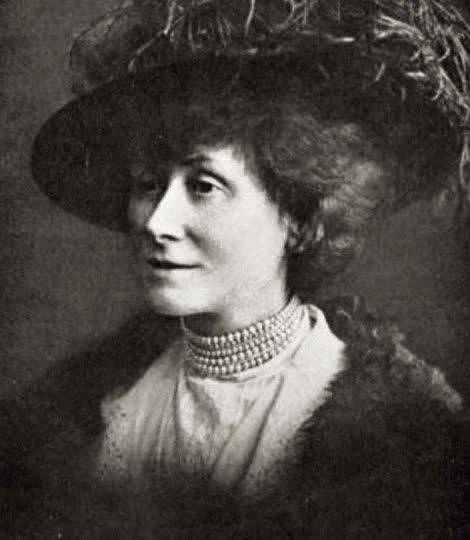 Julia WallaceCredit: The Julia Wallace Murder Foundation (williamherbertwallace.com)Editorial useSource
The short answer
Julia Wallace was beaten to death in her Liverpool home in January 1931 after her husband William was lured away by a hoax phone call. He was convicted but the Court of Criminal Appeal quashed the verdict months later, and the killing remains officially unsolved.
The case of Julia Wallace: the IMPOSSIBLE murderGeorgia Marie · 36 min1 piece from 1 creator: ranked, with duplicates removed and short clips set aside.
Start here
Georgia Marie's 36-minute breakdown, the fullest single telling on file.
Watch on YouTubeTitles and descriptions are the creators’ own and may not reflect current legal status. The sourced facts are in the file below. Players load only when you press play. Suggest coverage we’re missing.
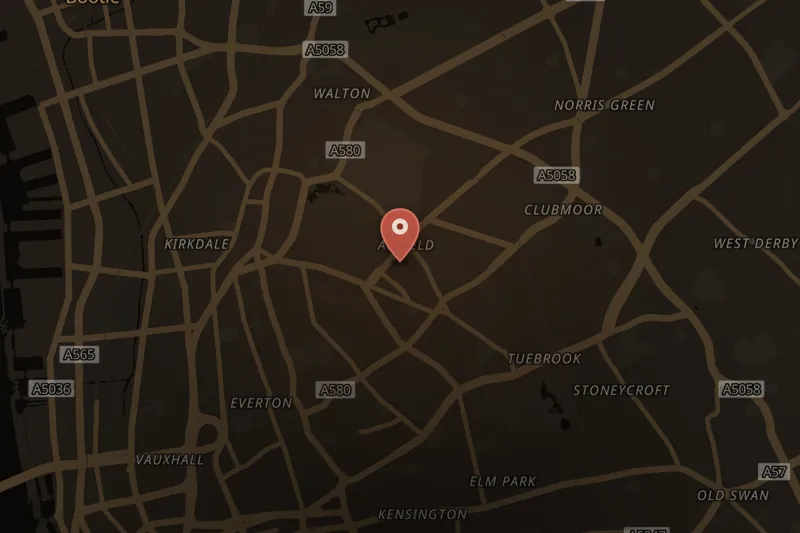
On the evening of 20 January 1931, William Herbert Wallace, a Prudential Assurance collections agent, returned to his home at 29 Wolverton Street in the Anfield district of Liverpool to find his wife, Julia Wallace, beaten to death in their sitting room. The killing followed a strange sequence of events: the previous night, while attending a chess club meeting, Wallace had been handed a telephone message from a man calling himself "R. M. Qualtrough," asking him to call at 25 Menlove Gardens East the following evening to discuss insurance business. When Wallace went to the address the next night, he discovered no such address existed, and after searching the area for around 45 minutes, returned home to find his wife dead.
Police investigated the telephone box used to make the "Qualtrough" call, located about 400 yards from Wallace's home, and began to suspect Wallace himself had made the call, despite the person who took it being certain it was not Wallace's voice. Investigators theorised about timing — whether Wallace could have killed his wife and still made his tram — and examined forensic evidence, including a mackintosh found beneath Julia's body, which police theorised was used to shield the killer from blood spatter. No bloodstains were found on Wallace's suit, and examinations of the bath and drains found no trace of blood except a single, unexplained clot in the toilet.
Wallace was charged with murder and tried at Liverpool Assizes beginning 22 April 1931. Despite evidence against him being circumstantial, and testimony from a milk-boy who said he spoke with Julia after 6:30pm — narrowing the window in which Wallace could have committed the crime — the jury found him guilty after an hour's deliberation, and he was sentenced to death.
In May 1931, the Court of Criminal Appeal quashed the conviction, ruling that the verdict "cannot be supported, having regard to the evidence." This marked the first instance in British legal history of an appeal being allowed after re-examination of the evidence itself, rather than on procedural grounds. Wallace was released, and no other person was ever charged with the murder, which remains officially unsolved.
After his release, Wallace faced continued public suspicion, harassment, and hate mail in the areas where he lived and worked. He moved to Bromborough and took a clerical position at Prudential's head office. He died on 26 February 1933 from uraemia and pyelonephritis, less than two years after his acquittal, and is buried alongside his wife in Anfield Cemetery.
Subsequent investigations, notably by crime writer Jonathan Goodman in the 1960s and radio journalist Roger Wilkes in 1981, focused on a former Prudential colleague, Richard Gordon Parry, as an alternative suspect, citing an alibi that may have been false and reports of a blood-soaked glove found in his car on the night of the murder. Author James Murphy's 2001 research introduced police statements suggesting Parry's alibi did not depend solely on the testimony Wilkes had identified. The case has generated extensive literature and remains widely discussed as an unsolved murder mystery.
William Herbert Wallace and Julia Dennis marry in Harrogate.
The Wallaces move to Liverpool, settling at 29 Wolverton Street, Anfield.
Wallace receives a telephone message at his chess club from a man calling himself 'R. M. Qualtrough' requesting a meeting the following evening.
Wallace searches for the nonexistent address 25 Menlove Gardens East; returns home to find Julia Wallace beaten to death.
Wallace's murder trial opens at Liverpool Assizes.
Wallace is found guilty by the jury and sentenced to death (exact date approximate, jury deliberated roughly one hour after trial).
The Court of Criminal Appeal quashes Wallace's conviction, ruling the verdict unsupported by the evidence.
William Herbert Wallace dies of uraemia and pyelonephritis at Clatterbridge Hospital.
A mock trial conducted by the Merseyside Medico-Legal Society again finds Wallace not guilty.
Roger Wilkes broadcasts a radio investigation naming Richard Gordon Parry as a suspect.
James Murphy publishes The Murder of Julia Wallace, introducing new police statement evidence regarding Parry's alibi.
Victims first. Every legal label is set from public records and court outcomes, not from the prose.
Coverage is not a source: every fact in this file rests on the records below.
Are you family of someone named in this file? Corrections and removal requests from victims’ families are prioritized.
 Credit: KAIDENBEARD10CC BY-SA 4.0SourceSOLVEDListen
New Strand Shopping Centre area, Bootle, Merseyside · 1990s
In February 1993, two-year-old James Bulger was abducted from a Bootle shopping centre by two 10-year-old boys, Robert Thompson and Jon Venables, who tortured and killed him before leaving his body on a railway line. Both were convicted of murder later that year, becoming the youngest convicted murderers in modern British history, and were released on life licence in 2001 after serving eight years.
 SOLVEDListen
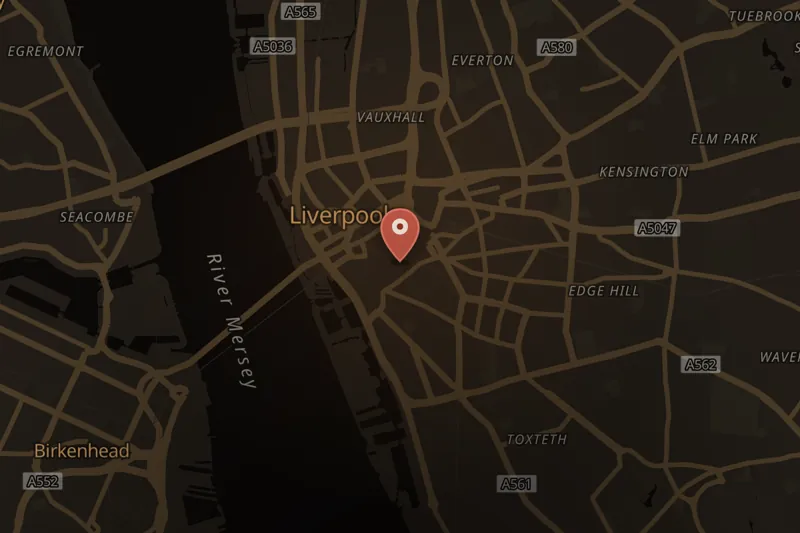
Near the Royal Court Theatre, Liverpool · 2020s
Ava White, a 12-year-old girl, was fatally stabbed in the neck in Liverpool city centre on 25 November 2021 following an argument with a group of boys over a Snapchat video. A 14-year-old boy, named in 2025 as Harry Gilbertson, was convicted of her murder and sentenced to life imprisonment.
 OVERTURNEDListen
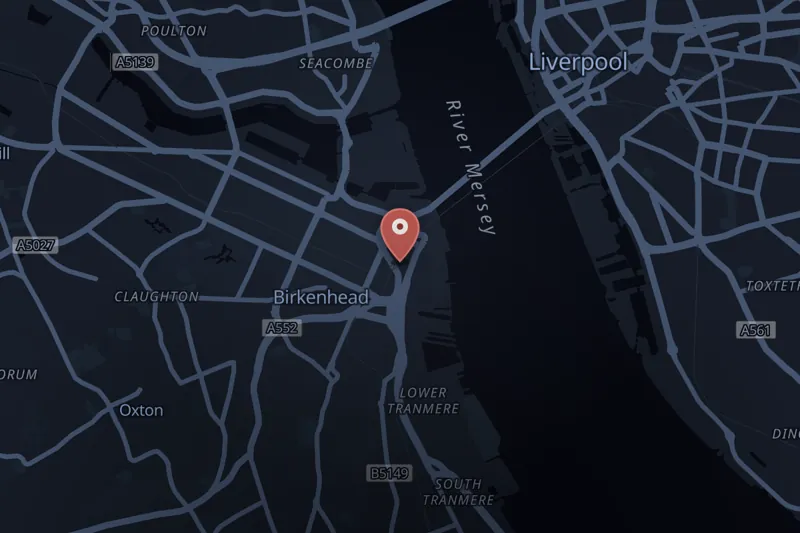
Fearnley Road, off Borough Road, Birkenhead, Merseyside · 1980s
Peter Sullivan spent 38 years in prison for the 1986 murder of Diane Sindall before DNA evidence exonerated him in May 2025, making him the longest-serving known victim of a miscarriage of justice in British history. The real perpetrator remains unidentified.
 Credit: Family handout via Suffolk NewsEditorial useSourceCOLDListen
Bury St Edmunds, Suffolk, England · 2016
Royal Air Force gunner Corrie McKeague disappeared after a night out in Bury St Edmunds in September 2016, and a 2022 inquest concluded he died after climbing into a waste bin that was tipped into a bin lorry, though his remains were never found.
 Credit: UnknownEditorial useSourceUNSOLVEDListen
Pimlico, London, England · 2010
Gareth Williams, a GCHQ mathematician on secondment to MI6, was found dead padlocked inside a bag in his London flat in August 2010; a coroner ruled the death unnatural and likely criminally mediated, but no one has been charged and a Metropolitan Police re-investigation later called it probably an accident.
Clifton, Bristol, England · 2010
Joanna Yeates, a landscape architect, disappeared from her Bristol flat on 17 December 2010 and was found dead on Christmas Day. Her neighbour Vincent Tabak was later convicted of her murder; the case also led to a landlord being wrongly arrested and successful libel and contempt-of-court actions against several UK newspapers.
Credit: Family handout via Suffolk NewsEditorial useSourceCOLDListenBury St Edmunds, Suffolk, England · 2016
Royal Air Force gunner Corrie McKeague disappeared after a night out in Bury St Edmunds in September 2016, and a 2022 inquest concluded he died after climbing into a waste bin that was tipped into a bin lorry, though his remains were never found.
El Pianista trail, near Boquete, Panama · 2014
Two Dutch students, Kris Kremers and Lisanne Froon, disappeared while hiking a jungle trail in Panama in April 2014, and their remains were recovered along a riverbank months later, but no official cause of death has ever been established.
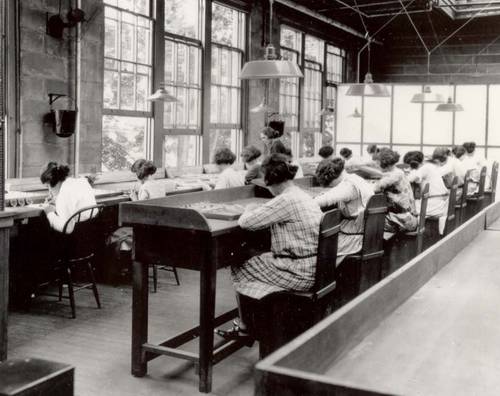 Credit: Argonne National Laboratory / Wikimedia Commons, c.1922–23Public domainSourceSOLVEDListen
Orange, New Jersey · 1917
Beginning in 1917, factory workers who came to be known as the Radium Girls were poisoned after being instructed to shape radium-paint brushes with their lips; the resulting illnesses, deaths, and lawsuits against the United States Radium Corporation and the Radium Dial Company reshaped U.S. occupational health and labor law.