

Start here
Teens Jailed For “Dream” Confession - The Kent Heitholt Case
The creator's telling of the case, the strongest entry point on file.
Watch on YouTubeUnsolved case · 2001
Also known as Kent Heitholt · Ryan W. Ferguson
 Columbia Daily TribuneCredit: Me5000 (talk)Public domainSource
The short answer
Kent Heitholt, a Columbia Daily Tribune sports editor, was beaten and strangled in his newspaper's parking lot in 2001. Two years later, Ryan Ferguson and Charles Erickson were charged based largely on Erickson's uncertain memories and a janitor's testimony; both later recanted, and Ferguson's conviction was vacated in 2013 after courts found prosecutors withheld evidence. The case remains unsolved.
Teens Jailed For “Dream” Confession - The Kent Heitholt Case1 piece from 1 creator: ranked, with duplicates removed and short clips set aside.
Start here
The creator's telling of the case, the strongest entry point on file.
Watch on YouTubeTitles and descriptions are the creators’ own and may not reflect current legal status. The sourced facts are in the file below. Players load only when you press play. Suggest coverage we’re missing.
Kent Heitholt, a 48-year-old sports editor for the Columbia Daily Tribune in Columbia, Missouri, was found beaten with a blunt object and strangled shortly after 2:00 a.m. on November 1, 2001, in the newspaper's parking lot. A co-worker, Michael Boyd, told police he had spoken with Heitholt in the parking lot minutes before the attack. Janitor Shawna Ornt saw two young men near Heitholt's car and alerted her supervisor, Jerry Trump; both witnessed the men before they fled. A 9-1-1 call was placed at 2:26 a.m.
Police recovered unidentified fingerprints, an unidentified hair, and bloody footprints at the scene, and produced a composite sketch from Ornt's description. The case went unsolved for two years.
In 2003, Charles Erickson — who had been out drinking and using cocaine with 17-year-old Ryan Ferguson on the night of the murder — began to fear he may have been involved after seeing newspaper coverage and having dreams about the crime. Erickson could not independently recall the events of that night. After a friend alerted police, Erickson was interrogated; despite significant uncertainty and prompting by investigators, he eventually implicated himself and Ferguson. Both were arrested and charged in March 2004.
At Ferguson's 2005 trial, prosecutor Kevin Crane relied on Erickson's testimony, given in exchange for a plea deal, along with testimony from Jerry Trump identifying Ferguson and Erickson at the scene. The defense noted that none of the physical evidence recovered — hair, blood, or fingerprints — matched Ferguson or Erickson. Ferguson was convicted of second-degree murder and robbery and sentenced to 40 years in prison.
Attorney Kathleen Zellner took on Ferguson's case in 2009. By 2012, both Erickson and Trump recanted their trial testimony, each alleging that Crane had coerced or pressured them. Trump admitted a key story about how he identified the suspects was fabricated. Witness Shawna Ornt stated she had told Crane the man she saw was not Ferguson but was never asked to identify him at trial. The Missouri Court of Appeals, Western District, found a pattern of non-disclosures by police and prosecutors, including withheld interview material, and vacated Ferguson's conviction on November 5, 2013. He was released on November 12, 2013, after nearly a decade in prison. The state attorney general declined to refile charges, citing Ferguson's presentation of overwhelming evidence of innocence.
Ferguson filed a civil rights suit in 2014 against multiple police officers, prosecutors, and local government entities; most defendants were dismissed, but in 2017 a settlement awarded Ferguson $11 million against six police officers. Charles Erickson, who had received a 25-year sentence for his plea and testimony, was released on parole in January 2023. The murder of Kent Heitholt remains unsolved.
Kent Heitholt found beaten and strangled in the Columbia Daily Tribune parking lot; 9-1-1 called at 2:26 a.m.
Local media renew coverage of the unsolved murder; Charles Erickson begins to suspect his own involvement after seeing coverage and having dreams about the crime.
Erickson sees a composite sketch resembling himself and confides concerns to friends, one of whom alerts police.
Erickson and Ferguson are arrested and charged with the murder.
Ryan Ferguson is convicted of second-degree murder and robbery and sentenced to 40 years in prison.
Charles Erickson and Jerry Trump recant their trial testimony in statements obtained by attorney Kathleen Zellner.
Missouri Court of Appeals, Western District, vacates Ferguson's conviction, citing prosecutorial non-disclosures.
Ferguson is released from prison after the state declines to refile charges.
Ferguson files a civil rights suit against 11 individuals, Boone County, and the city of Columbia.
Settlement hearing results in an $11 million award to Ferguson against six police officers.
Charles Erickson is released on parole after serving 18 years of his 25-year sentence.
Victims first. Every legal label is set from public records and court outcomes, not from the prose.
48-year-old sports editor beaten and strangled in the Columbia Daily Tribune parking lot on November 1, 2001.[3]
Pleaded and received a 25-year sentence in exchange for testimony implicating Ferguson; later recanted trial testimony; released on parole in January 2023.[3]
Convicted in 2005 of second-degree murder and robbery; conviction vacated in 2013 and charges not refiled after habeas corpus proceedings found prosecutorial non-disclosures; case cited by the National Registry of Exonerations.[3]
Prosecuting attorney at Ryan Ferguson's 2005 murder trial, later a Boone County circuit judge; an appeals court found a pattern of non-disclosure by police and prosecutors, and three witnesses later testified or said Crane had pressured them to implicate Ferguson. Ferguson's conviction was vacated in 2013; Crane faced no criminal charge over the claims and was later dismissed from Ferguson's civil suit on prosecutorial immunity grounds.[3]
From the record
Coverage is not a source: every fact in this file rests on the records below.
Are you family of someone named in this file? Corrections and removal requests from victims’ families are prioritized.
 SOLVEDListen
University of Missouri campus, Columbia, Missouri, US · 2000s
Jesse Valencia, a 23-year-old University of Missouri student, was found dead on the Columbia, Missouri campus on June 5, 2004, after being choked and having his throat cut. Columbia police officer Steven Rios, who had been secretly involved with Valencia, was convicted of the murder in September 2004 and, after a retrial, remains imprisoned on a second-degree murder conviction.
 SOLVEDListen
New Bloomfield, Missouri, United States · 2000s
On December 23, 2006, Benjamin and Sarah Bonnie were fatally shot in their New Bloomfield, Missouri home by Sarah's cousin, Brian Dorsey, whom they had taken in to help him evade drug dealers. Dorsey was convicted and sentenced to death, and was executed in April 2024.
 SOLVEDListen
New Florence, Missouri · 2010s
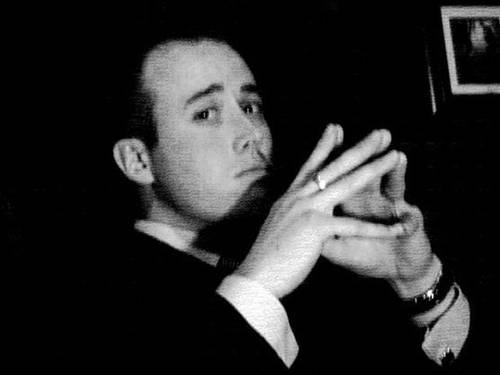
Ben Renick was killed at his Missouri reptile-breeding facility on June 8, 2017; Lynlee Renick and Michael Humphrey were convicted in separate proceedings.
 Credit: CBS News / Travis Alexander (personal photo)Editorial useSourceSOLVEDListen
Mesa, Arizona, United States · 2000s
Travis Alexander, 30, was stabbed, slashed, and shot to death in his Mesa, Arizona home on June 4, 2008. His ex-girlfriend, Jodi Arias, was convicted of first-degree murder in 2013 and sentenced to life without parole in 2015 after two juries deadlocked on the death penalty.
 Credit: Prugna at Italian WikipediaCC BY-SA 4.0SourceSOLVEDListen
Via della Pergola 7, Perugia, Italy · 2000s
British exchange student Meredith Kercher was found murdered in her Perugia flat on 2 November 2007. Rudy Guede was convicted of her sexual assault and murder in a fast-track trial. Kercher's roommate Amanda Knox and Knox's boyfriend Raffaele Sollecito were separately convicted, then acquitted, reconvicted, and finally acquitted and declared innocent by Italy's Supreme Court of Cassation in 2015.
 SOLVEDListen
Macon, Georgia, United States · 2011
Lauren Giddings, a recent Mercer University School of Law graduate studying for the bar exam, was strangled and dismembered in Macon, Georgia, in June 2011 by her neighbor and former classmate Stephen Mark McDaniel, who pleaded guilty in 2014.