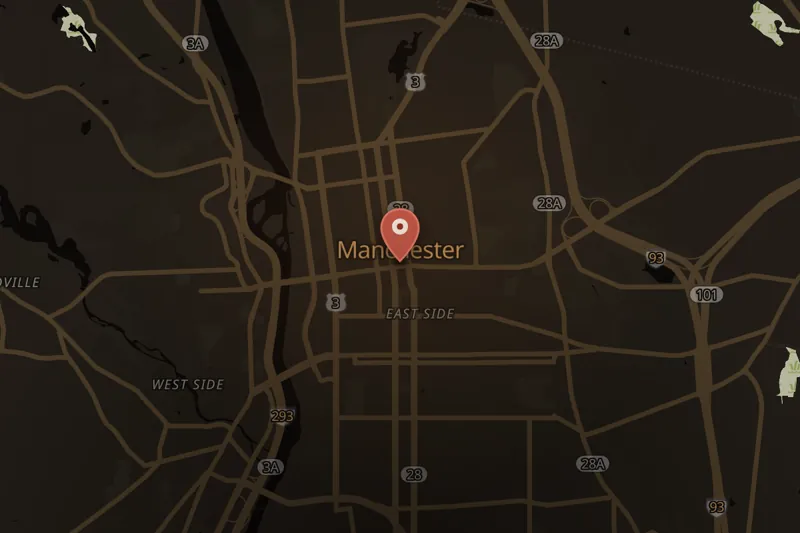
On October 16, 2006, Manchester, New Hampshire police officer Michael Briggs was shot while responding, with his partner Officer John Breckenridge, to a domestic disturbance call involving Michael Addison and Antoine Bell-Rodgers. When Briggs ordered Addison to stop, Addison turned and shot him before Briggs could draw his weapon. Officer Briggs died of his injuries. Two other officers returned fire; Addison fled through an alleyway, dropping his handgun and a T-shirt nearby. Bell-Rodgers surrendered at the scene, but Addison fled, triggering a manhunt involving SWAT teams, searches of multiple apartment buildings, and school lockdowns in Manchester.
Manchester detectives learned Addison had fled to his grandfather's apartment in Dorchester, Massachusetts, and passed the information to the Boston Police Department's Anti-Crime Unit, led by Sergeant Gary Eblan, who located and arrested Addison without incident approximately fifteen hours after the shooting. Addison was initially charged by Boston Police as a fugitive from justice, waived extradition, and was returned to New Hampshire, where the Manchester District Court signed a capital murder warrant against him. During a taped police interview, Addison gave several differing accounts before stating he shot at officers approaching him. New Hampshire Attorney General Kelly Ayotte sought the death penalty, since the killing of a police officer qualified as capital murder under state law.
Court records indicate Addison and Bell-Rodgers were connected to a string of crimes in the days preceding the shooting, including an armed robbery of a restaurant and a robbery at a convenience store. Bell-Rodgers was not charged in the Briggs shooting but was charged with weapons and robbery offenses and was ultimately sentenced to 60½ years in prison; associates Angela Swist and Teresia Shipley were also investigated, with Shipley pleading guilty to helping Addison rob a convenience store.
Addison's capital murder trial began with jury selection in September 2008 in Hillsborough County Superior Court before Judge Kathleen A. McGuire. In opening arguments, Addison admitted to killing Briggs but argued the killing was reckless rather than knowing. On November 13, 2008, the jury unanimously convicted Addison of capital murder. The jury found him eligible for the death penalty but did not find that he had purposely murdered Briggs. On December 18, 2008, the jury sentenced Addison to death, and the judge imposed that sentence along with 63 years for related convictions on December 22, 2008.
The New Hampshire Supreme Court affirmed Addison's conviction and death sentence in decisions issued in 2013 and 2015 following a mandated proportionality review. The U.S. Supreme Court denied certiorari in January 2016, and Addison subsequently pursued habeas corpus relief in Merrimack County Superior Court. In September 2025, the New Hampshire Supreme Court agreed to hear a further petition regarding the death sentence, docketed as 2025-0273, with the ACLU of New Hampshire filing an amicus brief asking the court to vacate the sentence following the legislature's 2019 repeal of the death penalty for future cases. Oral argument on this petition occurred in March 2026, and Addison remains the only person on New Hampshire's death row.

 Credit: NCMEC / Manchester (NH) Police DepartmentLaw-enforcement releaseSourceOVERTURNEDListen