
Start here
He Might Be More Terrifying Than You Think - Issei Sagawa | Mystery & Makeup GRWM| Bailey Sarian

Bailey Sarian's 47-minute breakdown, the fullest single telling on file.
Watch on YouTubeBefore you continue
This case involves sexual violence. Casepin presents the record in neutral, non-graphic language. Choose whether to continue.
Solved case · 1981
Also known as Issei Sagawa case · Paris Cannibal case
The short answer
In 1981, Renée Hartevelt, a Dutch student in Paris, was shot and killed by her Sorbonne classmate Issei Sagawa, who then mutilated, cannibalized, and committed necrophilia on her body before being arrested attempting to dispose of her remains.
Start hereHe Might Be More Terrifying Than You Think - Issei Sagawa | Mystery & Makeup GRWM| Bailey SarianBailey Sarian · 47 minThe coverage index
1 piece from 1 creator: ranked, with duplicates removed and short clips set aside.
Start here
Video · YouTube · 47 min · 2021
Bailey Sarian's 47-minute breakdown, the fullest single telling on file.
Watch on YouTubeTitles and descriptions are the creators’ own and may not reflect current legal status. The sourced facts are in the file below. Players load only when you press play. Suggest coverage we’re missing.
The case file
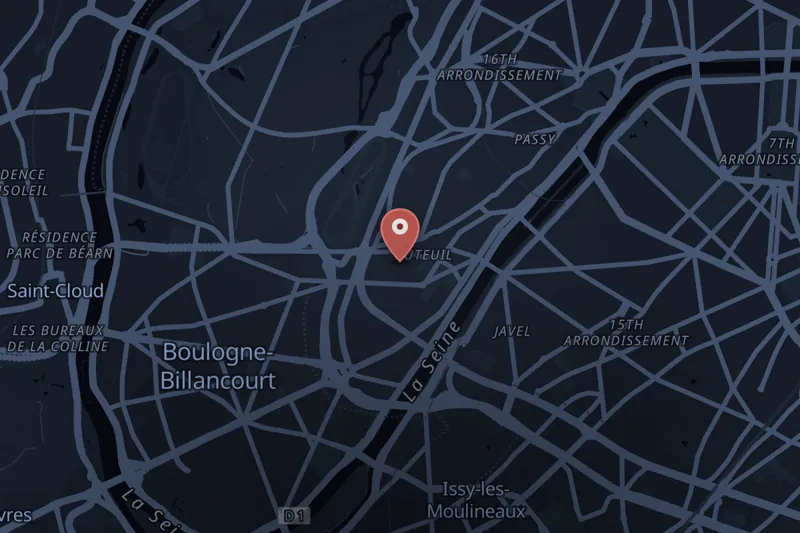
On 11 June 1981, Issei Sagawa, a 32-year-old Japanese literature student at the Sorbonne in Paris, invited his classmate Renée Hartevelt, a 25-year-old Dutch woman, to his apartment at 10 Rue Erlanger under the pretext of a poetry-translation assignment. According to Sagawa's own account, he had planned in advance to kill and eat her, having selected her because of her health and beauty. While Hartevelt sat reading poetry with her back to him, Sagawa shot her in the neck with a rifle.
After the shooting, Sagawa said he fainted and then, upon regaining consciousness, proceeded to rape her corpse. Unable to bite through her skin, he left the apartment to buy a butcher knife and subsequently mutilated and cannibalized parts of her body, including her breasts, face, buttocks, feet, thighs, and neck, consuming some parts raw and others cooked. He photographed her remains at various stages and stored some body parts in his refrigerator. As the unconsumed remains began to decompose, Sagawa attempted to dispose of them by carrying her dismembered body in suitcases to a lake in the Bois de Boulogne park. He was caught in the act and arrested by French police approximately four days after the killing.
Sagawa's family, described as wealthy, retained a lawyer for his defense. He was held for two years awaiting trial. A French judge, Jean-Louis Bruguière, ultimately found him legally insane and unfit to stand trial, ordering him held indefinitely in a mental institution rather than convicted of a crime. While detained, Sagawa's account of the killing and its aftermath was published in Japan as a book titled "In the Fog." His growing public notoriety reportedly contributed to French authorities' decision to deport him to Japan, where he was committed to Matsuzawa Hospital in Tokyo.
Japanese psychologists who examined Sagawa at Matsuzawa Hospital unanimously found him sane and concluded that sexual perversion was his sole motive. Because the French criminal case had been closed and the underlying court records were not released to Japanese authorities, Sagawa could not be legally detained or retried in Japan. He checked himself out of the hospital on 12 August 1986 and remained free for the rest of his life. This outcome drew widespread criticism as an apparent failure of cross-border justice.
Following his release, Sagawa became a public figure in Japan, appearing as a guest commentator, writing books about his crime, contributing restaurant reviews to a magazine, and appearing in a film. He died of complications from pneumonia in a Tokyo hospital on 24 November 2022, at age 73, having never been convicted of killing Renée Hartevelt.
7 dated entries · 1949–2022
Issei Sagawa is born in Kobe, Japan.
Sagawa moves to Paris to pursue a PhD in literature at the Sorbonne.
Sagawa shoots and kills Renée Hartevelt at his Paris apartment, then mutilates, cannibalizes, and performs necrophilia on her body over several days.
Sagawa is arrested by French police while attempting to dispose of Hartevelt's remains at a lake in the Bois de Boulogne park.
After two years in custody awaiting trial, Sagawa is found legally insane and unfit to stand trial by French judge Jean-Louis Bruguière, who orders indefinite psychiatric detention.
Sagawa checks himself out of Matsuzawa Hospital in Tokyo after Japanese psychologists find him sane; he cannot be retried because French court records were not released, and he remains free.
Sagawa dies of complications from pneumonia in a Tokyo hospital at age 73.
3 named in this file
Victims first. Every legal label is set from public records and court outcomes, not from the prose.
Dutch Sorbonne student killed by Issei Sagawa in Paris in 1981.[3]
Found legally insane and unfit to stand trial by a French court for the killing of Renée Hartevelt; never criminally convicted, and later found sane by Japanese psychologists but could not be retried.[3]
French judge who presided over the case and ordered Sagawa held indefinitely in a mental institution after finding him legally insane.[3]
3 cited
Coverage is not a source: every fact in this file rests on the records below.
PressCNNAccessed Jul 18, 2026
PressThe New York TimesAccessed Jul 18, 2026
EncyclopedicWikipediaAccessed Jul 18, 2026
Trust
Are you family of someone named in this file? Corrections and removal requests from victims’ families are prioritized.
Near this case
 SOLVEDListen
Hôtel de Pourtalès, 7 rue Tronchet, 8th arrondissement, Paris · 2010s
In the early hours of 3 October 2016, armed men posing as police tied up Kim Kardashian in her Paris residence at the Hôtel de Pourtalès and stole jewellery worth about €9 million; in May 2025 a Paris court convicted eight defendants, four of them of the armed robbery and confinement, and acquitted two.
 SOLVEDListen
Paris, France · 1980s
Between October 1984 and November 1987, at least 18 elderly women were robbed and killed in Paris, mostly in the 18th arrondissement, in a series of attacks French police linked by fingerprint evidence, a survivor's description, and a confession to nightclub performer Thierry Paulin. Paulin died of AIDS-related illness in April 1989 before he could stand trial; his former partner, Jean-Thierry Mathurin, was later convicted as an accomplice in the first nine attacks and was released from prison in 2009.
 OVERTURNEDListen
Paris, France · 1890s
Captain Alfred Dreyfus, a Jewish French artillery officer, was wrongfully convicted of treason in December 1894 on forged and disputed evidence and exiled to Devil's Island; a cover-up by military leadership suppressed proof of his innocence for years until his 1899 pardon and 1906 exoneration.
 Credit: Federal Bureau of Investigation·Public domain·SourceSOLVEDListen
Fort Wayne, Indiana · 1988
April Tinsley, an eight-year-old girl from Fort Wayne, Indiana, was kidnapped, raped, and strangled to death on April 1, 1988. The killing went unsolved for more than three decades, marked by taunting notes from her killer, until forensic genealogy identified John D. Miller as the perpetrator in 2018; Miller pleaded guilty and was sentenced to 80 years in prison.
 Image record·Editorial use·SourceSOLVEDListen
Matamoros, Tamaulipas, Mexico · 1989
Mark Kilroy, a University of Texas at Austin student, was abducted during spring break in Matamoros, Mexico, in March 1989 and killed at a ranch used by a drug-trafficking cult led by Adolfo Constanzo; several cult members were convicted in 1993-1994 of homicide and other charges.
 Credit: Unknwown·Editorial use·SourceSOLVEDListen
Near Greeley, Colorado · 1984
A 12-year-old girl who disappeared from her Greeley, Colorado, home in 1984 was found dead in 2019, and a former Greeley resident was convicted in 2022 of her kidnapping and murder.
Also covered by
 Credit: English Wikipedia·Editorial use·SourceSOLVEDListen
Modesto, California · 2002
Laci Peterson, 27 and eight months pregnant, disappeared from her Modesto, California home on December 24, 2002; her body and that of her unborn son Conner were found in San Francisco Bay in April 2003, and her husband Scott Peterson was convicted in 2004 of murdering both.
 Credit: CBS News / Travis Alexander (personal photo)·Editorial use·SourceSOLVEDListen
Mesa, Arizona, United States · 2000s
Travis Alexander, 30, was stabbed, slashed, and shot to death in his Mesa, Arizona home on June 4, 2008. His ex-girlfriend, Jodi Arias, was convicted of first-degree murder in 2013 and sentenced to life without parole in 2015 after two juries deadlocked on the death penalty.
 COLDListen
Cumming, Georgia · 2018
Tamla Horsford, a 40-year-old mother of five, died from a fall at a home in Cumming, Georgia, during a gathering on November 3-4, 2018; two separate investigations ruled her death accidental, though her family has disputed that finding and pushed for further inquiry.
 Credit: Los Angeles Police Department·Public domain·SourceUNSOLVEDListen
Leimert Park, Los Angeles, California, USA · 1940s
Elizabeth Short, known posthumously as the Black Dahlia, was found murdered in Los Angeles in January 1947 in a case that remains unsolved.
 Credit: Ted Van Zyl·Editorial use·SourceSOLVEDListen
Albuquerque, New Mexico, United States · 1993
Girly Chew Hossencofft, a Malaysian-born bank teller living in Albuquerque, New Mexico, disappeared on September 9, 1999, shortly after filing for divorce from her husband Diazien Hossencofft. He and his girlfriend Linda Henning were later convicted of her murder. Her body has never been found.
 Credit: Argonne National Laboratory / Wikimedia Commons, c.1922–23·Public domain·SourceSOLVEDListen
Orange, New Jersey · 1917
Beginning in 1917, factory workers who came to be known as the Radium Girls were poisoned after being instructed to shape radium-paint brushes with their lips; the resulting illnesses, deaths, and lawsuits against the United States Radium Corporation and the Radium Dial Company reshaped U.S. occupational health and labor law.