Skip to content
Casepin

Solved case · 2003

Murder of Stephen Oake

Also known as Stephen Oake's murder · Stephen Oake's killing

SOLVEDCONVICTEDACQUITTED
Updated
Updated Jul 5, 2026
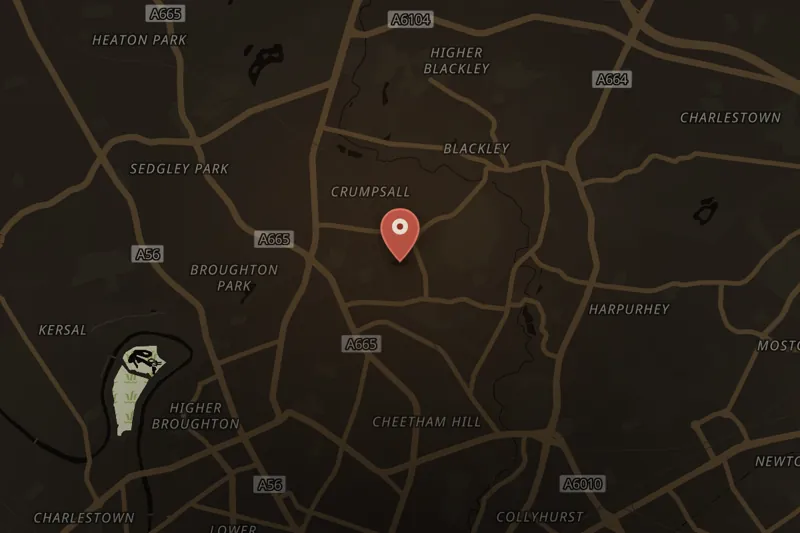
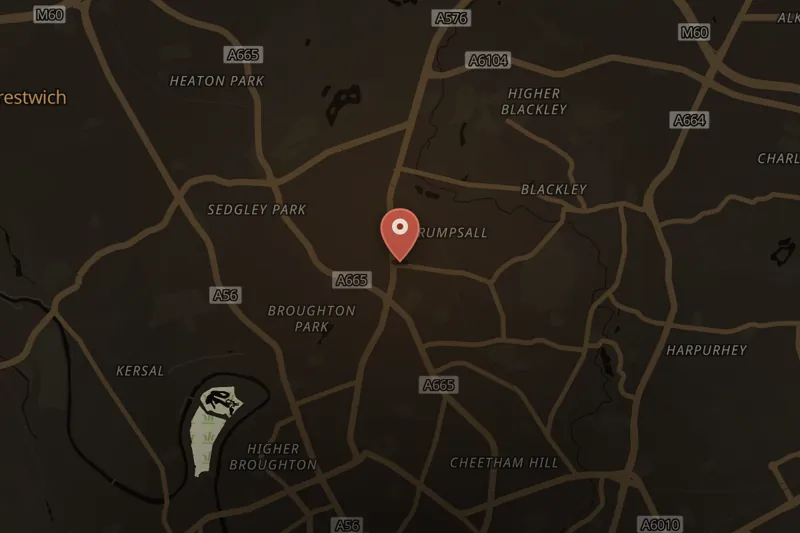
Crumpsall Lane, Crumpsall, Manchester, UKView on the map

The short answer

Murder of Stephen Oake in brief

DC Stephen Oake, a Greater Manchester Police anti-terrorism detective, was fatally stabbed on 14 January 2003 while helping restrain Kamel Bourgass, an Algerian illegal immigrant wanted in connection with the Wood Green ricin plot, during an immigration raid in Manchester. Bourgass was convicted of Oake's murder in 2004 and sentenced to life imprisonment.

Key facts

Year
2003
Place
Crumpsall Lane, Crumpsall, Manchester, UK
Status
SOLVEDSolved
Victim
Stephen Oake
Outcome
Convicted: Kamel Bourgass; Acquitted: Mustapha Taleb, Mouloud Sihali, Sidali Feddag and David Khalef

The coverage index

Where to watch & listen

No one's coverage is attached to this file yet.

Know great coverage of this case?

A documentary, a podcast episode, a careful long-form video. Suggest it and an editor will review it before it appears here.

Suggest coverage for Murder of Stephen Oake

The case file

What happened

On 14 January 2003, Detective Constable Stephen Robin Oake, an anti-terrorism officer with Greater Manchester Police, was killed while taking part in an immigration operation at Flat 4, 4 Crumpsall Lane in the Crumpsall area of north Manchester. Oake had served with Greater Manchester Police for almost 20 years and had worked as an anti-terrorism detective in the special branch since 1999. He was born in Poynton, Cheshire, and was the son of Robin Oake, a former chief constable of the Isle of Man Constabulary.

During the operation, officers found three men at the address, including Kamel Bourgass, an Algerian national who had entered the UK illegally in the back of a lorry three years earlier. Bourgass was wanted in London in connection with the Wood Green ricin plot, a bioterrorism plot targeting the London Underground, but was not immediately recognised by the officers present and was not handcuffed, as he was not perceived to pose a threat. Believing the officers had identified him in connection with the ricin plot, Bourgass attempted to escape, punching one officer and seizing a kitchen knife. Oake, who was unarmed and not wearing protective clothing, moved to restrain him and was stabbed eight times in the chest and upper body, including one wound that penetrated his heart. Despite his injuries, Oake continued trying to help colleagues subdue Bourgass. Three other officers were also stabbed before Bourgass was detained. Oake later died of his injuries.

The killing prompted debate over whether police in England and Wales should be permitted to handcuff suspects regardless of an immediate or obvious threat. A subsequent inquiry criticised the officers who led the raid for inadequate operational planning.

Oake's funeral at Manchester Cathedral drew more than 1,000 attendees, including Prime Minister Tony Blair. In 2005, the Criminal Injuries Compensation Authority paid £13,000 each to Oake's widow and his three children, an amount the Greater Manchester Police Federation said did not match his sacrifice. A Manchester street was renamed Stephen Oake Close in his honour, and in 2006 the Police Memorial Trust unveiled a granite memorial near the site of his killing; the memorial was vandalised in March 2007 and replaced six months later, with no one prosecuted despite a £15,000 reward.

A civil service committee ruled in 2006 that Oake's actions did not meet the standard required for the George Cross. He was posthumously awarded the Queen's Gallantry Medal in 2009, cited in The London Gazette. A colleague stabbed twice during the incident received a Queen's Commendation for Bravery.

Kamel Bourgass was convicted at the Old Bailey on 29 June 2004 of Oake's murder, the attempted murder of two other officers, and wounding another. He was sentenced to life imprisonment with a minimum term of 22 years, plus 15 years for the attempted murder charges; his appeal was rejected in July 2005. A second trial concluding on 8 April 2005 convicted Bourgass of conspiracy to commit a public nuisance using poisons or explosives, adding 17 years to his sentence; a conspiracy to murder charge related to the ricin plot was left on file after the jury failed to reach a verdict. Four co-defendants were acquitted, and a second trial for four others was abandoned.

10 dated entries · 2003–2026

Timeline

  1. DC Stephen Oake is fatally stabbed while helping restrain Kamel Bourgass during an immigration raid in Crumpsall, Manchester; three other officers are also stabbed.

  2. Kamel Bourgass is convicted at the Old Bailey of the murder of Stephen Oake, attempted murder of two other officers, and wounding of another; sentenced to life with a minimum of 22 years plus 15 years for the attempted murder charges.

  3. A second trial concludes with Bourgass convicted of conspiracy to commit a public nuisance using poisons or explosives, adding 17 years to his sentence; four co-defendants are acquitted.

  4. Bourgass's appeal against his murder conviction is upheld/rejected, and the conviction stands.

  5. The Criminal Injuries Compensation Authority pays £13,000 to Oake's widow and each of his three children.

  6. A civil service committee decides Oake's actions did not meet the standard for the George Cross; the Police Memorial Trust unveils a granite memorial near the murder site.

  7. The memorial to Oake in Crumpsall Lane is destroyed by vandals.

  8. Oake is posthumously awarded the Queen's Gallantry Medal, cited in The London Gazette.

  9. A High Court judge rejects Bourgass's appeal against prison segregation procedures.

  10. The Parole Board denies Bourgass's application for release after he became eligible for parole in January 2026.

6 named in this file

People

Victims first. Every legal label is set from public records and court outcomes, not from the prose.

  • Stephen Oake

    VICTIM

    Anti-terrorism detective (DC) with Greater Manchester Police, fatally stabbed during an immigration raid on 14 January 2003.[3]

  • Kamel Bourgass

    CONVICTED

    Convicted at the Old Bailey on 29 June 2004 of the murder of Stephen Oake, attempted murder of two other officers, and wounding of another; also convicted in a second trial of conspiracy to commit a public nuisance using poisons or explosives in connection with the Wood Green ricin plot.[3]

  • David Khalef

    ACQUITTED

    Tried and acquitted in the second trial related to the Wood Green ricin plot conspiracy.[3]

  • Mouloud Sihali

    ACQUITTED

    Tried and acquitted in the second trial related to the Wood Green ricin plot conspiracy.[3]

  • Mustapha Taleb

    ACQUITTED

    Tried and acquitted in the second trial related to the Wood Green ricin plot conspiracy.[3]

  • Sidali Feddag

    ACQUITTED

    Tried and acquitted in the second trial related to the Wood Green ricin plot conspiracy.[3]

From the record

Quick answers

Who was convicted?
Kamel Bourgass: Convicted at the Old Bailey on 29 June 2004 of the murder of Stephen Oake, attempted murder of two other officers, and wounding of another; also convicted in a second trial of conspiracy to commit a public nuisance using poisons or explosives in connection with the Wood Green ricin plot.

3 cited

Sources

Coverage is not a source: every fact in this file rests on the records below.

  • 2 Press
  • 1 Encyclopedic
  1. Contemporaneous coverage — BBC News

    PressBBC NewsAccessed Jul 5, 2026

  2. Contemporaneous coverage — The Telegraph

    PressThe TelegraphAccessed Jul 5, 2026

  3. Murder of Stephen Oake

    EncyclopedicWikipediaAccessed Jul 5, 2026

Trust

Record history

First published
Jul 5, 2026
Last verified against sources
Jul 5, 2026
Corrections
None

Are you family of someone named in this file? Corrections and removal requests from victims’ families are prioritized.