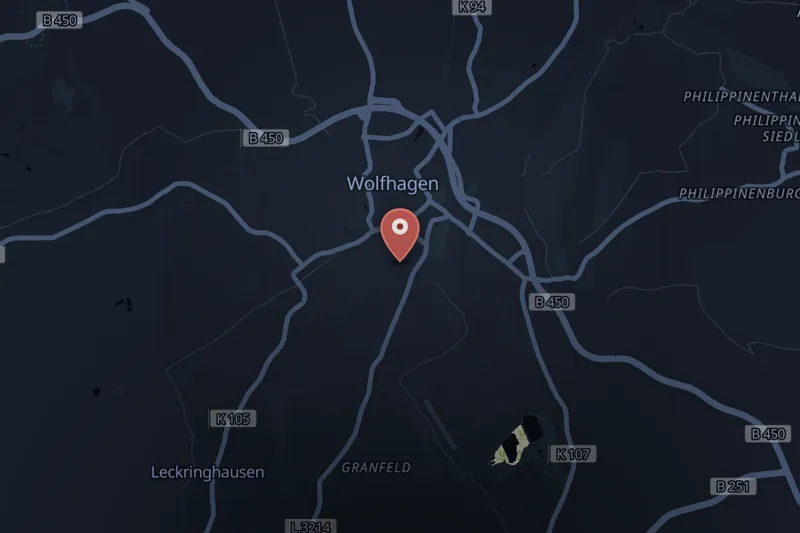
Walter Lübcke, the Regierungspräsident (regional governor) of the Kassel region in the German state of Hesse, was shot and killed at his home in Istha, a village that is part of the town of Wolfhagen, during the night of 1–2 June 2019. He was found dead on the terrace of his residence by his son a few hours after the shooting. Lübcke had been shot in the head at close range with an illegally owned Rossi .38 revolver.
Two weeks later, on 15 June 2019, 45-year-old Stephan Ernst was arrested as the prime suspect. Ernst, born in 1973 in Wiesbaden and living in eastern Kassel at the time, was a known right-wing extremist with ties to the German branch of the neo-Nazi group Combat 18, as well as to the National Democratic Party of Germany (NPD) and the Alternative for Germany (AfD). He had previously been convicted of knife and bomb attacks against targets connected to ethnic minorities in Germany, and he was further implicated in Lübcke's killing by DNA evidence.
Ernst confessed to the killing on 25 July 2019. He was formally charged with murder on 29 April 2020 and went on trial in June 2020 alongside alleged accomplice Markus Hartmann. He recanted his confession on 2 July 2020, at one point claiming that an accomplice had been the gunman before retracting that account by the time of trial. Separate investigations into two other right-wing extremists, accused of helping plan the killing with Ernst and of being present at the shooting, were opened and then suspended in 2019 and 2020, and did not result in charges.
On 28 January 2021, Ernst was convicted of murder and sentenced to life imprisonment. The court found a “special gravity” of guilt, a finding that extended his minimum term before parole eligibility to at least 22 years rather than the 15 years typically required under German law for a life sentence. Hartmann was acquitted of accessory to murder but convicted of illegal firearms possession and received a suspended sentence.
Lübcke had publicly supported the admittance of refugees to Germany and, at an October 2015 public meeting, spoke out against agitation targeting refugees by the local branch of the far-right Pegida movement. He received numerous death threats in the years that followed.
The killing prompted a broad public debate in Germany over right-wing extremism, including scrutiny of Combat 18 and related organizations, what German security authorities had known about the suspects beforehand, the alleged co-responsibility of the AfD for the political climate behind the attack, the relationship between the AfD and the mainstream Christian Democratic Union (CDU), a rise in attacks on local politicians, and the handling of hate speech on social media. The case has remained a point of reference in German political debate; in February 2025, remarks by CDU leader Friedrich Merz invoking Lübcke's murder at a campaign event drew public criticism over how they characterized a large anti-far-right rally held in Kassel after the killing.


 SOLVEDListen