
 SOLVEDListen
Duckmanton, Derbyshire, England · 2020s
Killing of Gracie Spinks
Gracie Spinks was a swimming instructor and lifeguard from Old Whittington who, at the time of her death, was working as a warehouse operative.
Before you continue
This case involves sexual violence. Casepin presents the record in neutral, non-graphic language. Choose whether to continue.
Overturned conviction · 1973
Also known as Wendy Sewell · Bakewell Cemetery murder
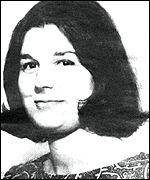 File:Wendy Sewell.jpgCredit: Unknown·Editorial use·Source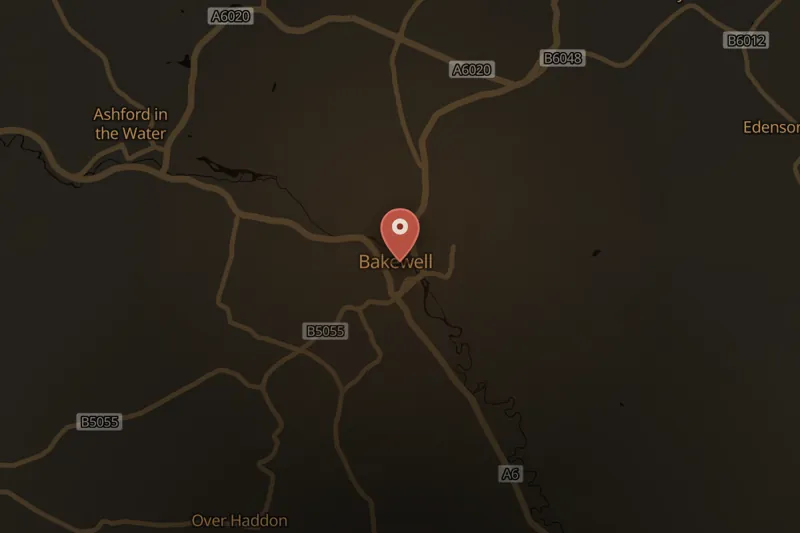
The short answer
Wendy Sewell, a 32-year-old legal secretary, was beaten and sexually assaulted in Bakewell Cemetery in September 1973 and died of her injuries two days later.
The coverage index
No one's coverage is attached to this file yet.
Know great coverage of this case?
A documentary, a podcast episode, a careful long-form video. Suggest it and an editor will review it before it appears here.
Suggest coverage for Killing of Wendy SewellThe case file
On 12 September 1973, Wendy Sewell, a 32-year-old legal secretary from Bakewell, Derbyshire, was attacked at lunchtime in Bakewell Cemetery. A witness saw her enter the cemetery at about 12:50 pm. She was struck around the head seven times with the handle of a pickaxe, suffering severe head injuries and skull fractures, and was sexually assaulted, with items of her clothing removed. She was found still conscious, fell and struck her head on a gravestone, and died two days later at Chesterfield Royal Hospital.
Stephen Downing, the 17-year-old cemetery groundskeeper who found her, was immediately suspected. He had learning difficulties and a mental age of around 11. He was questioned for hours without a caution or a solicitor present, and officers reportedly shook him and pulled his hair to keep him awake. He signed a confession, which he later retracted, claiming he had been at home at the time of the attack, though no evidence supported this. At his trial at Nottingham Crown Court in February 1974, Downing pleaded not guilty to murder but admitted sexually assaulting Sewell as she lay injured. A forensic witness testified that blood on his clothing was consistent with him being the assailant. The jury unanimously convicted him of murder after one hour's deliberation, and he was ordered to be detained indefinitely with a minimum term of seventeen years. Because he would not admit guilt, he was classified as "in denial of murder" and remained ineligible for parole. A 1974 appeal based on a new witness was rejected.
In 1994, Downing's family approached local newspaper editor Don Hale, who led a campaign highlighting breaches of procedure in the original investigation, including an independent forensic re-examination of the murder weapon that found no fingerprint evidence linking Downing to it. The case was referred to the Criminal Cases Review Commission in 1997. Downing was released on appeal in 2001 after 27 years in prison, and in January 2002 the Court of Appeal quashed his conviction, ruling that his 1973 confession was unreliable due to the manner in which it was obtained.
Derbyshire Police then conducted a reinvestigation, Operation Noble, interviewing 1,600 witnesses at an estimated cost of £500,000. Twenty-two alternative suspects raised by Hale's campaign, including Downing's father, were examined and cleared. Police stated Downing remained the only suspect who could not be eliminated, citing recordings of him allegedly confessing after his release, though he declined to be reinterviewed. An independent oversight committee concluded the reinvestigation had been conducted fairly. Hale's book on the case, Town Without Pity, was separately criticised by police for inaccuracies, though he was not charged over its contents.
Following a 2005 change to double jeopardy law permitting retrials in cases with new and compelling evidence, Derbyshire Police applied to the Crown Prosecution Service to recharge Downing, but the CPS determined the evidence was not sufficiently compelling. As of the most recent reporting, Downing has not been retried, and the case remains without a further prosecution.
16 dated entries · 1973–2022
Wendy Sewell is attacked in Bakewell Cemetery; Stephen Downing, the cemetery groundskeeper, is arrested.
Wendy Sewell dies of her injuries at Chesterfield Royal Hospital.
Stephen Downing's trial begins at the Crown Court at Nottingham.
Downing is convicted of murder by unanimous jury verdict.
Court of Appeal rejects Downing's first appeal based on new witness testimony.
Downing's family contacts Matlock Mercury editor Don Hale, who begins a campaign on his behalf.
Case referred to the Criminal Cases Review Commission.
Downing is released from Littlehey Prison after 27 years, pending appeal.
Court of Appeal quashes Downing's conviction, ruling his confession unreliable.
Derbyshire Police announce findings of Operation Noble reinvestigation; Downing remains only suspect who cannot be eliminated.
Police announce Don Hale will not be charged over content of his book.
Downing is arrested over alleged intimidation of a witness.
Double jeopardy law changes; Derbyshire Police apply to CPS to recharge Downing, but CPS declines.
Downing is convicted of wearing police clothing in public and fined.
Former detective Chris Clark alleges a suppressed pathology report links the murder to Peter Sutcliffe; Derbyshire Police dismiss the claim.
Documentary 'Yorkshire Ripper: The Secret Murders' revives claims linking the case to Peter Sutcliffe; as of July 2022 Downing has not been retried.
2 named in this file
Victims first. Every legal label is set from public records and court outcomes, not from the prose.
32-year-old legal secretary attacked and sexually assaulted in Bakewell Cemetery on 12 September 1973; died of her injuries two days later.[3]
Convicted of Sewell's murder in 1974 at age 17; conviction quashed by the Court of Appeal in 2002 after 27 years' imprisonment. Police reinvestigation stated he remained the only suspect who could not be eliminated, but he was not retried.[3]
3 cited
Coverage is not a source: every fact in this file rests on the records below.
PressBBC NewsAccessed Jul 5, 2026
PressBBC NewsAccessed Jul 5, 2026
EncyclopedicWikipediaAccessed Jul 5, 2026
Trust
Are you family of someone named in this file? Corrections and removal requests from victims’ families are prioritized.
Near this case
SOLVEDListenDuckmanton, Derbyshire, England · 2020s
Gracie Spinks was a swimming instructor and lifeguard from Old Whittington who, at the time of her death, was working as a warehouse operative.
 Credit: Buttons0603·CC BY-SA 4.0·SourceSOLVEDListen
Chandos Crescent, Killamarsh, Derbyshire · 2020s
On 18 September 2021, Damien Bendall murdered his partner Terri Harris, her two children Lacey and John-Paul Bennett, and Lacey's friend Connie Gent at a home in Killamarsh, Derbyshire, and raped Lacey as she was dying. He pleaded guilty and was given a whole-life prison term in December 2022.
 Credit: Parrot of Doom·CC BY-SA 3.0·SourceSOLVEDListen
Saddleworth Moor, Greater Manchester, England · 1960s
Between July 1963 and October 1965, Ian Brady and Myra Hindley killed five children and teenagers in and around Manchester, England, burying most victims on Saddleworth Moor; both were convicted at trial in 1966 and received life sentences.
 Credit: Santa Barbara County Sheriff’s Office·Public domain·SourceSOLVEDListen
Sacramento, California (crimes spanned multiple California counties) · 1970s
Across California between 1974 and 1986, at least 13 people were murdered in a crime series that also included more than 50 rapes, burglaries, kidnappings, and assaults. Forensic genetic genealogy identified former police officer Joseph James DeAngelo in 2018; he pleaded guilty in 2020 to murder and kidnapping charges.
 Credit: United States Air Force·Public domain·SourceSOLVEDListen
Wichita and Park City, Kansas · 1974
Dennis Rader, a Wichita-area man who worked as an ADT security installer and later a Park City compliance officer, murdered at least ten people in Wichita and Park City, Kansas, between 1974 and 1991, taunting police and media with letters as "BTK." He was identified through DNA and computer metadata and arrested in February 2005, later pleading guilty to ten counts of first-degree murder.
 Credit: Unknown author·Public domain·SourceSOLVEDListen
Hollywood, Florida (abduction site: Sears, Hollywood Mall) · 1981
Adam Walsh, a six-year-old boy, was abducted from a Hollywood, Florida department store in July 1981 and found killed weeks later; police named drifter Ottis Toole as the perpetrator and closed the case in 2008, though he died in prison in 1996 without ever being tried or convicted for it.