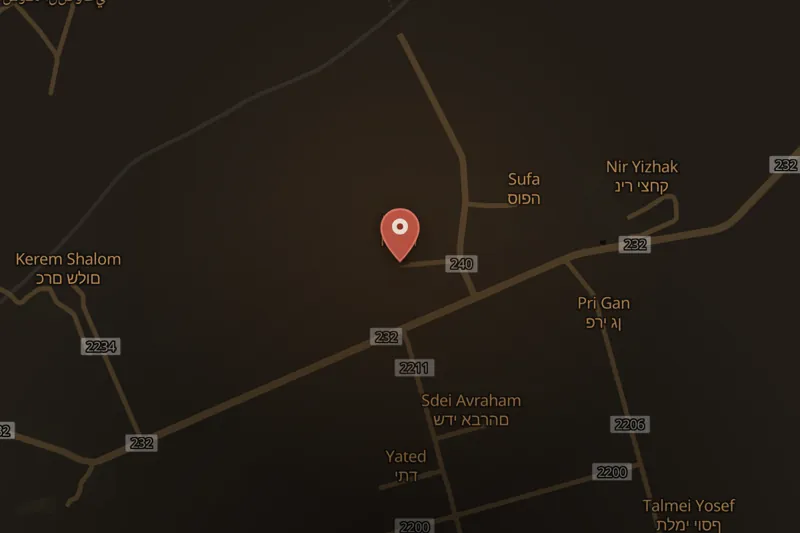
On August 12 and 13, 1949, soldiers of the Israel Defense Forces on patrol near a military outpost fifteen kilometers south of the modern town of Nirim — the site of the original Nirim kibbutz and of the Battle of Nirim, today part of Nir Yitzhak — encountered a Bedouin man and a girl estimated to be between 10 and 15 years old. The soldiers shot and killed the man and brought the girl back to their camp. She was stripped naked, forcibly washed in front of the assembled soldiers, and had her hair cut off.
That evening, commanders reportedly had the soldiers vote on whether the girl would be kept as a domestic servant or raped. The soldiers voted for rape, and she was raped. The following morning, after she protested, she was shot and killed, and her body was buried in the desert.
The case was prosecuted before a military court. Two commanders were sentenced for murder; one, a Second Lieutenant identified only as Moshe, served 15 years in prison. Seventeen soldiers received sentences ranging from one to three years for negligence or complicity in the killings. One additional soldier, who admitted guilt, was sentenced for rape. In total, twenty men were convicted across the proceedings. The judgments, comprising two cases and two subsequent appeals, were classified as secret at the time.
The case remained largely unknown to the public for decades. Records of the trials survived among papers related to the 1956 Kafr Qasim massacre, which defense attorney Yitzhak Oren donated to the archives of the law faculty of Tel Aviv University. In the 1990s, law professor Yoram Shahar uncovered the details of the Nirim affair while researching these archives. Public attention followed a 2003 investigative article in Haaretz by journalists Aviv Lavie and Moshe Gorali, who interviewed numerous eyewitnesses to the events.


 Credit: YnhockeyCC BY-SA 3.0SourceSOLVEDListen