
Case file
Qissa Khwani massacre
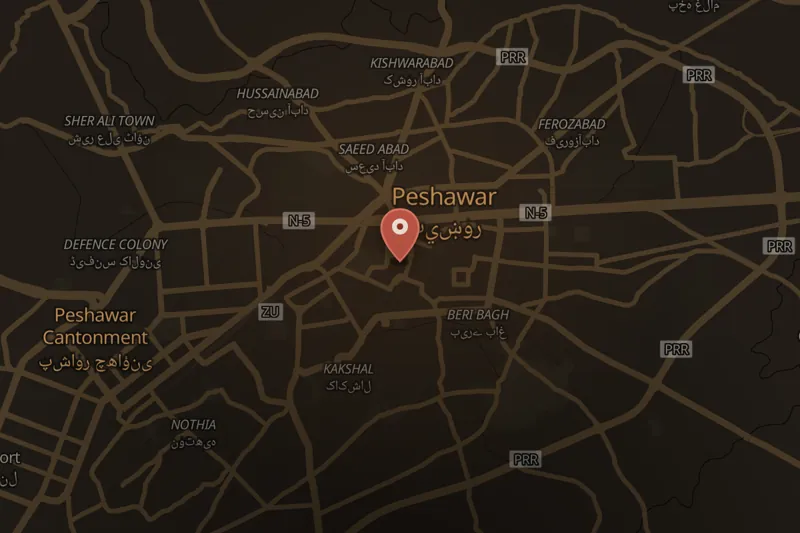
On 23 April 1930, in the Qissa Khwani Bazaar of Peshawar, North-West Frontier Province, British India (present-day Khyber Pakhtunkhwa, Pakistan), British Indian Army troops carried out an armored vehicle-ramming attack and mass shooting against unarmed civilian demonstrators. The demonstrators belonged to the Khudai Khidmatgar (Servants of God) movement, a non-violent group founded and led by Abdul Ghaffar Khan that sought the removal of British colonial rule through non-violent methods. The event is regarded as the first major confrontation between the British Indian Army and demonstrators in Peshawar tied to the Khudai Khidmatgar movement.
Earlier that day, Ghaffar Khan had been arrested following a speech in Utmanzai urging resistance to British colonial rule. Simultaneous demonstrations were being led around Peshawar by Maulana Abdur Rahim Popalzai against laws such as the Frontier Crimes Regulation. After other Khudai Khidmatgar leaders were also arrested, a large crowd gathered at the Qissa Khwani bazaar. As army troops moved in, the crowd grew loud and threw stones; a British Indian Army dispatch rider was killed and his body burned. Two armored cars then drove into the square at high speed, killing several people. According to accounts, the crowd offered to disperse if allowed to gather their dead and injured and if the army left the square; when the army refused to withdraw, the protesters remained, and officers ordered troops to open fire with machine guns on the unarmed crowd. Many in the crowd reportedly continued to advance without violence, some invoking religious phrases and holding the Qur'an as they were shot. The confrontation continued for approximately six hours.
The precise death toll remains disputed: official figures recorded 20 dead, while Pakistani and Indian nationalist sources put the toll as high as 400, with many more wounded. Two platoons of the Royal Garhwal Rifles, a British Indian Army regiment, refused to board buses intended to take them to Peshawar for anti-riot duty; the non-commissioned officers involved, including one led by Hawaldar Major Chandra Singh Garhwali, were later sentenced to prison terms of up to eight years.
The killings triggered unrest across British India and are described as having elevated the Khudai Khidmatgar movement to national prominence. The unrest prompted a legal investigation, with a case brought before Chief Justice Naimatullah Chaudhry, who personally surveyed the massacre site and published a report critical of the British Indian Army's actions; he was later knighted by King George VI. A contemporaneous report by Olaf Caroe, then secretary to the Chief Commissioner, describes arrangements made on the night of 23 April 1930 to bury casualties quickly, with the cooperation of local community figures, in order to prevent further unrest arising from funeral processions.
Key facts
- Victims
- On file
- Date
- 1930
- Location
- Qissa Khwani Bazaar, Peshawar, North-West Frontier Province, British India (present-day Khyber Pakhtunkhwa, Pakistan)
- Case status
- solved
Case timeline
1930-04-23
Abdul Ghaffar Khan is arrested in Utmanzai after a speech urging resistance to British colonial rule; other Khudai Khidmatgar leaders are also arrested; a crowd gathers at Qissa Khwani Bazaar in Peshawar.
1930-04-23
A British Indian Army dispatch rider is killed and his body burned; two armored cars drive into the crowd at high speed, killing several people; troops subsequently open machine-gun fire on the unarmed crowd, with violence continuing for about six hours.
1930
Two platoons of the Royal Garhwal Rifles refuse anti-riot duty in Peshawar; involved NCOs, including Hawaldar Major Chandra Singh Garhwali, are later sentenced to up to eight years imprisonment.
1930
A legal investigation into the killings is initiated, with the case brought before Chief Justice Naimatullah Chaudhry, who surveys the site and publishes a report criticizing the British Indian Army's actions.
Best coverage
No approved coverage links are attached yet.
People
Chandra Singh Garhwali
CONVICTEDHawaldar Major who led Royal Garhwal Rifles NCOs refusing anti-riot duty; sentenced to a term of imprisonment of up to eight years in connection with the mutiny/refusal.
Roles reflect public records and court outcomes at the time of writing — supporting citations are on file under Sources.
Places
Common questions
- What happened to the victim?
- On 23 April 1930, British Indian Army troops drove armored cars into a crowd of unarmed Khudai Khidmatgar demonstrators in Peshawar's Qissa Khwani Bazaar and then opened machine-gun fire, killing between an official count of 20 and nationalist estimates of up to 400 people.
- Where did the massacre happen?
- Qissa Khwani Bazaar, Peshawar, North-West Frontier Province, British India (present-day Khyber Pakhtunkhwa, Pakistan).
- Who was convicted?
- Chandra Singh Garhwali (Hawaldar Major who led Royal Garhwal Rifles NCOs refusing anti-riot duty; sentenced to a term of imprisonment of up to eight years in connection with the mutiny/refusal.).
- What is the current status of the case?
- Status: solved.
Related cases
View all cases
28 October 2009 Peshawar Bombing
Meena Bazar, Peshawar, Pakistan
Peshawar church bombing
All Saints Church, Peshawar, Pakistan
2018 Peshawar Suicide Bombing
Yaka Toot, Peshawar, Khyber Pakhtunkhwa, Pakistan

1933 Belfast, Maine shooting
Belfast, Maine, United States
1933 Cleveland shootings
Lorain Avenue / West 38th Street area, Cleveland, Ohio
Sources
- ENCYCLOPEDICQissa Khwani massacreWikipedia · 2026-07-07
- PRESSContemporaneous coverage — statesman.com.pkstatesman.com.pk · 2026-07-07
- PRESSContemporaneous coverage — dawn.comdawn.com · 2026-07-07
Record history
- First published
- JUL 07, 2026