
Start here
THE RADIUM GIRLS | A HISTORY SERIES

Georgia Marie's 37-minute breakdown of the whole case.
Watch on YouTubeSolved case · 1917
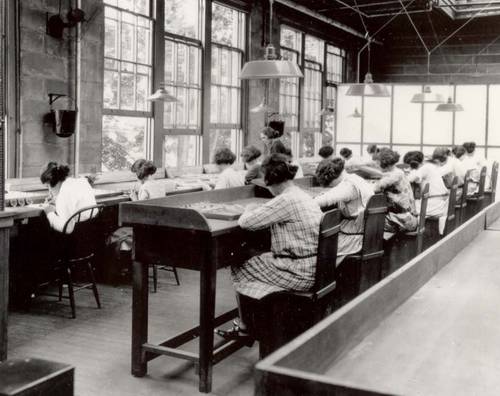 Radium dial painters (incl. Grace Fryer, Katherine Schaub, Quinta McDonald, Albina Larice, Edna Hussman)Credit: Argonne National Laboratory / Wikimedia Commons, c.1922–23Public domainSource
The short answer
Beginning in 1917, factory workers who came to be known as the Radium Girls were poisoned after being instructed to shape radium-paint brushes with their lips; the resulting illnesses, deaths, and lawsuits against the United States Radium Corporation and the Radium Dial Company reshaped U. S. occupational health and labor law.
THE RADIUM GIRLS | A HISTORY SERIESGeorgia Marie · 37 min3 pieces from 3 creators: ranked, with duplicates removed and short clips set aside.
Start here
Georgia Marie's 37-minute breakdown of the whole case.
Watch on YouTubeLittle did they know, this factory would turn TOXIC
 Bailey SarianVideo · YouTube · 1 min · 2024
Titles and descriptions are the creators’ own and may not reflect current legal status. The sourced facts are in the file below. Players load only when you press play. Suggest coverage we’re missing.
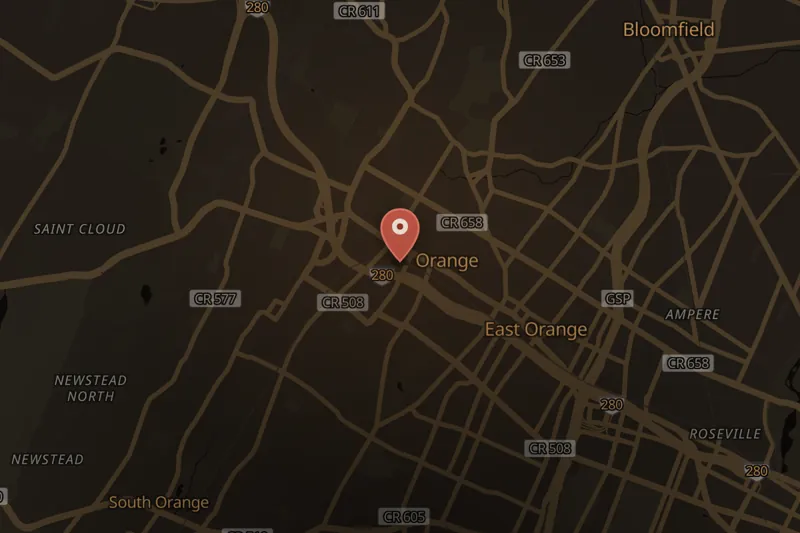
Beginning around 1917, the United States Radium Corporation (USRC) employed as many as 300 workers, mostly young women, at a factory in Orange, New Jersey, to hand-paint watch and instrument dials with self-luminous radium paint sold as "Undark." Similar operations followed at the Radium Dial Company in Ottawa, Illinois, founded in 1922, and at an unaffiliated Connecticut plant supplying the Waterbury Clock Company. Told the paint was harmless, painters were instructed to shape their brushes to a fine point with their lips and tongues — "lip, dip, paint" — because rags or water rinses slowed production; some painters also applied the paint to their nails, teeth, and faces for fun.
USRC's own chemists used lead screens, tongs, and masks around radium, and the company had circulated medical literature on radium's "injurious effects" even as painters worked unprotected. Harvard researchers who examined the Orange plant in the early 1920s found it saturated with radioactive dust; the company's president disputed that radium caused workers' illness, and a researcher's report submitted to the New Jersey Department of Labor was later found to have been altered in the company's favor. The unaltered findings were published despite a threatened lawsuit, and the labor commissioner's safety order led the factory to close.
Painters developed dental pain, loose teeth, anemia, bone fractures, and jaw necrosis — now called radium jaw — along with sterility and suppressed menstruation. The first dial painter died in 1923, her jaw reported to have fallen away from her skull beforehand; by 1924, fifty New Jersey painters were ill and a dozen had died. A 1925 cluster of similar deaths, including USRC chief chemist Dr. Edwin E. Leman and several female workers, prompted a county physician's investigation, and by 1927 more than fifty female workers were reported dead from radium poisoning. Dr. Sabin Arnold von Sochocky, the paint's inventor, died of radium poisoning in November 1928, described as its 16th known victim.
Five USRC workers — Grace Fryer, Edna Hussman, Katherine Schaub, Quinta McDonald, and Albina Larice — became known as the Radium Girls after suing the company; it took Fryer two years to find a lawyer willing to take the case. By their first court appearance in January 1928, two of the women were bedridden and none could raise an arm to take an oath. USRC denied wrongdoing but settled that autumn, before a jury could deliberate, paying each woman $10,000, a lifetime annuity, and medical and legal costs. All five were dead within the decade.
In Illinois, Radium Dial Company employees began showing poisoning symptoms in 1926 and 1927 but were told radium was safe and that the New Jersey cases involved viral infections. From 1937, five women — including Catherine Donahue, too ill to travel — pursued a claim before the Illinois Industrial Commission, which ruled in their favor in 1938; Radium Dial had since relocated to New York, and the commission would not enforce payment across state lines. The U.S. Supreme Court declined to hear Radium Dial's appeal on October 23, 1939, upholding the ruling. Donahue had died by the time the matter was finally settled.
The litigation established injured workers' right to sue employers over labor abuse and helped build modern labor safety standards; in 1949, Congress passed a law compensating workers for occupational diseases. Radium-based paint was banned in the 1960s, though the last radium-paint factory did not close until 1978. A 1951 LIFE photo-essay, spotlighting the 1949 sinus-cancer death of Florence Kohler Casler, who had joined USRC in 1917, brought the dial painters' story to wide public attention.
Radium dial-painting begins at the United States Radium Corporation's factory in Orange, New Jersey, where as many as 300 workers, mostly women, hand-paint watch and instrument dials with radium-based paint sold as "Undark."
The Radium Dial Company is established in Ottawa, Illinois, to paint clock dials for the Westclox Corporation using the same lip-pointing brush technique.
The first dial painter dies; her jaw is reported to have fallen away from her skull before her death.
Fifty women who worked at the New Jersey plant are reported ill, and a dozen have died.
A cluster of similar deaths, including United States Radium Corporation chief chemist Dr. Edwin E. Leman and several female workers, prompts an investigation by a Newark county physician.
Employees at the Radium Dial Company in Ottawa, Illinois, begin showing signs of radium poisoning.
More than 50 female factory workers are reported to have died from radium poisoning caused by the dial paint.
The five New Jersey plaintiffs make their first court appearance; two are bedridden and none can raise an arm to take an oath.
The United States Radium Corporation settles the New Jersey lawsuit before the jury deliberates, paying each of the five women $10,000, a lifetime annuity, and medical and legal costs.
Dr. Sabin Arnold von Sochocky, inventor of the radium dial paint, dies of radium poisoning, described as its 16th known victim.
Five Illinois dial painters retain an attorney to bring their case before the Illinois Industrial Commission.
The Illinois Industrial Commission rules in favor of the women, but the Radium Dial Company has since relocated to New York and the commission does not enforce payment across state lines.
The U.S. Supreme Court declines to hear the Radium Dial Company's appeal, upholding the ruling in the women's favor; Catherine Donahue has died by this point.
Congress passes a law providing compensation for workers suffering from occupational diseases; the same year, Florence Kohler Casler, who had joined the United States Radium Corporation in 1917, dies of sinus cancer.
A LIFE magazine photo-essay brings the story of the 1920s radium dial painters, including Casler's death, to wide public attention.
The last factory manufacturing radium dial paint shuts down.
Victims first. Every legal label is set from public records and court outcomes, not from the prose.
One of the five United States Radium Corporation dial painters, known as the Radium Girls, whose 1928 lawsuit against the company was settled out of court.[3]
Illinois dial painter at the Radium Dial Company; too ill to travel, her case was heard at her home before the Illinois Industrial Commission, which ruled in her favor in 1938. She died before the U.S. Supreme Court upheld that ruling in 1939.[3]
Chief chemist at the United States Radium Corporation; his 1925 death was grouped among a cluster of similar deaths that prompted a county physician's investigation into radium exposure at the plant.[3]
Inventor of the radium dial paint; died of radium poisoning in November 1928, described in sources as the 16th known victim of poisoning by radium dial paint.[3]
One of the five United States Radium Corporation dial painters, known as the Radium Girls, whose 1928 lawsuit against the company was settled out of court.[3]
Joined the United States Radium Corporation in 1917; died of sinus cancer in 1949, a death spotlighted in a 1951 LIFE magazine photo-essay about the dial painters.[3]
Dial painter at the United States Radium Corporation's Orange, New Jersey plant; took two years to find a lawyer willing to sue the company and became one of the five plaintiffs known as the Radium Girls.[3]
One of the five United States Radium Corporation dial painters, known as the Radium Girls, whose 1928 lawsuit against the company was settled out of court.[3]
One of the five United States Radium Corporation dial painters, known as the Radium Girls, whose 1928 lawsuit against the company was settled out of court.[3]
Coverage is not a source: every fact in this file rests on the records below.
Are you family of someone named in this file? Corrections and removal requests from victims’ families are prioritized.
Broad and Market Streets, Newark, New Jersey · 2000s
Sakia Gunn, a 15-year-old African American lesbian, was fatally stabbed in Newark, New Jersey, on May 11, 2003, after she and her friends rejected men's advances and identified themselves as lesbians. Richard McCullough pleaded guilty to aggravated manslaughter, aggravated assault, and bias intimidation, and was sentenced to 20 years in prison.
 Credit: SsmartinoCC BY-SA 4.0SourceUNSOLVEDListen
657 Boulevard, Westfield, New Jersey · 2010s
Starting in June 2014, an unidentified stalker calling themselves "The Watcher" sent a family multiple harassing letters about their newly purchased home in Westfield, New Jersey, referencing their children and claiming a generational connection to the house. The sender has never been identified and no charges have ever been filed.
 Credit: DjflemCC BY-SA 4.0SourceSOLVEDListen
JC Kosher Supermarket, Greenville, Jersey City, New Jersey · 2010s
On December 10, 2019, two assailants fatally shot a Jersey City police detective at a cemetery, then drove to the JC Kosher Supermarket and killed three people inside before dying in a shootout with police. Authorities described the attack as a hate crime and act of domestic terrorism motivated by antisemitism and anti-police sentiment.
 Credit: Family/Instagram photograph, widely distributed in press coverageEditorial useSourceSOLVEDListen
Moscow, Idaho · 2022
Four University of Idaho students—Madison Mogen, Kaylee Goncalves, Ethan Chapin, and Xana Kernodle—were fatally stabbed inside an off-campus house in Moscow, Idaho, in the early morning hours of November 13, 2022. Bryan Kohberger, a criminology PhD student at nearby Washington State University, was arrested that December and pleaded guilty in 2025, receiving four consecutive life sentences.
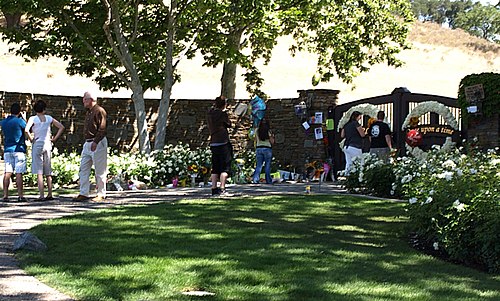 Credit: Mona EshaikerCC BY-SA 3.0SourceSOLVEDListen
Holmby Hills, Los Angeles, California · 2009
Singer Michael Jackson died on June 25, 2009, in Los Angeles from acute propofol intoxication administered by his personal physician, Conrad Murray. The Los Angeles County coroner ruled the death a homicide, and Murray was convicted of involuntary manslaughter in November 2011.
 Credit: RaptacCC BY-SA 4.0SourceSOLVEDListen
Bardstown, Kentucky · 2015
Crystal Rogers, a 35-year-old Bardstown, Kentucky, mother of five, disappeared in July 2015 and has never been found; in 2025, her former boyfriend, Brooks Houck, was found guilty of her murder, and two other men were convicted of related conspiracy and evidence-tampering charges.
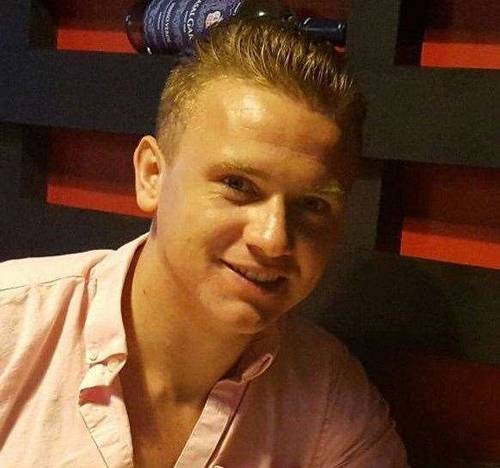 Credit: Family handout via Suffolk NewsEditorial useSourceCOLDListen
Bury St Edmunds, Suffolk, England · 2016
Royal Air Force gunner Corrie McKeague disappeared after a night out in Bury St Edmunds in September 2016, and a 2022 inquest concluded he died after climbing into a waste bin that was tipped into a bin lorry, though his remains were never found.
El Pianista trail, near Boquete, Panama · 2014
Two Dutch students, Kris Kremers and Lisanne Froon, disappeared while hiking a jungle trail in Panama in April 2014, and their remains were recovered along a riverbank months later, but no official cause of death has ever been established.

