Casepin
Back to cases

Solved case

Stockton schoolyard shooting

On January 17, 1989, 24-year-old Patrick Purdy opened fire with a semi-automatic rifle on children at Cleveland Elementary School in Stockton, California, killing five children and wounding thirty-one others before killing himself.

Oeun Lim Stockton Schoolyard Shooting New York Times January 19, 1989
Oeun Lim Stockton Schoolyard Shooting New York Times January 19, 1989 — Credit: Elementary school portrait, commissioned December 1988 by faculty at Cleveland Elementary School. · Public domain

On the morning of January 17, 1989, Patrick Edward Purdy, 24, arrived at Cleveland Elementary School in Stockton, California, in a station wagon he had rigged with a Molotov cocktail and gasoline containers. After parking at the rear of the school, he entered the grounds carrying a semi-automatic rifle with a fixed bayonet and two handguns. He set his vehicle ablaze and began firing into a playground where approximately 300 children were present. Over approximately three minutes, Purdy fired 106 rounds, moving between positions to target fleeing children, before shooting himself once in the head with a 9mm pistol. Emergency responders found him still alive at approximately 11:50 a.m., but he died shortly afterward.

Five children were killed: four of Cambodian ancestry and one of Vietnamese ancestry, all from refugee families. Thirty additional children and one teacher, who was wounded while assisting injured students, were shot but survived. More than two-thirds of the wounded were of Southeast Asian ancestry. A community mourning service was held on January 23, 1989, at the Stockton Civic Center, attended by over 2,000 people, followed by funerals conducted according to the Buddhist, Baptist, and Roman Catholic beliefs of the victims' families.

Purdy had a documented history of instability, including childhood exposure to domestic violence and parental alcohol abuse, periods of homelessness, a criminal record spanning drug offenses, robbery, and burglary, and a prior suicide attempt while in custody in 1987. He had purchased the rifle used in the attack in Oregon in August 1988 and a handgun from a Stockton pawn shop in December 1988. In the weeks before the shooting, he was reported to have made statements expressing resentment toward Southeast Asian immigrants, and his vehicle had reportedly been seen near several Stockton schools with high Southeast Asian enrollment prior to the attack. An official report concluded that Purdy had decided to end his life by mid-December 1988 and had spent weeks preparing for an attack intended to draw attention to himself, with racial prejudice considered a likely major factor in his choice of target, which was a school he had himself attended as a child.

The shooting prompted national debate over regulation of semi-automatic and assault weapons. On May 24, 1989, California enacted the Roberti–Roos Assault Weapons Control Act, becoming the first U.S. state to prohibit ownership and transfer of numerous specified assault weapon models. The school reopened the day after the shooting with counselors present, and survivors later founded Cleveland School Remembers, a nonprofit focused on reducing gun violence and supporting survivors, which remains active.

Key facts

Victims
Robert Young, Janet Geng, Oeun Lim, Rathanar Or, Thuy Tran, Sokhim An, Ram Chun
Date
1989
Location
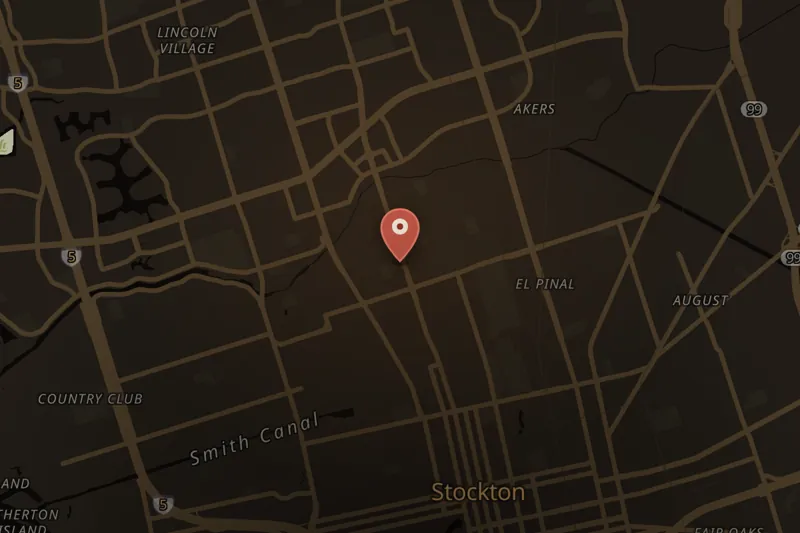
Cleveland Elementary School, Stockton, California
Case status
solved

Case timeline

  1. 1989-01-17

    Patrick Purdy opens fire on children at Cleveland Elementary School in Stockton, California, killing five children and wounding thirty-one others before killing himself.

  2. 1989-01-18

    Cleveland Elementary School reopens with counselors on-site; most staff return to their posts.

  3. 1989-01-19

    674 of the school's 970 pupils return to Cleveland Elementary School.

  4. 1989-01-21

    Victim Thuy Tran is laid to rest in a Christian burial following a Roman Catholic Mass.

  5. 1989-01-23

    A two-hour multifaith community mourning service is held at the Stockton Civic Center, attended by over 2,000 mourners, followed by funerals for four of the five children.

  6. 1989-02-07

    Michael Jackson visits the school to meet with children and staff affected by the shooting.

  7. 1989-05-24

    California signs the Roberti–Roos Assault Weapons Control Act of 1989 into law.

Best coverage

No coverage has been attached to this file yet.

People

  • Robert Young

    VICTIM

    6-year-old child wounded in the initial gunfire; survived his injuries.

  • Janet Geng

    VICTIM

    Second-grade teacher wounded in the upper leg while assisting injured children; the sole adult wounded in the shooting.

  • Oeun Lim

    VICTIM

    Child killed in the shooting; Buddhist funeral service held.

  • Rathanar Or

    VICTIM

    Child killed in the shooting; died after being brought into a classroom.

  • Patrick Edward Purdy

    CONVICTED

    Perpetrator of the shooting; died by suicide at the scene and was never formally charged or tried, but is identified as the shooter in the official investigative report.

  • Thuy Tran

    VICTIM

    Child killed in the shooting; Roman Catholic funeral held on January 21, 1989.

  • Sokhim An

    VICTIM

    Child killed in the shooting; Baptist funeral service held.

  • Ram Chun

    VICTIM

    Child killed in the shooting; died after being brought into a classroom.

Roles reflect public records and court outcomes at the time of writing — supporting citations are on file under Sources.

Archival records

  • Monique Lopez Margo Lopez Stockton schoolyard shooting New York Daily News 18 January 1989A

    archival location

    Monique Lopez Margo Lopez Stockton schoolyard shooting New York Daily News 18 January 1989A

    Credit: Press photographer Rich Pedroncelli · Public domain · Source

  • Oeun Lim Stockton Schoolyard Shooting New York Times January 19, 1989

    portrait victim

    Oeun Lim Stockton Schoolyard Shooting New York Times January 19, 1989

    Credit: Elementary school portrait, commissioned December 1988 by faculty at Cleveland Elementary School. · Public domain · Source

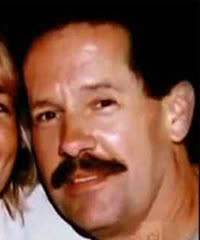
  • Patrick Purdy Stockton Schoolyard Shooting Delaware County Daily Times January 18, 1989

    archival location

    Patrick Purdy Stockton Schoolyard Shooting Delaware County Daily Times January 18, 1989

    Credit: Walter Zeboski · Public domain · Source

  • Patrick Purdy Stockton Schoolyard Shooting New York Times January 19 1989

    mugshot

    Patrick Purdy Stockton Schoolyard Shooting New York Times January 19 1989

    Credit: L.A. County Sheriff’s Dept · Public domain · Source

  • Stockton Schoolyard Shooting Diagram Cynthia Greer Allegheny Times May 1, 1989

    other document

    Stockton Schoolyard Shooting Diagram Cynthia Greer Allegheny Times May 1, 1989

    Credit: Cynthia Greer · Public domain · Source

  • Stockton Schoolyard Shootings El Paso Times 22 January 22, 1989

    portrait victim

    Stockton Schoolyard Shootings El Paso Times 22 January 22, 1989

    Credit: Elementary school portraits, commissioned by the elementary school attended by the deceased · Public domain · Source

Places

Common questions

What happened to the victim?
On January 17, 1989, 24-year-old Patrick Purdy opened fire with a semi-automatic rifle on children at Cleveland Elementary School in Stockton, California, killing five children and wounding thirty-one others before killing himself.
Where did the shooting happen?
Cleveland Elementary School, Stockton, California.
Who was convicted?
Patrick Edward Purdy (Perpetrator of the shooting; died by suicide at the scene and was never formally charged or tried, but is identified as the shooter in the official investigative report.).
What is the current status of the case?
Status: solved.

Sources

  1. ENCYCLOPEDICStockton schoolyard shootingWikipedia · 2026-07-07
  2. PRESSContemporaneous coverage — The New York TimesThe New York Times · 2026-07-07
  3. PRESSContemporaneous coverage — Los Angeles TimesLos Angeles Times · 2026-07-07

Record history

First published
JUL 07, 2026

When a file you follow changes — a new development, a correction, fresh coverage — the Dispatch is how you hear about it.

The Casepin Dispatch

A calm weekly briefing from the archive — one case worth understanding, meaningful updates to files you follow, and the best new coverage. You’ll also get the one-time note when the apps land. No gore, no rumor, no drip.