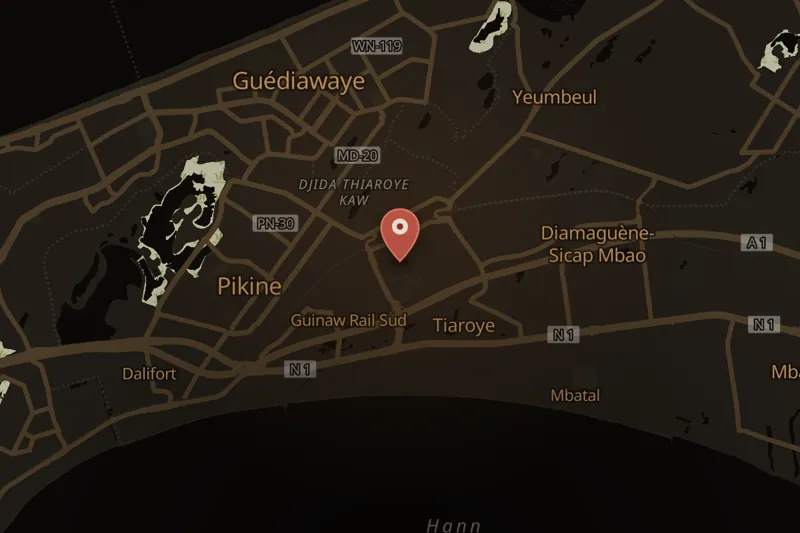
On the morning of 1 December 1944, French Army forces killed a number of black African soldiers of the Tirailleurs Sénégalais at the Thiaroye military camp near Dakar, French Senegal. The victims were veterans of the 1940 Battle of France who had recently been liberated from German prisoner-of-war camps in Europe and repatriated to French West Africa. Estimates of the death toll vary widely, with figures ranging from 35 to as high as 300 killed, according to different official reports and later veteran testimony.
The soldiers had been held in Frontstalags in France rather than in Germany during their captivity, reportedly due to German policy concerns, and were liberated following the Allied landings in Normandy in June 1944. After repatriation, discontent grew among the former prisoners over delays, unpaid demobilization benefits, and disputes over currency exchange rates and back pay. A group that refused to leave Thiaroye camp on 25 November 1944 was later declared to be in "open mutiny" by Brigadier General Marcel Dagnan after a hostile visit on 28 November.
On 1 December, three companies of Senegalese Tirailleurs regiments, backed by gendarmerie, colonial artillery, and an M3 Stuart tank, entered the camp. Official reports describe an escalating sequence of events—a disarmed knife-wielder, an inconclusive gunshot, and finally a fusillade around 9:30 a.m. that lasted under a minute but killed and wounded dozens. Official French reports at the time cited a death toll of approximately 24 to 70, while declassified military documents and testimony—including from lieutenant colonel Jean Le Berre—suggest the killings may have been planned in advance and that most or all victims were unarmed.
In the aftermath, the French war ministry issued a circulaire on 4 December 1944 falsely claiming that all repatriated prisoners had already received full pay. In 1945, 34 men identified as instigators were tried and sentenced to one to ten years in prison; they were later pardoned during a 1947 visit by French President Vincent Auriol but were not exonerated, and widows of the dead were denied standard veteran pensions.
The massacre has received limited attention in French education and public memory. A 1988 Senegalese film about the events, Camp de Thiaroye, was banned in France and censored in Senegal. In 2014, French President François Hollande described the event as a "bloody repression," and in 2024 President Emmanuel Macron called it a "massacre" in a letter to Senegal's president. In July 2024, France's National Office of Combatants and War Victims declared six victims "dead for France." In June 2025, a legal complaint was filed against France over alleged concealment of remains and historical records.


 ONGOINGListen

