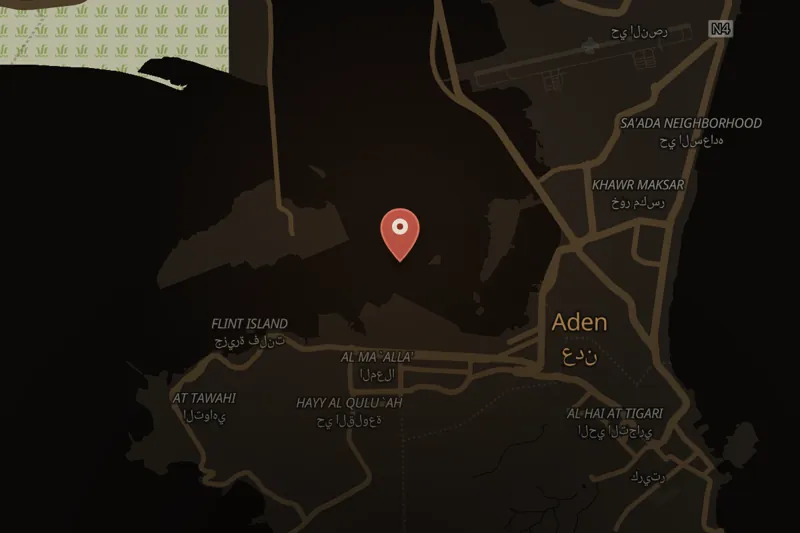
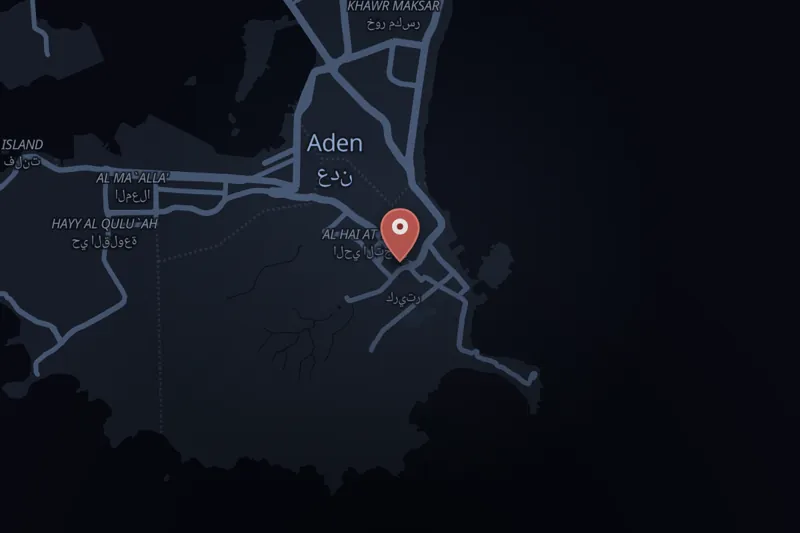
On the morning of 12 October 2000, the guided-missile destroyer USS Cole, commanded by Commander Kirk Lippold, docked in Aden harbor, Yemen, for a routine refueling stop. Around 11:18 local time, a small fiberglass boat carrying more than 1,000 pounds of C4 explosives and two suicide bombers approached the port side of the ship and detonated, tearing a 40-by-60-foot gash in the hull. The blast struck a mechanical space beneath the ship's galley, killing crew members who were lining up for lunch. Seventeen U.S. Navy sailors were killed and 37 were injured. It was the deadliest attack on a U.S. naval vessel since the 1987 USS Stark incident.
The attack was organized and directed by al-Qaeda, following a failed attempt against USS The Sullivans in the same harbor in January 2000. Planning was discussed at a January 2000 al-Qaeda summit in Kuala Lumpur attended by future September 11 hijacker Khalid al-Mihdhar, who Yemeni Prime Minister Abdul Karim al-Iryani later said was a key planner present in Yemen at the time of the bombing.
The British frigate HMS Marlborough was first to assist, and injured sailors were evacuated to a French military hospital in Djibouti and then to Landstuhl Regional Medical Center in Germany. U.S. Air Force and Marine forces arrived within hours to secure the ship. Cole was later transported to the United States aboard the heavy-lift ship MV Blue Marlin and arrived in Pascagoula, Mississippi, on 13 December 2000 for repairs.
FBI and NCIS investigators faced a hostile environment in Yemen, including armed guards, threats, and a CCTV recording of the incident with the moment of the explosion deleted.
Several individuals have been identified in different accounts as masterminds or key organizers of the attack, including Abd al-Rahim al-Nashiri, Abu Ali al-Harithi, Jamal Ahmad Mohammad Al Badawi, Fahd al-Quso, and Tawfiq bin Attash. Al-Nashiri, held at Guantanamo Bay, was charged by U.S. military authorities in 2008 with organizing and directing the bombing, with prosecutors indicating they would seek the death penalty; charges were later dropped without prejudice in 2009. A Yemeni court in 2004 sentenced al-Nashiri and Jamal al-Badawi to death in absentia/in custody for their roles. Al-Badawi escaped Yemeni custody multiple times and was killed in a U.S. drone strike on 1 January 2019. Al-Harithi was killed in a 2002 U.S. drone strike, and al-Quso was killed in a 2012 U.S. airstrike.
U.S. federal courts subsequently found the governments of Sudan (2007) and later Iran (2015) civilly liable for supporting the attack, resulting in various financial judgments to victims' families. In October 2020, Sudan and the United States signed a bilateral claims agreement, under which Sudan agreed to pay $335 million in compensation related to the Cole bombing and the 1998 U.S. embassy bombings in Kenya and Tanzania; the agreement took effect in February 2021. A separate $314 million default judgment against Sudan was later vacated by the U.S. Supreme Court in Republic of Sudan v. Harrison (2019).
A memorial to the 17 sailors was dedicated at Norfolk Naval Station, Virginia, on 12 October 2001.


 SOLVEDListen


