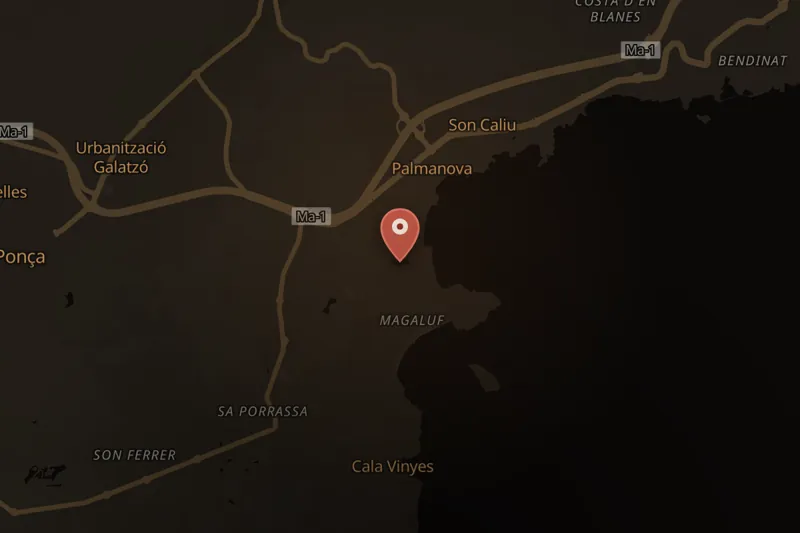
On 30 July 2009, a limpet bomb detonated outside a Civil Guard barracks in the resort town of Palma Nova, on the Spanish island of Majorca. The device, weighing about 3 kilograms, had been placed under a Civil Guard Nissan Patrol parked on Na Boira street, in front of a government-owned building that served as a post office and barracks. It exploded at 13:50, killing two officers, Carlos Sáenz de Tejada García and Diego Salvá Lezaun, who were both inside the vehicle. One officer died instantly and paramedics were unable to resuscitate the other. Because many hotels stand nearby, numerous foreign tourists, mainly German and British, witnessed the blast.
After the explosion, the Civil Guard ordered searches of every barracks on the island. A detection dog located a second bomb attached to another Civil Guard Nissan Patrol parked about one kilometre away. The area was cordoned off and nearby homes and hotels were evacuated; at 18:30, Civil Guard TEDAX bomb-disposal officers carried out a controlled explosion. That second device had been placed on a broken-down vehicle that was not in use.
The attack came during a renewed campaign of violence by ETA, the Basque nationalist and separatist organisation, which had abandoned a 2006 ceasefire and resumed attacks across Spain from 2007. In the preceding weeks, ETA killed a police inspector in Arrigorriaga on 19 June 2009, bombed a Socialist Workers' Party office in Durango on 9 July, and detonated a van loaded with explosives outside a Civil Guard barracks in Burgos on 29 July, injuring 70 people. Palma Nova was ETA's first fatal attack on Majorca and came on the eve of the 50th anniversary of the group's founding, days before the King's annual visit to the island.
A funeral was held on 31 July at the Cathedral of Santa Maria in Palma, attended by Prime Minister José Luis Rodríguez Zapatero and other senior officials, with at least 2,000 people gathered outside and a nationwide minute of silence. Authorities launched Operation Cage (Operación Jaula), described as the largest manhunt in the island's history, setting up checkpoints and temporarily closing the Palma de Mallorca Airport and all ports.
On 9 August 2009, ETA claimed responsibility for the barracks attack. The same day, four small bombs exploded at three restaurants and a shopping centre in Palma after warning calls, causing damage but no injuries. Investigators concluded that the attackers had probably travelled to the island specifically for the operation and may have left before the devices detonated, using timers. In the following months, Spanish and French police arrested several ETA members tied to the group's logistics and explosives network, though the source notes that no direct evidence had linked the initially publicised suspects to the Palma Nova attack.

 Credit: Oliver MarkCC BY-SA 4.0SourceSOLVEDListen


