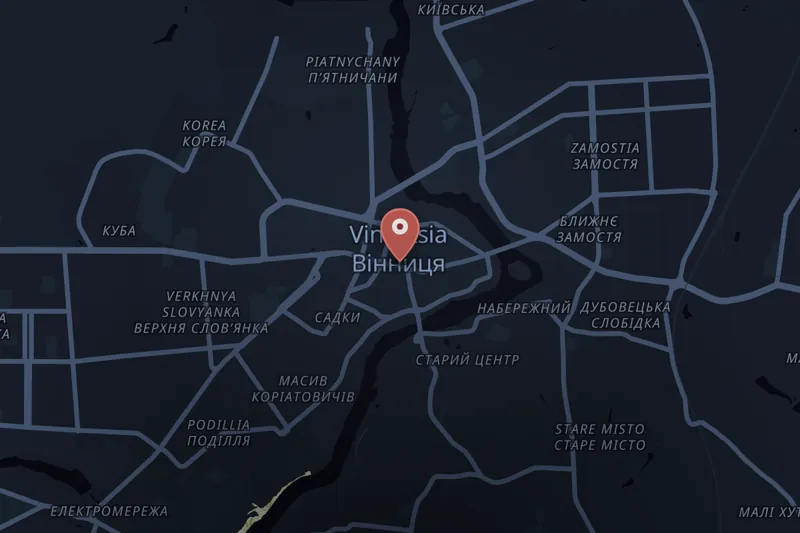
The Vinnytsia massacre refers to the mass execution of more than 9,000 people in the Ukrainian town of Vinnytsia, carried out by the Soviet secret police (NKVD) during the Great Purge of 1937–1938. The killings were clandestine: victims' families were never informed of their fate, and personal belongings, identification documents, and trial records were deliberately buried separately from the bodies rather than preserved.
Forensic examination of the exhumed remains found that most victims were killed with .22 calibre bullets fired into the back of the neck. Because of the small calibre used, most victims were shot twice, and at least 78 were shot three times. Traces of blunt trauma were found on 395 skulls in addition to gunshot wounds. Nearly all male victims had their hands bound; older women were found clothed, while younger female victims were buried naked.
The site was discovered by Nazi Germany during its occupation of Ukraine, with excavations beginning in May 1943 at three locations in Vinnytsia: a fruit orchard, the central cemetery, and the People's Park. The fruit orchard yielded the largest number of remains, 5,644 bodies. In total, 91 mass graves were found across the three sites and 9,432 bodies were exhumed, of which 149 were women; excavation at the People's Park site was not completed, and additional bodies were believed to remain there.
Initial examinations were conducted by a team led by Professor Gerhard Schrader of the University of Halle-Wittenberg, along with local and regional pathologists. Subsequently, two additional forensic teams were brought in: one composed of 13 experts from universities across Nazi Germany and allied or occupied European states, and an international commission of forensic and anatomical experts representing 11 countries. This international group visited the mass graves between 13 and 15 July 1943, and the German commission's report was completed on 29 July 1943. Both commissions concluded that nearly all victims had been executed by two shots to the back of the head sometime between 1937 and 1938.
Of the bodies recovered, 468 were identified by residents of Vinnytsia and the surrounding area, while another 202 were identified through documents and other evidence recovered from the graves. Most identified victims were Ukrainian; 28 were identified as ethnic Poles, and some were identified as Russians.
Nazi Germany publicized the findings as part of its propaganda campaign against the Soviet Union, drawing comparisons to the contemporaneous discovery of the Katyn massacre of Polish prisoners of war. Most of the bodies were reburied following a religious service led by a metropolitan of the Orthodox Church. A temporary obelisk commemorating "Victims of Stalinism" was erected near the site, but after Soviet forces retook Vinnytsia in March 1944, the monument was rededicated to "victims of fascism" before ultimately being removed and replaced with a park. Within the Soviet Union, information about the massacre was suppressed; it was researched and disseminated abroad primarily by the Ukrainian diaspora until it re-emerged as a topic of open discussion in Ukraine in 1988. A new monument referring to "Victims of Totalitarianism" has since been constructed at the site.