Casepin
Back to cases

Case file

1862 Mankato mass execution

SOLVED1862Mankato, Minnesota, United States3 SOURCESUPDATED JUL 2026

Documents violence · ongoing investigation — written to inform, not to shock.

Illustrative

Background

The 1862 Dakota War in southern Minnesota resulted in the deaths of 358 American settlers, 77 soldiers, and 36 volunteer militia and armed civilians. Dakota men attacked over 500 white settlers and took hundreds of hostages, mostly women and children, causing thousands to flee. The total number of Dakota casualties is unknown, though 150 Dakota men died in battle. Approximately 2,000 Dakota surrendered or were taken into custody at Fort Snelling, including at least 1,658 non-combatants and those who had opposed the war.

Trials

On September 27, 1862, Colonel Henry Hastings Sibley ordered a military commission to try Dakota men. A year later, the judge advocate general found Sibley lacked authority to convene the trials and had violated Article 65 of the Articles of War, but by then the executions had already taken place. The roughly 400 trials, held between September 28 and November 3, 1862, were conducted without defense attorneys or explanation of proceedings to defendants, some lasting less than five minutes, in an atmosphere of open racist hostility. The commission tried 392 Dakota men and, by November 7, sentenced 307 to death for murder and rape. Sibley confirmed all but four of these sentences.

Presidential review

President Abraham Lincoln reviewed the trial records with two White House lawyers, distinguishing men convicted of participating in massacres from those who fought in battles. Minnesota officials, including General John Pope, Senator Morton S. Wilkinson, and Governor Alexander Ramsey, pressed Lincoln for harsher punishment, warning of "private revenge" if all were not executed. Bishop Henry Benjamin Whipple urged leniency. On December 11, 1862, Lincoln informed the Senate he had ordered 39 executions, commuting the remaining 264 sentences. On December 23, Lincoln suspended the execution of Tatemima (Round Wind) after Sibley raised doubts about his guilt, reducing the number to 38.

Execution and aftermath

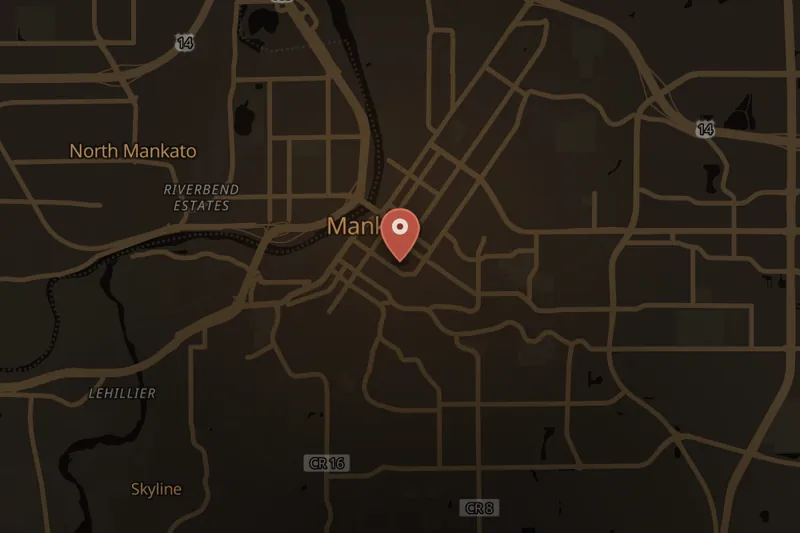
On December 26, 1862, the 38 men were hanged simultaneously on a specially built gallows in Mankato, guarded by 2,000 troops due to hostility from the roughly 4,000 spectators. The bodies were buried en masse in a sandbar of the Minnesota River but were exhumed overnight and distributed among doctors for anatomical study, a practice common at the time. Physician William Worrall Mayo obtained the body of Maȟpiya Akan Nažiŋ ("Cut Nose"), dissected it, and kept the cleaned skeleton in his home office. In 1998, the Mayo Clinic returned identifiable remains to a Dakota tribe under the Native American Graves Protection and Repatriation Act and created a scholarship for a Native American student. Separately, Dakota leaders Little Six and Medicine Bottle, who had fled to the Red River Colony, were later captured, tried, and hanged at Fort Snelling in November 1865. A 1912 monument to the hangings was removed in 1971 amid protests; memorial events continue today.

Key facts

Victims
Maȟpiya Akan Nažiŋ (Cut Nose)
Date
1862
Location
Mankato, Minnesota, United States
Case status
solved

Case timeline

  1. 1862-09-27

    Colonel Henry Hastings Sibley orders creation of a military commission to try Dakota men.

  2. 1862-09-28

    Military commission trials of Dakota men begin.

  3. 1862-11-03

    Trials conclude; military commission has tried 392 Dakota men.

  4. 1862-11-07

    Military commission announces 307 Dakota prisoners sentenced to death; Sibley confirms all but four sentences.

  5. 1862-11-10

    Maj. Gen. John Pope informs President Lincoln of the sentences by telegraph.

  6. 1862-12-11

    Lincoln addresses the Senate, announcing he has ordered 39 executions and commuted 264 sentences.

  7. 1862-12-23

    Lincoln suspends the execution of Tatemima (Round Wind), reducing the number condemned to 38.

  8. 1862-12-26

    38 Dakota men are publicly hanged in Mankato, Minnesota, guarded by 2,000 troops.

  9. 1864-01

    Little Six and Medicine Bottle are captured near Fort Pembina after fleeing to the Red River Colony.

  10. 1865-11

    Little Six and Medicine Bottle are tried and hanged at Fort Snelling.

  11. 1912

    A monument to the hangings is erected.

  12. 1971

    The 1912 monument is removed amid protests.

  13. 1998

    Mayo Clinic returns identifiable Dakota remains, including those of Maȟpiya Akan Nažiŋ, for reburial under the Native American Graves Protection and Repatriation Act.

Best coverage

No approved coverage links are attached yet.

People

  • Tatemima (Round Wind)

    CONVICTED

    Sentenced to death by the military commission; execution suspended by Lincoln on December 23, 1862, after doubts were raised about his guilt.

  • Little Six

    CONVICTED

    Dakota leader who fled to the Red River Colony, was later captured, tried, and hanged at Fort Snelling in November 1865.

  • Medicine Bottle

    CONVICTED

    Dakota leader who fled to the Red River Colony, was later captured, tried, and hanged at Fort Snelling in November 1865.

  • Maȟpiya Akan Nažiŋ (Cut Nose)

    VICTIM

    One of the 38 Dakota men executed on December 26, 1862; his body was later obtained by physician William Worrall Mayo for dissection.

  • Henry Hastings Sibley

    LAW ENFORCEMENT

    Colonel who ordered the creation of the military commission and confirmed most death sentences.

  • Abraham Lincoln

    LAW ENFORCEMENT

    President who reviewed the trial records, commuted 264 sentences, and approved 39 executions (later reduced to 38).

  • Edwin A. C. Hatch

    LAW ENFORCEMENT

    Major who led Hatch's Independent Battalion of Cavalry in the arrest of Little Six and Medicine Bottle at Fort Pembina.

Roles reflect public records and court outcomes at the time of writing — supporting citations are on file under Sources.

Places

Common questions

What happened to the victim?
On December 26, 1862, the U.S. government executed 38 Dakota men by hanging in Mankato, Minnesota, following rushed military commission trials after the Dakota War of 1862, in what remains the largest single-day mass execution in American history.
Where did the crime happen?
Mankato, Minnesota, United States.
Who was convicted?
Tatemima (Round Wind) (Sentenced to death by the military commission; execution suspended by Lincoln on December 23, 1862, after doubts were raised about his guilt.), Little Six (Dakota leader who fled to the Red River Colony, was later captured, tried, and hanged at Fort Snelling in November 1865.), and Medicine Bottle (Dakota leader who fled to the Red River Colony, was later captured, tried, and hanged at Fort Snelling in November 1865.).
What is the current status of the case?
Status: solved. Last verified July 2026.

Sources

  1. 1862 Mankato mass executionwikipedia · Wikipedia · 2026-07-07
  2. Contemporaneous coverage — nps.govnews · nps.gov · 2026-07-07
  3. Contemporaneous coverage — The New York Timesnews · The New York Times · 2026-07-07

Last verified JUL 2026