
 SOLVEDListen
New Florence, Missouri · 2010s
Murder of Ben Renick
Ben Renick was killed at his Missouri reptile-breeding facility on June 8, 2017; Lynlee Renick and Michael Humphrey were convicted in separate proceedings.
1 thing to watch or hear
Before you continue
This case involves sexual violence. Casepin presents the record in neutral, non-graphic language. Choose whether to continue.

The short answer
On October 18, 1862, ten Confederate prisoners of war held in Palmyra and Hannibal, Missouri, were executed by a Union firing squad in reprisal for the disappearance of Union supporter Andrew Alsman, none of whom had any connection to his disappearance.
The coverage index
No one's coverage is attached to this file yet.
Know great coverage of this case?
A documentary, a podcast episode, a careful long-form video. Suggest it and an editor will review it before it appears here.
Suggest coverage for Palmyra massacreThe case file
The Palmyra massacre took place in Palmyra, Missouri, on October 18, 1862, during the American Civil War. Ten Confederate prisoners of war were executed by a Union firing squad in reprisal for the abduction and disappearance of Andrew Alsman, a local Union supporter. The execution was ordered by Colonel John McNeil, who was afterward known by opponents as the "Butcher of Palmyra." McNeil later left the army in 1865 after receiving a brevet promotion to Major General of Volunteers in recognition of his service to the Union.
Andrew Alsman was a sixty-year-old carpenter and a Union patriot in a predominantly pro-Confederate area, described by a Union source as a respected man who assisted Union forces in identifying local Confederate sympathizers. He was taken prisoner by Confederate Colonel Joseph C. Porter's forces during a raid on Palmyra on September 12, 1862. After Porter's forces decided Alsman was a liability, he was released and allowed to choose an escort back toward Palmyra or Union lines. He was never seen again, and speculation held that he was taken into nearby woods and killed, though most writers have concluded he was likely the victim of personal enemies among Porter's men rather than of an organized Confederate action.
On October 8, 1862, Provost Marshal William R. Strachan, acting on behalf of Colonel McNeil, published a notice threatening that unless Alsman was returned within ten days, ten of Porter's men held prisoner in Palmyra and Hannibal would be executed. Porter may never have seen the notice and, in any case, had no ability to produce Alsman. On the evening of October 17, ten prisoners were selected — five from the jail in Hannibal and five from the jail in Palmyra — none of whom had any connection with Alsman's disappearance. One selected prisoner, Willis Baker, was held because his sons were reported to be riding with Porter and because he was reported to have killed a Union neighbor the previous year. All ten men were executed on October 18, 1862, by a firing squad of thirty soldiers from the Second Missouri State Militia.
In the aftermath, it was alleged that Strachan spared one intended victim, William Thomas Humphrey of Lewis County, in exchange for $500 paid by Humphrey's wife, and that Strachan also violated Mrs. Humphrey's chastity. In 1864, Strachan was tried for the rape of Mrs. Humphrey and other offenses, including misuse of funds; he was found not guilty of rape but guilty of embezzlement and sentenced to prison, before being released by General William Starke Rosecrans on grounds of persecution and an unfair trial.
A skull believed by some to be Alsman's surfaced along Troublesome Creek in 1877 and passed through several private owners before reportedly being returned to one of Alsman's daughters for burial. A granite monument listing the ten executed men was erected in Palmyra in 1907 and stands outside the Palmyra courthouse. The Marion County Jail and Jailor's House associated with the case was added to the National Register of Historic Places in 2002.
10 dated entries · 1862–2002
Confederate Colonel Joseph C. Porter's forces raid Palmyra and take Andrew Alsman prisoner.
Alsman reportedly observed alive near Troublesome Creek in the company of two Confederate guerrillas, per a later 1994 newspaper column.
Provost Marshal William R. Strachan publishes a notice threatening execution of ten Confederate prisoners unless Alsman is returned within ten days.
Ten Confederate prisoners are selected from jails in Hannibal and Palmyra for execution.
Ten Confederate prisoners of war are executed by a Union firing squad in Palmyra, Missouri.
William R. Strachan is tried for the rape of Mrs. Humphrey and other offenses including embezzlement; found not guilty of rape but guilty of embezzlement.
Colonel John McNeil leaves the army after receiving a brevet promotion to Major General of Volunteers.
A farmer finds a skull near Troublesome Creek believed by some to be that of Andrew Alsman.
The Palmyra Confederate Monument Association erects a granite monument in Palmyra listing the names of the ten executed men.
The Marion County Jail and Jailor's House is added to the National Register of Historic Places.
14 named in this file
Victims first. Every legal label is set from public records and court outcomes, not from the prose.
Union supporter who disappeared after being released by Confederate forces; his disappearance was cited as the pretext for the execution of ten Confederate prisoners.[3]
Prisoner executed October 18, 1862, in reprisal for Alsman's disappearance.[3]
Prisoner executed October 18, 1862, in reprisal for Alsman's disappearance.[3]
Prisoner executed October 18, 1862, in reprisal for Alsman's disappearance.[3]
Prisoner executed October 18, 1862, chosen as a substitute for William Thomas Humphrey.[3]
Prisoner executed October 18, 1862, in reprisal for Alsman's disappearance.[3]
Prisoner executed October 18, 1862, in reprisal for Alsman's disappearance.[3]
Prisoner executed October 18, 1862, in reprisal for Alsman's disappearance.[3]
Confederate prisoner of war executed October 18, 1862, in reprisal for Alsman's disappearance.[3]
Prisoner executed October 18, 1862, in reprisal for Alsman's disappearance.[3]
Confederate-associated prisoner executed October 18, 1862; held in the Palmyra jail reportedly because his sons rode with Colonel Porter.[3]
Provost Marshal who issued the execution ultimatum; in 1864 tried for rape and other offenses, found not guilty of rape but guilty of embezzlement and sentenced to prison, later released.[3]
Union colonel who ordered the execution of the ten prisoners; later known as the "Butcher of Palmyra"; not shown to have been criminally charged.[3]
Confederate colonel whose forces took Alsman prisoner and later released him; not shown to have been criminally charged in connection with the massacre.[3]
From the record
3 cited
Coverage is not a source: every fact in this file rests on the records below.
Official / agencyMissouri Secretary of StateAccessed Jul 11, 2026
Official / agencynpgallery.nps.govAccessed Jul 10, 2026
EncyclopedicWikipediaAccessed Jul 10, 2026
Trust
Are you family of someone named in this file? Corrections and removal requests from victims’ families are prioritized.
Near this case
SOLVEDListenNew Florence, Missouri · 2010s
Ben Renick was killed at his Missouri reptile-breeding facility on June 8, 2017; Lynlee Renick and Michael Humphrey were convicted in separate proceedings.
 ONGOINGListen
Troy, Missouri · 2010s
Betsy Faria was killed in her Troy, Missouri, home on December 27, 2011; her husband was later acquitted, and Pam Hupp remains charged and not guilty in a pending murder prosecution.
 UNSOLVEDListen
Fountain N' Lakes, Missouri · 1990s
Charles Arlin Henderson, 11, vanished after leaving his home in Fountain N' Lakes, Missouri, on a bicycle on July 25, 1991. His bike was found months later in a nearby field, but he has never been located and the case remains unsolved.
 Credit: Photographed by Upton or Whiting, although the carte lacks a studio imprint·Public domain·SourceSOLVEDListen
Mankato, Minnesota, United States · 1862
On December 26, 1862, the U.S. government executed 38 Dakota men by hanging in Mankato, Minnesota, following rushed military commission trials after the Dakota War of 1862, in what remains the largest single-day mass execution in American history.
 Credit: Family/Instagram photograph, widely distributed in press coverage·Editorial use·SourceSOLVEDListen
Moscow, Idaho · 2022
Four University of Idaho students—Madison Mogen, Kaylee Goncalves, Ethan Chapin, and Xana Kernodle—were fatally stabbed inside an off-campus house in Moscow, Idaho, in the early morning hours of November 13, 2022. Bryan Kohberger, a criminology PhD student at nearby Washington State University, was arrested that December and pleaded guilty in 2025, receiving four consecutive life sentences.
 Credit: Mona Eshaiker·CC BY-SA 3.0·SourceSOLVEDListen
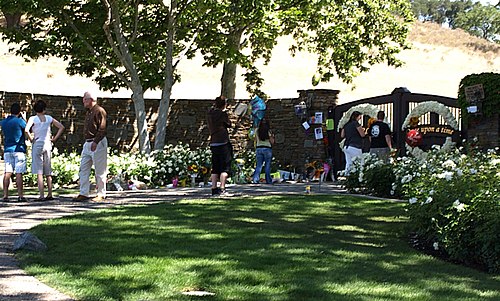
Holmby Hills, Los Angeles, California · 2009
Singer Michael Jackson died on June 25, 2009, in Los Angeles from acute propofol intoxication administered by his personal physician, Conrad Murray. The Los Angeles County coroner ruled the death a homicide, and Murray was convicted of involuntary manslaughter in November 2011.