Start here
Who gave the Philly Police a friggin’ BOMB?!: The 1985 MOVE Bombing | Dark History Podcast

Bailey Sarian's 56-minute breakdown, the fullest single telling on file.
Watch on YouTubeBefore you continue
This case involves crimes against children. Casepin presents the record in neutral, non-graphic language. Choose whether to continue.
Unsolved case · 1985
 Officials observe damage of MOVE bombing on 6200 block at Osage AvenueCredit: Sam Kushner·Public domain·Source
The short answer
On May 13, 1985, Philadelphia police dropped two bombs on a house occupied by the MOVE organization in the Cobbs Creek neighborhood; the resulting fire, which police allowed to burn for 90 minutes, killed eleven people — six adults and five children — and destroyed 61 homes.
Start hereWho gave the Philly Police a friggin’ BOMB?!: The 1985 MOVE Bombing | Dark History PodcastBailey Sarian · 56 minThe coverage index
1 piece from 1 creator: ranked, with duplicates removed and short clips set aside.
Start here
Video · YouTube · 56 min · 2021
Bailey Sarian's 56-minute breakdown, the fullest single telling on file.
Watch on YouTubeTitles and descriptions are the creators’ own and may not reflect current legal status. The sourced facts are in the file below. Players load only when you press play. Suggest coverage we’re missing.
The case file
MOVE, which Philadelphia mayor Wilson Goode and police commissioner Gregore J. Sambor classified as a terrorist organization, relocated in 1981 to a row house at 6221 Osage Avenue in the Cobbs Creek section of West Philadelphia. For years afterward, neighbors complained to the city about trash around the property, confrontations with MOVE members, and bullhorn announcements of political messages, though the bullhorn had been broken and unused for the three weeks beforehand. In 1985, police obtained arrest warrants charging four MOVE occupants with parole violations, contempt of court, illegal possession of firearms, and making terroristic threats. Police evacuated neighborhood residents beforehand, telling them they could return after 24 hours.
On May 13, 1985, nearly 500 police officers arrived to execute the warrants and clear the house, which held seven adults and six children. Officers cut off water and electricity to the building, and Sambor gave MOVE members 15 minutes to surrender. When they did not comply, police threw tear gas and a 90-minute gunfight followed in which police fired more than 10,000 rounds. At 2 p.m., Sambor ordered the house bombed. Philadelphia police lieutenant Frank Powell, flying in a Pennsylvania State Police helicopter, dropped two explosive devices made of Tovex and FBI-supplied C-4 onto a fortified bunker on the roof, igniting the fuel of a gasoline-powered generator and setting the house on fire. Officials said this was meant to destroy the roof bunker so tear gas could flush out the occupants; firefighters who moved in thirty minutes later were ordered back amid gunfire as the fire spread to neighboring houses. The fire killed eleven people in the house, six adults and five children: John Africa, Rhonda Africa, Theresa Africa, Frank Africa, Conrad Africa, Tree Africa, Delisha Africa, Netta Africa, Little Phil Africa, Tomaso Africa, and Raymond Africa. Two occupants survived: Ramona Africa, the only surviving adult, and Birdie Africa, then 13 years old. The fire went on to destroy 61 neighboring houses, leaving 250 people homeless.
Goode appointed the Philadelphia Special Investigation Commission, which found in its March 1986 report that dropping a bomb on an occupied row house was unconscionable; Goode then issued a formal public apology, and Sambor had already resigned that November. No one in city government was criminally charged over the deaths, though Ramona Africa was charged and convicted of riot and conspiracy and served seven years in prison. In 1995, the Third Circuit Court of Appeals held that the bombing was not a Fourth Amendment seizure, that officials had qualified immunity as individuals, but that the city itself was not immune from liability. A federal jury awarded $1.5 million in 1996 to Ramona Africa and relatives of two people killed in the bombing after finding the city had used excessive force, and a separate federal jury awarded displaced residents $12.83 million in 2005. The Philadelphia City Council formally apologized for the bombing in a 2020 resolution and, in 2025, designated May 13 an annual day of reflection and remembrance.
The rebuilt block was later found defective; by 2005 the city was paying homeowners to leave rather than fix it, and in 2023 a member of the Africa family bought back 6221 Osage Avenue to create a memorial. Separately, the remains of two of the children killed, Tree Africa and Delisha Africa, were kept for decades by a University of Pennsylvania museum and used in an online forensics course; the disclosure caused public outcry, and in 2021 the city's health commissioner resigned after ordering other victims' remains cremated in 2017 without notifying their families.
10 dated entries · 1981–2025
MOVE relocated to a row house at 6221 Osage Avenue in the Cobbs Creek section of West Philadelphia.
Nearly 500 Philadelphia police officers arrived to execute arrest warrants against MOVE occupants; a 90-minute gunfight followed after MOVE members fired on police attempting to clear the house.
Police Commissioner Gregore Sambor ordered the house bombed; Lt. Frank Powell dropped two explosive devices from a police helicopter, igniting a fire that was allowed to burn, killing eleven people and destroying 61 neighboring houses.
Police Commissioner Gregore Sambor resigned.
The Philadelphia Special Investigation Commission (MOVE Commission) issued a report denouncing the bombing of an occupied row house as unconscionable; Mayor Wilson Goode made a formal public apology.
The U.S. Court of Appeals for the Third Circuit ruled that the city was not immune from liability for the bombing, though individual officials had qualified immunity.
A federal jury ordered the city to pay $1.5 million to survivor Ramona Africa and relatives of two people killed in the bombing after finding the city used excessive force.
A federal jury ordered the City of Philadelphia to pay $12.83 million to residents displaced by the destruction from the bombing.
The Philadelphia City Council approved a resolution formally apologizing for the bombing.
The Philadelphia City Council approved a resolution declaring May 13 a day of reflection and remembrance for the victims.
15 named in this file
Victims first. Every legal label is set from public records and court outcomes, not from the prose.
Survived the May 13, 1985 fire at age 13; one of only two occupants of the house who escaped.[3]
Killed in the May 13, 1985 fire after Philadelphia police bombed the MOVE house at 6221 Osage Avenue; one of eleven people who died when the fire was allowed to burn.[3]
One of five children killed in the May 13, 1985 fire; also known as Delisha Orr Africa, age 12. Her remains were also kept for decades by a University of Pennsylvania museum; additional remains believed to be hers were found at the university in November 2024.[3]
Killed in the May 13, 1985 fire after Philadelphia police bombed the MOVE house at 6221 Osage Avenue; one of eleven people who died when the fire was allowed to burn.[3]
Killed in the May 13, 1985 fire after Philadelphia police bombed the MOVE house at 6221 Osage Avenue; one of eleven people who died when the fire was allowed to burn.[3]
Killed in the May 13, 1985 fire after Philadelphia police bombed the MOVE house at 6221 Osage Avenue; one of eleven people who died when the fire was allowed to burn.[3]
Killed in the May 13, 1985 fire after Philadelphia police bombed the MOVE house at 6221 Osage Avenue; one of eleven people who died when the fire was allowed to burn.[3]
Killed in the May 13, 1985 fire after Philadelphia police bombed the MOVE house at 6221 Osage Avenue; one of eleven people who died when the fire was allowed to burn.[3]
Killed in the May 13, 1985 fire after Philadelphia police bombed the MOVE house at 6221 Osage Avenue; one of eleven people who died when the fire was allowed to burn.[3]
Killed in the May 13, 1985 fire after Philadelphia police bombed the MOVE house at 6221 Osage Avenue; one of eleven people who died when the fire was allowed to burn.[3]
Killed in the May 13, 1985 fire after Philadelphia police bombed the MOVE house at 6221 Osage Avenue; one of eleven people who died when the fire was allowed to burn.[3]
One of five children killed in the May 13, 1985 fire; also known as Katricia Dotson, age 14. Her remains were later kept for decades by a University of Pennsylvania museum and used in an online forensic anthropology course before being returned to her family in 2021.[3]
The only surviving adult MOVE member; escaped the May 13, 1985 fire, refused to testify in court, and was charged and convicted of riot and conspiracy, serving seven years in prison. In 1996 a federal jury awarded her $500,000 for pain, suffering, and physical harm from the fire as part of a larger judgment against the city.[3]
Philadelphia Police Department lieutenant who, from a Pennsylvania State Police helicopter, dropped the two bombs onto the roof of the MOVE house on May 13, 1985.[3]
Philadelphia police commissioner who, with Mayor Wilson Goode, classified MOVE as a terrorist organization; read the May 13, 1985 surrender ultimatum to MOVE members and ordered the house bombed. Resigned in November 1985.[3]
From the record
3 cited
Coverage is not a source: every fact in this file rests on the records below.
PressThe New York TimesAccessed Jul 6, 2026
PressNPRAccessed Jul 6, 2026
EncyclopedicWikipediaAccessed Jul 6, 2026
Trust
Are you family of someone named in this file? Corrections and removal requests from victims’ families are prioritized.
Near this case
 SOLVEDListen
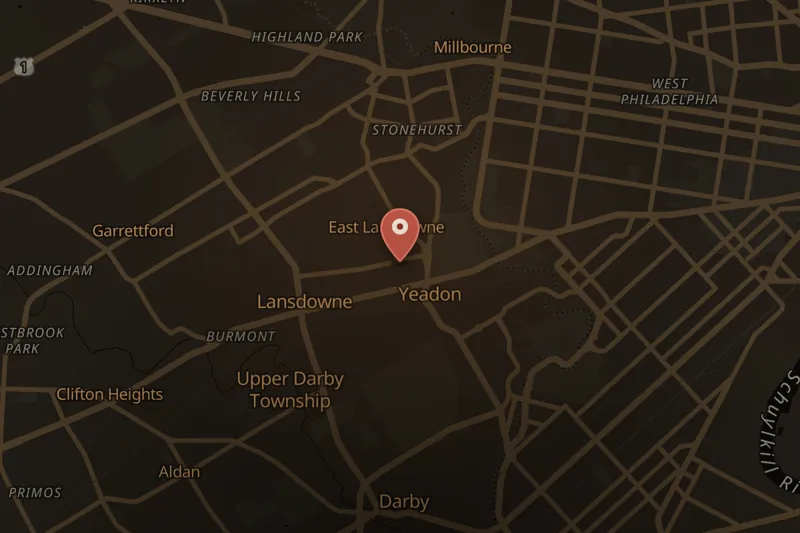
Lewis Avenue, East Lansdowne, Pennsylvania · 2020s
On February 7, 2024, a gunman shot two responding police officers and killed five members of his own family in East Lansdowne, Pennsylvania, before setting the house on fire and dying by suicide.
 SOLVEDListen
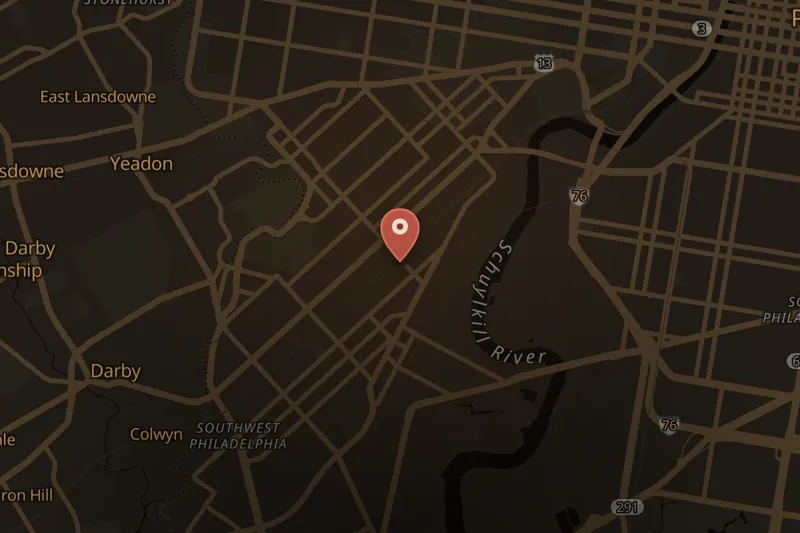
Kingsessing, Philadelphia, Pennsylvania, United States · 2020s
A spree shooting in the Kingsessing neighborhood of Philadelphia on July 2–3, 2023 left five people dead and four injured before police apprehended the suspected shooter.
 ONGOINGListen
Manayunk, Philadelphia, Pennsylvania · 2010s
Ellen Greenberg, a 27-year-old Philadelphia teacher, was found dead in her apartment on January 26, 2011, after sustaining 20 stab wounds. Her death was officially ruled a suicide, but the ruling has been disputed for more than a decade by her family, independent forensic reviewers, and, as of 2025, the pathologist who performed the original autopsy; the manner of death remains officially recorded as suicide.
 Credit: Federal Bureau of Investigation·Public domain·SourceSOLVEDListen
Fort Wayne, Indiana · 1988
April Tinsley, an eight-year-old girl from Fort Wayne, Indiana, was kidnapped, raped, and strangled to death on April 1, 1988. The killing went unsolved for more than three decades, marked by taunting notes from her killer, until forensic genealogy identified John D. Miller as the perpetrator in 2018; Miller pleaded guilty and was sentenced to 80 years in prison.
 Image record·Editorial use·SourceSOLVEDListen
Matamoros, Tamaulipas, Mexico · 1989
Mark Kilroy, a University of Texas at Austin student, was abducted during spring break in Matamoros, Mexico, in March 1989 and killed at a ranch used by a drug-trafficking cult led by Adolfo Constanzo; several cult members were convicted in 1993-1994 of homicide and other charges.
 Credit: Unknwown·Editorial use·SourceSOLVEDListen
Near Greeley, Colorado · 1984
A 12-year-old girl who disappeared from her Greeley, Colorado, home in 1984 was found dead in 2019, and a former Greeley resident was convicted in 2022 of her kidnapping and murder.
Also covered by
 Credit: English Wikipedia·Editorial use·SourceSOLVEDListen
Modesto, California · 2002
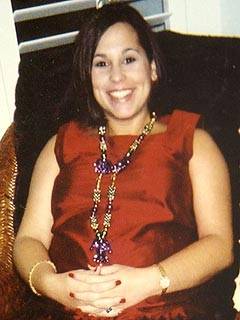
Laci Peterson, 27 and eight months pregnant, disappeared from her Modesto, California home on December 24, 2002; her body and that of her unborn son Conner were found in San Francisco Bay in April 2003, and her husband Scott Peterson was convicted in 2004 of murdering both.
 Credit: CBS News / Travis Alexander (personal photo)·Editorial use·SourceSOLVEDListen
Mesa, Arizona, United States · 2000s
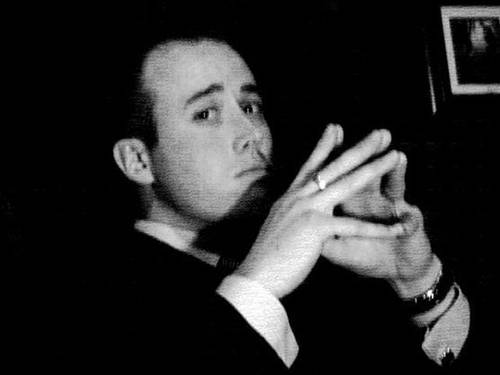
Travis Alexander, 30, was stabbed, slashed, and shot to death in his Mesa, Arizona home on June 4, 2008. His ex-girlfriend, Jodi Arias, was convicted of first-degree murder in 2013 and sentenced to life without parole in 2015 after two juries deadlocked on the death penalty.
 COLDListen
Cumming, Georgia · 2018
Tamla Horsford, a 40-year-old mother of five, died from a fall at a home in Cumming, Georgia, during a gathering on November 3-4, 2018; two separate investigations ruled her death accidental, though her family has disputed that finding and pushed for further inquiry.
 Credit: Los Angeles Police Department·Public domain·SourceUNSOLVEDListen
Leimert Park, Los Angeles, California, USA · 1940s
Elizabeth Short, known posthumously as the Black Dahlia, was found murdered in Los Angeles in January 1947 in a case that remains unsolved.
 Credit: Ted Van Zyl·Editorial use·SourceSOLVEDListen
Albuquerque, New Mexico, United States · 1993
Girly Chew Hossencofft, a Malaysian-born bank teller living in Albuquerque, New Mexico, disappeared on September 9, 1999, shortly after filing for divorce from her husband Diazien Hossencofft. He and his girlfriend Linda Henning were later convicted of her murder. Her body has never been found.
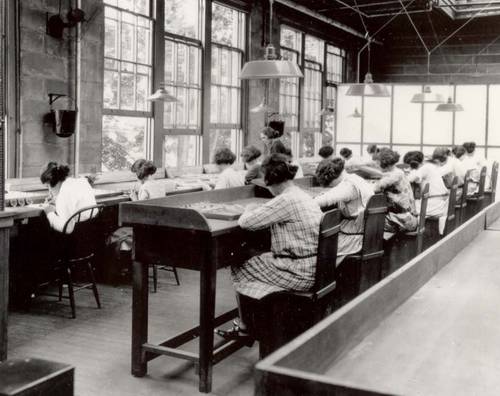 Credit: Argonne National Laboratory / Wikimedia Commons, c.1922–23·Public domain·SourceSOLVEDListen
Orange, New Jersey · 1917
Beginning in 1917, factory workers who came to be known as the Radium Girls were poisoned after being instructed to shape radium-paint brushes with their lips; the resulting illnesses, deaths, and lawsuits against the United States Radium Corporation and the Radium Dial Company reshaped U.S. occupational health and labor law.