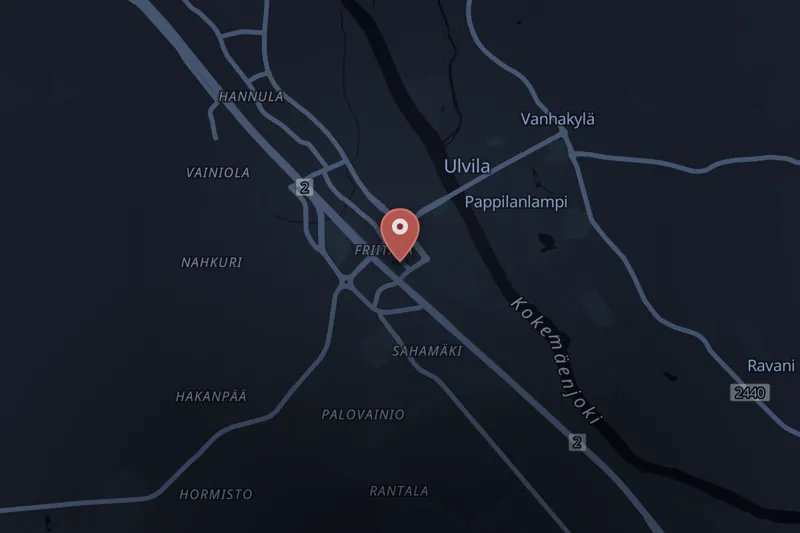
On 1 December 2006, 51-year-old Jukka S. Lahti, a social psychologist and father of four, was killed at his family home in Ulvila, Finland. His wife, Anneli Auer (born 1965), telephoned emergency services at 02:43 and reported that a masked assailant had attacked her husband. Lahti had been stabbed multiple times and struck on the head with a blunt object, and Auer had also been wounded.
Investigators initially searched for an outside perpetrator and detained or arrested several people. One police hypothesis held that the killing was revenge connected to Lahti's work as a human-resources director at a company that had carried out large layoffs. In the spring of 2008, police tested the DNA of hundreds of that company's employees, but none matched unidentified DNA recovered from the scene. That unknown DNA was later attributed to a police investigator.
In August 2008 a new chief investigator took over, and attention turned to Auer's emergency call, which police said contained no evidence of an outside attacker; the recording was also examined by the FBI. An undercover officer befriended and dated Auer for seven to eight months, and police monitored her phone and home for three days. A police representative said the operation produced neither incriminating nor exonerating evidence. Auer was arrested on 28 September 2009 on the theory that she had killed Lahti during the call and staged the scene.
Auer was tried before a three-judge panel at the Satakunta District Court and convicted in November 2010, with one judge voting to acquit. The Vaasa Court of Appeal unanimously acquitted her in July 2011. In October 2012 the Supreme Court of Finland returned the case to the district court after prosecutors presented new evidence.
In 2013 it emerged that the crime-scene DNA sample had been contaminated and that the unidentified male DNA belonged to a crime-laboratory examiner. The district court convicted Auer again in December 2013 by a 2-1 vote and imposed a life sentence, but the Vaasa Court of Appeal overturned that conviction in February 2015, finding that the presence of an outside perpetrator could not be ruled out. In December 2015 the Supreme Court dismissed the prosecution's appeal, making the acquittal final. Auer had spent more than 600 days in custody and was awarded roughly 500,000 euros in compensation in 2016. That year, more than 50 police officers were charged for improperly accessing her records in a police database, and most were fined.

 Credit: Huhtala ja BranthinPublic domainSourceUNSOLVEDListen