
 UNSOLVEDListen
Ulvila, Finland · 2000s
Killing of Jukka S. Lahti
In 2006, social psychologist Jukka S. Lahti was killed at his home in Ulvila, Finland; his widow was tried repeatedly and permanently acquitted in 2015, and the case remains unsolved.
Before you continue
This case involves sexual violence and crimes against children. Casepin presents the record in neutral, non-graphic language. Choose whether to continue.
Unsolved case · 1953
Also known as Auli Kyllikki Saari · Kyllikki Saari
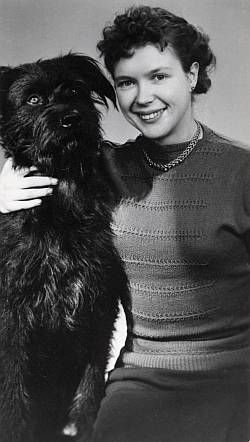
 File:Kyllikki Saari ja siskot.jpgCredit: Huhtala ja Branthin·Public domain·Source
The short answer
Kyllikki Saari, a 17-year-old Finnish girl, disappeared while cycling home from a prayer meeting in Isojoki on 17 May 1953; her remains were found buried in a bog nearly five months later. Despite decades of investigation into multiple leads, no one was ever charged, and her killing remains one of Finland's most well-known unsolved cases.
The coverage index
No one's coverage is attached to this file yet.
Know great coverage of this case?
A documentary, a podcast episode, a careful long-form video. Suggest it and an editor will review it before it appears here.
Suggest coverage for Killing of Kyllikki SaariThe case file
Auli Kyllikki Saari was a 17-year-old girl from Isojoki, a rural municipality in western Finland. On the evening of 17 May 1953, she attended a prayer meeting in the village of Kortteenkylä, in Isojoki, and set out afterward to cycle home to Möykky. She was last seen alive that night and never arrived home.
An extensive search followed her disappearance. Saari's bicycle was found abandoned in a marshy area. It is believed she was attacked by an unidentified person while cycling home; authorities at the time speculated that the attack may have had a sexual motive, though no evidence was ever produced to support that theory. On 11 October 1953, nearly five months after she vanished, Saari's remains were found buried in a bog. Her funeral was held at Isojoki Church on 25 October 1953 and drew an estimated 25,000 mourners, reflecting the intense public attention the case received across Finland.
Investigators pursued a series of leads over the following years without result. An early suspect, a clergyman who had relocated to Merikarvia three weeks before Saari's disappearance and who was reported to have been in the area that evening, was later cleared: with only about twenty minutes of his time that evening unaccounted for, and lacking a driver's licence or a car, investigators concluded he could not have made the 60-kilometre trip to Isojoki. Police also focused for years on a local Isojoki resident who lived within one to two kilometres of the murder scene. He and a relative jointly worked a field fifty metres from where Saari's body was found, and a shovel kept in that field was determined to be the one used to dig her grave. The two men were questioned in the autumn of 1953; the resident gave an incriminating-sounding statement during interrogation, then retracted it, and was later hospitalized for psychiatric treatment before his death in 1967, after which that line of inquiry was set aside. In 1997, a former police officer reported that a different suspect had confessed involvement shortly before his own death, claiming Saari's death resulted from a road accident that was then concealed and staged to look like a murder. This secondhand account was never substantiated, and, as with every other lead pursued in the case, it produced no criminal charges.
More than seven decades later, the killing of Kyllikki Saari has never been solved. No one has ever been charged in connection with her death, and it remains one of the most widely known unsolved homicide cases in Finnish history.
6 dated entries · 1935–1997
Auli Kyllikki Saari is born.
Saari is last seen alive, cycling home from a prayer meeting in Kortteenkylä, Isojoki, toward her home in Möykky.
Saari's remains are found buried in a bog.
Funeral services are held at Isojoki Church; an estimated 25,000 people attend.
A man who had been investigated at length in connection with the case dies; that line of inquiry is subsequently set aside.
A former police officer reports that a different suspect confessed involvement in Saari's death shortly before his own death, attributing it to a road accident that was then concealed and staged to look like a murder; the claim is never substantiated and produces no charges.
1 named in this file
Victims first. Every legal label is set from public records and court outcomes, not from the prose.
Full name Auli Kyllikki Saari; 17-year-old Finnish girl who disappeared while cycling home from a prayer meeting in Kortteenkylä, Isojoki, on 17 May 1953. Her remains were found buried in a bog on 11 October 1953. Her killing has never been solved.[3]
3 cited
Coverage is not a source: every fact in this file rests on the records below.
Presswww2.hs.fiAccessed Jul 12, 2026
Presstiede.fiAccessed Jul 12, 2026
EncyclopedicWikipediaAccessed Jul 12, 2026
Trust
Are you family of someone named in this file? Corrections and removal requests from victims’ families are prioritized.
Near this case
UNSOLVEDListenUlvila, Finland · 2000s
In 2006, social psychologist Jukka S. Lahti was killed at his home in Ulvila, Finland; his widow was tried repeatedly and permanently acquitted in 2015, and the case remains unsolved.
 Credit: JGKlein·Public domain·SourceSOLVEDListen
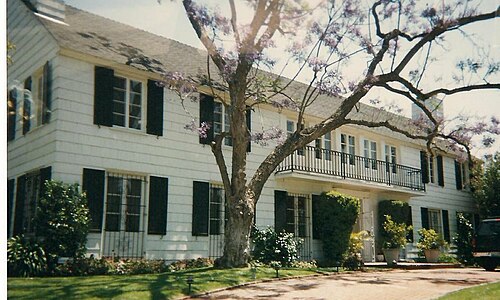
730 North Bedford Drive, Beverly Hills, California · 1958
On April 4, 1958, 14-year-old Cheryl Crane fatally stabbed Johnny Stompanato, the boyfriend of her mother, actress Lana Turner, at Turner's rented Beverly Hills home during a violent argument. A coroner's inquest ruled the killing a justifiable homicide and Crane was exonerated, though the case remains subject to enduring conspiracy theories.
 Credit: Nationaal Archief / Spaarnestad Collection (unknown photographer, undated)·Public domain·SourceCOLDListen
498 Nieuwe Haven, The Hague, Netherlands · 1959
Sebilla Niemans, a Dutch prostitute and businesswoman known as Blonde Dolly, was found strangled in her home in The Hague in November 1959. Despite widespread speculation, the case was never solved and no one was ever charged.
 Credit: Unknown/ Sycamore High School "Leaves" yearbook·Public domain·SourceOVERTURNEDListen
Sycamore, Illinois, United States · 1957
Seven-year-old Maria Ridulph disappeared from Sycamore, Illinois, on December 3, 1957, and her remains were found five months later; a man wrongly convicted of her murder in 2012 was later declared innocent in 2017, and her killing remains officially unsolved.
 Credit: User:Wegeral·CC BY-SA 3.0·SourceSOLVEDListen
Jokela High School, Tuusula, Finland · 2007
On 7 November 2007, an 18-year-old gunman killed eight people — six students, a school nurse, and the head teacher — in a shooting at Jokela High School in Tuusula, Finland, before fatally shooting himself.
 Credit: valok. Atelier Rembrandt (Suomen Kuvalehti 25.2.1922)·Public domain·SourceSOLVEDListen
Etu-Töölö, Helsinki, Finland · 1922
Heikki Ritavuori, Finland's Minister of the Interior, was shot dead at the door of his Helsinki home on 14 February 1922 after a right-wing press campaign had targeted him over his handling of the East Karelian uprising. The gunman, Ernst Tandefelt, surrendered immediately and was convicted and sentenced to twelve years of hard labor; a later government inquiry found no evidence to support his claims that others had helped plan the killing.