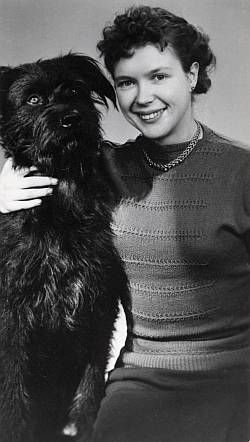
Sebilla Alida Johanna Niemans was born in Amsterdam-West on 27 September 1927. Her father, Hendricus Johannes Niemans, was a shoemaker, and her mother was Sebilla Alida Johanna Streelder. After her mother's chronic illness led to hospitalization, Niemans and her brother were placed in the Groot Kijkduin children's home in Zandvoort. During the German occupation, they returned to Amsterdam to live with their father and his new wife. Niemans's difficult relationship with her stepmother led her to leave home; she entered prostitution in Amsterdam's Kerkstraat after being introduced to it through a fortune teller and a man posing as an Italian sailor who was in fact a pimp. After police investigation, she returned to her father's household and trained in dressmaking.
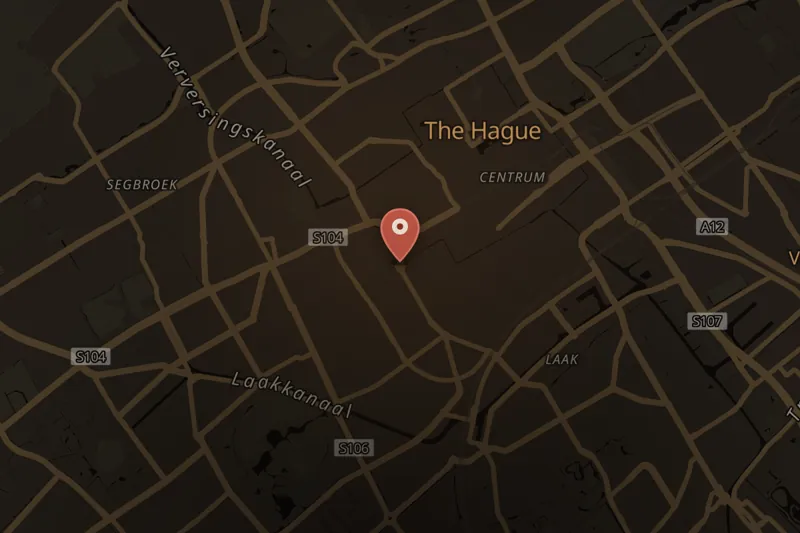
In 1948, Niemans moved to The Hague, resuming sex work and renting a window at 21 Doubletstraat. She was initially nicknamed "Black Dolly" for her dark hair before bleaching it, becoming known as "Blonde Dolly." In 1950 she purchased a house at 498 Nieuwe Haven. Later that year she married Botto van den Bergh, a violinist with The Hague's Residentie Orchestra, and was introduced to circles of classical music, fashion, and art, occasionally working as a fashion model. The marriage broke down after roughly a year, and the couple divorced in 1957 following a lengthy legal process.
Niemans was found dead in her bed at 498 Nieuwe Haven on 2 November 1959. Investigators estimated she had been strangled on the night of 30–31 October 1959. There were no signs of a struggle, and a substantial amount of cash remained in the residence, leading police to rule out robbery as a motive. The killing generated significant public and press attention. Speculation centered on Niemans's "blue book," which police declined to make public, and which was rumored to contain the names of prominent regular clients. This fueled unsubstantiated rumors that one of her customers was involved in her death. No evidence was ever produced to support these rumors or claims of a political cover-up. International press drew comparisons to the 1957 murder of Rosemarie Nitribitt in Germany, a case that similarly involved allegations concerning politicians.
The principal suspect identified during the investigation was a bodyguard referred to as "Gerard V," whom Niemans had hired after another prostitute, Marietje van Es, was robbed in December 1958. Gerard reportedly had fallen in love with Niemans, but she rejected him. He was never charged, and the investigation was ultimately closed without resolution.
According to the politician Hans Gualthérie van Weezel, his father, police commissioner Jan Gualthérie van Weezel, claimed to know the identity of the perpetrator and kept a file on the case at home, with instructions that it be destroyed after his death. His son reportedly read the alleged perpetrator's name in the file before the instruction was carried out; this account has not been independently substantiated and no one has been publicly named or charged as a result.
The case has remained a notable unsolved Dutch crime and has inspired several works of fiction and nonfiction, including a 1962 novel, a 1987 film, and later books by researchers examining the case.

 SOLVEDListen