Skip to content
Casepin

Cold case · 1951

Killings of Harry and Harriette Moore

COLD
Updated
Updated Jul 13, 2026
Bombing of home of NAACP member - Mims, FloridaBombing of home of NAACP member - Mims, FloridaCredit: State of FloridaPublic domainSource

The short answer

Killings of Harry and Harriette Moore in brief

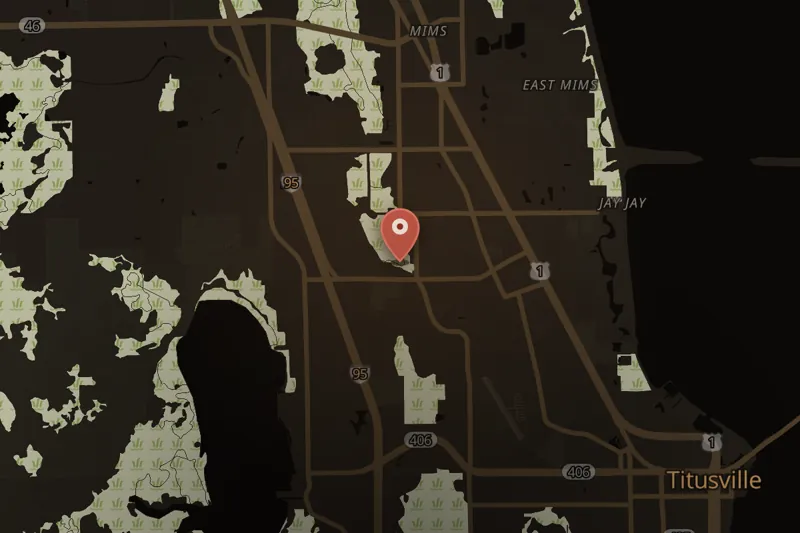
On Christmas night 1951, a dynamite bomb planted beneath the bedroom floor of civil rights activists Harry T. Moore and Harriette V. S. Moore's home in Mims, Florida, killed them both, making them the first martyrs of the Civil Rights Movement.

Key facts

Year
1951
Place
Mims, Florida, United States
Status
COLDCold
Victims
Harriette V. S. Moore and Harry T. Moore
Outcome
No conviction on file

The coverage index

Where to watch & listen

No one's coverage is attached to this file yet.

Know great coverage of this case?

A documentary, a podcast episode, a careful long-form video. Suggest it and an editor will review it before it appears here.

Suggest coverage for Killings of Harry and Harriette Moore

The case file

What happened

Harry T. Moore and Harriette V. S. Moore were educators and early civil rights leaders in Florida. They married on December 25, 1926, and both worked as teachers in the segregated Titusville Colored School, where Harry became principal in 1927. In 1934, Harry founded the Brevard County chapter of the NAACP and later became the organization's first Executive Secretary in Florida. Their advocacy included efforts to secure equal pay for Black teachers, prosecution of lynchings, and voter registration for Black residents. In 1946, both Harry and Harriette were dismissed from their teaching positions by state authorities because of Harry's activism, after which he became a full-time NAACP employee.

On the night of December 25, 1951 — the couple's 25th wedding anniversary — a bomb made from dynamite that had been planted under the floor of their bedroom in Mims, Florida, exploded. Their daughter, who was home at the time, was unharmed. The Moores were driven roughly 29.8 miles to the nearest hospital in Sanford, Florida, that would treat African-American patients. Harry died en route in the ambulance. Harriette survived long enough to attend her husband's burial before dying of her injuries on January 3, 1952. Their deaths marked the first assassination of an activist during the Civil Rights Movement and the only instance of a husband and wife both being killed during that era.

Five separate criminal investigations have examined the bombing: an FBI investigation beginning the night of the attack and concluding in 1955; a 1978 joint investigation by the Brevard County Sheriff's Office and State Attorney's Office; a 1991 Florida Department of Law Enforcement investigation; a 2004 investigation by the Florida Attorney General's Office of Civil Rights; and a 2008 FBI investigation under the Department of Justice's Cold Case Initiative. These investigations implicated four men described as high-ranking Ku Klux Klan members in central Florida: Earl J. Brooklyn, Tillman H. "Curley" Belvin, Joseph N. Cox, and Edward L. Spivey. Investigators reported that Brooklyn possessed floor plans of the Moore home and had recruited volunteers, and that Belvin was a close, violent associate of his. In 1978, Spivey reportedly gave a deathbed confession implicating Cox, stating that Cox told him he had been paid $5,000 by the Klan to carry out the bombing and then took his own life the day after being confronted by the FBI, on March 30, 1952. Belvin died of natural causes on August 25, 1952, and Brooklyn died of illness on December 25, 1952 — one year to the day after the bombing. Spivey died of cancer in 1980. No arrests were ever made in the case, and the Department of Justice Civil Rights Division formally closed the federal investigation file in 2011.

The bombing prompted immediate local protest in Brevard County and nationwide reactions, including telegrams to President Harry S. Truman and Florida Governor Fuller Warren, a memorial organized by Jackie Robinson in New York drawing about 3,000 people, and an NAACP memorial at Madison Square Garden in March 1952 attended by roughly 15,000 people. Harry Moore was posthumously awarded the NAACP's Spingarn Medal in 1952. The site of their home became a Florida Historical Heritage Landmark in 1999, and Brevard County later established the Harry T. and Harriette Moore Memorial Park and Interpretive Center.

19 dated entries · 1926–2011

Timeline

  1. Harry Moore and Harriette Simms marry.

  2. Harry Moore is promoted to principal of the Titusville Colored School.

  3. Harry Moore founds the Brevard County, Florida NAACP chapter.

  4. Harry and Harriette Moore are fired from their teaching jobs by state authorities due to Harry's activism.

  5. A dynamite bomb explodes under the Moores' bedroom floor in Mims, Florida; Harry dies en route to the hospital.

  6. Harriette Moore dies of her injuries from the bombing.

  7. Jackie Robinson holds a memorial service in New York City drawing about 3,000 mourners.

  8. Suspect Joseph N. Cox dies by suicide, one day after being confronted by the FBI.

  9. NAACP holds a memorial service at Madison Square Garden attended by about 15,000 people.

  10. Suspect Tillman H. 'Curley' Belvin dies of natural causes.

  11. Suspect Earl J. Brooklyn dies of illness, one year after the bombing.

  12. The initial FBI investigation into the bombing concludes.

  13. A joint Brevard County Sheriff's Office and State Attorney's Office investigation begins; Edward L. Spivey reportedly gives a deathbed confession implicating Joseph N. Cox.

  14. Edward L. Spivey dies of cancer.

  15. The Florida Department of Law Enforcement conducts a further investigation.

  16. The site of the Moores' home in Mims becomes a Florida Historical Heritage Landmark.

  17. The Florida Attorney General's Office of Civil Rights opens a further investigation.

  18. The FBI reinvestigates the case under the Department of Justice's Cold Case Initiative.

  19. The Department of Justice Civil Rights Division closes the federal investigation file.

2 named in this file

People

Victims first. Every legal label is set from public records and court outcomes, not from the prose.

  • Harriette V. S. Moore

    VICTIM

    Civil rights activist and educator who died of injuries from the December 1951 bombing.[3]

  • Harry T. Moore

    VICTIM

    Civil rights activist and educator killed in the December 1951 bombing of his home.[3]

3 cited

Sources

Coverage is not a source: every fact in this file rests on the records below.

  • 1 Official / agency
  • 1 Press
  • 1 Encyclopedic
  1. Contemporaneous coverage — US Department of Justice

    Official / agencyUS Department of JusticeAccessed Jul 7, 2026

  2. Contemporaneous coverage — The Washington Post

    PressThe Washington PostAccessed Jul 7, 2026

  3. Murders of Harry and Harriette Moore

    EncyclopedicWikipediaAccessed Jul 7, 2026

Trust

Record history

First published
Jul 7, 2026
Last verified against sources
Jul 7, 2026
Corrections
None

Are you family of someone named in this file? Corrections and removal requests from victims’ families are prioritized.