Overview
National Airlines Flight 2511 was a scheduled domestic passenger flight from New York City to Miami, Florida. On January 6, 1960, the Douglas DC-6B aircraft serving the flight, registration N8225H, exploded in midair and crashed near Bolivia, North Carolina, killing all 34 people aboard — 29 passengers and 5 crew members. The flight had originally been scheduled to be a Boeing 707 operating as Flight 601, but a cracked cockpit windshield forced National Airlines to substitute two propliner aircraft. The remaining 29 passengers who had not already boarded a Lockheed L-188 Electra were placed on the DC-6B, which departed Idlewild Airport at 11:52 p.m. on January 5, 1960.
Crash and Recovery
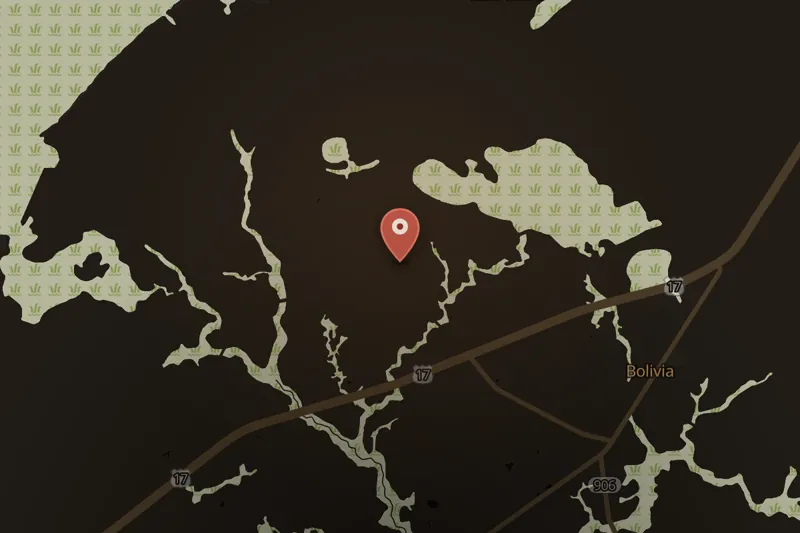
The aircraft maintained radio contact until 2:31 a.m., reporting its position over the Carolina Beach radio beacon. A farmer, Richard Randolph, heard the sound of an engine cutting in and out, followed by tearing metal and an explosion at about 2:45 a.m. Wreckage and bodies were found scattered across roughly 20 acres of farmland, marshland, and pine forest near Bolivia, North Carolina. One body, later identified as attorney Julian Frank, was recovered separately from Snow's Marsh, about 16 miles from the main crash site.
Investigation
The Civil Aeronautics Board (CAB) led the investigation, reconstructing about 90% of the fuselage in a hangar at Wilmington Airport. Frank's body showed injuries markedly different from other victims, including amputated legs, embedded debris, and blackened areas resembling gunshot residue. Laboratory analysis by the FBI identified wire fragments, manganese dioxide (found in dry cell batteries), and chemical residues consistent with a dynamite explosion near seat row 7, close to where Frank had been seated. At the time of the crash, Frank was under investigation by the Manhattan district attorney's office for allegedly misappropriating up to a million dollars through charity scams, and he held nearly $900,000 in life insurance policies, some purchased the day of the crash.
The CAB's chief investigator, Oscar Bakke, testified to the Senate Aviation subcommittee on January 12, 1960, that dynamite caused the explosion. The FBI formally assumed the criminal investigation on January 20, 1960. Alternative theories — including a mid-air collision, engine fire, structural fatigue, pressurization failure, lightning, and fuel or oxygen bottle explosion — were investigated and ruled out by the CAB.
Conclusion
The CAB's final report determined that the probable cause of the crash was the detonation of dynamite within the passenger cabin, but it assigned no blame to any specific individual, including Frank. No criminal charges were ever filed, and the identity of the person or persons responsible has never been officially determined. The case remains open and unsolved. Among the victims was retired U.S. Navy Vice Admiral Edward Orrick McDonnell, a Medal of Honor recipient and veteran of both World Wars.

 Credit: Unknown authorPublic domainSourceSOLVEDListen


