Casepin
Back to cases

Case file

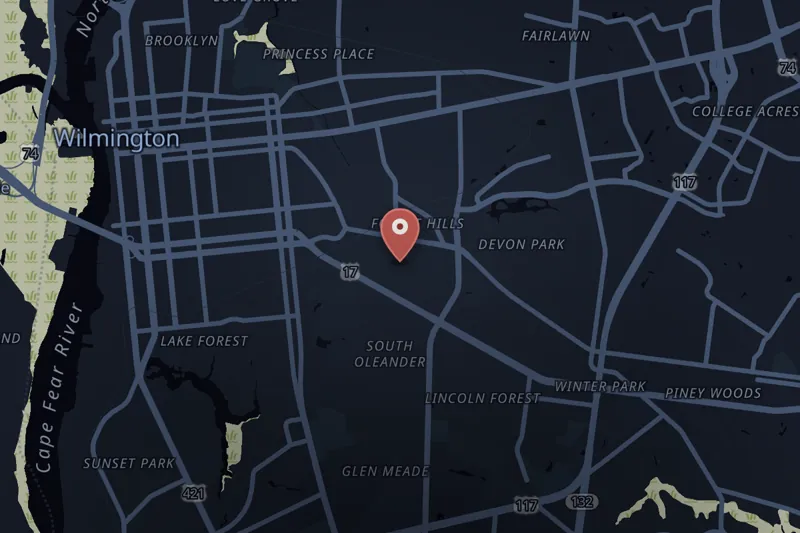
Wilmington massacre

SOLVED1898Wilmington, North Carolina3 SOURCESUPDATED JUL 2026
Alexander Manly Daily Record
Alexander Manly Daily Record — Credit: Unknown authorUnknown author · Public domain

On Thursday, November 10, 1898, a coordinated campaign of white supremacist politicians, businessmen, and armed vigilante groups in Wilmington, North Carolina, culminated in the violent overthrow of the city's legally elected Fusionist government — a biracial coalition of Republicans and Populists. The white press of the era described the events as a "race riot" instigated by Black residents; historians have since characterized it as a municipal coup d'état accompanied by a racial massacre.

Wilmington in the 1890s was North Carolina's largest city and majority-Black, with a substantial Black professional and business class, including three Black aldermen and the only Black-owned daily newspaper in the country, the Wilmington Daily Record, edited by Alexander Manly. Economic and political tensions grew as the Fusionist coalition — combining Republican and Populist voters — won state and local offices in 1894 and 1896, reversing Democratic-era policies on interest rates, taxation, and railroad regulation.

In late 1897, a group of nine prominent white Wilmington men, later called the "Secret Nine," began conspiring to retake the city government. State Democratic Party Chairman Furnifold Simmons built a statewide "White Supremacy Campaign" for the 1898 elections, recruiting orators such as Alfred Moore Waddell and enlisting propagandists, including editor Josephus Daniels. Following the August 1898 publication of an editorial by Alexander Manly rebutting a pro-lynching speech by Rebecca Latimer Felton, white supremacist agitation intensified. Armed groups known as the Red Shirts staged parades, intimidation campaigns, and attacks on Black communities in the weeks before the November 8 election, while white merchants refused to sell firearms to Black residents seeking to arm themselves in self-defense.

On November 10, two days after the election, the mob — estimated at 2,000 white men — expelled elected Black and white political leaders from the city, destroyed Black-owned property and businesses, and burned the offices of the Daily Record. At least 14 Black people were killed, with some estimates of the death toll ranging from 60 to more than 300. Many leaders of the coup, including Alfred Moore Waddell, went on to hold prominent positions in North Carolina politics for decades afterward.

The Wilmington massacre is regarded by historians as a pivotal turning point in post-Reconstruction Southern politics, reinforcing disenfranchisement of Black voters and entrenching white-supremacist political control across North Carolina and the broader South in the years that followed.

Key facts

Victims
Alexander Manly
Date
1898
Location
Wilmington, North Carolina
Case status
solved

Case timeline

  1. 1897-11-20

    Following a Democratic Executive Committee meeting in Raleigh, a statewide call for white unity was issued, calling on whites to unite to "re-establish Anglo-Saxon rule" in North Carolina.

  2. 1898-08-18

    Alexander Manly published an editorial in the Wilmington Daily Record responding to a pro-lynching speech by Rebecca Latimer Felton, provoking outrage among white residents.

  3. 1898-10-21

    Democrats staged a large political rally in Fayetteville; the Red Shirts made their North Carolina debut.

  4. 1898-10-25

    Alfred Moore Waddell delivered a speech at Thalian Hall in Wilmington declaring white supremacy the sole issue for white voters.

  5. 1898-10-28

    A "White Supremacy Convention" was held in Goldsboro, drawing a crowd of about 8,000.

  6. 1898-11-01

    Red Shirt leader Mike Dowling led a parade of 1,000 mounted men through Black neighborhoods of Wilmington.

  7. 1898-11-02

    A "White Man's Rally" marched through Wilmington, firing into Black homes and a Black school on Campbell Square.

  8. 1898-11-08

    North Carolina held its general election amid widespread intimidation of Black and Fusionist voters.

  9. 1898-11-10

    An armed white mob of roughly 2,000 men overthrew Wilmington's elected Fusionist government, killed at least 14 Black residents, and destroyed Black-owned businesses including the Daily Record newspaper offices.

Best coverage

No approved coverage links are attached yet.

People

  • Alexander Manly

    VICTIM

    Co-owner and editor of the Wilmington Daily Record, the city's only Black newspaper, which was destroyed during the massacre; he was forced to flee the city.

  • Alfred Moore Waddell

    LAW ENFORCEMENT

    Orator and leader of the white supremacist campaign; later installed as mayor of Wilmington following the coup, per the Wikipedia account.

Roles reflect public records and court outcomes at the time of writing — supporting citations are on file under Sources.

Archival records

  • 18980826 Mrs. Felton Speaks - lynching - The Wilmington Weekly Star

    newspaper

    18980826 Mrs. Felton Speaks - lynching - The Wilmington Weekly Star

    Credit: The Wilmington Weekly Star (newspaper of North Carolina, U.S., August 26, 1898) · Public domain · Source

  • Alexander Manly Daily Record

    portrait public figure

    Alexander Manly Daily Record

    Credit: Unknown authorUnknown author · Public domain · Source

  • Fusionist Devil

    newspaper

    Fusionist Devil

    Credit: Norman E. Jennett · Public domain · Source

  • Morning Star Bloody Conflict

    newspaper

    Morning Star Bloody Conflict

    Credit: The Wilmington Morning Star · Public domain · Source

  • White Man's Day Fayetteville Observer 10 22 1898

    newspaper

    White Man's Day Fayetteville Observer 10 22 1898

    Credit: The Fayetteville Observer · Public domain · Source

  • Wilmington Coup

    archival location

    Wilmington Coup

    Credit: JThom4295 · CC0 · Source

Places

Common questions

What happened to the victim?
On November 10, 1898, white supremacist Democrats led an armed mob of roughly 2,000 men in Wilmington, North Carolina, overthrowing the city's legitimately elected biracial Fusionist government, killing at least 14 Black residents (estimates run far higher), and destroying Black-owned businesses including the city's only Black daily newspaper.
Where did the massacre happen?
Wilmington, North Carolina.
What is the current status of the case?
Status: solved.

Sources

  1. Wilmington massacrewikipedia · Wikipedia · 2026-07-07
  2. Contemporaneous coverage — The New York Timesnews · The New York Times · 2026-07-07
  3. Contemporaneous coverage — digital.ncdcr.govnews · digital.ncdcr.gov · 2026-07-07