Joseph H. McCoy was born in Alexandria, Virginia, around 1878 or 1879 and was the youngest of five children. He lived on South Alfred Street, where much of his extended family resided; his maternal grandmother, a freed Black woman, worked as a washerwoman. McCoy had worked for a white employer, Richard Lacy, for 16 years.
On the evening of April 22, 1897, McCoy was arrested without a warrant after a police lieutenant met with Lacy and a neighbor, who accused McCoy of sexually assaulting Lacy's three daughters. McCoy denied the charges after being told the reason for his arrest. He was taken to the Alexandria Police Department station house.
By around 11 p.m. that night, approximately 150 men had gathered at the station house. Before midnight, the crowd used a makeshift battering ram to force entry; police fired weapons into the air, forced the crowd outside, and arrested four people, then attempted to barricade the building. Lt. Smith urged the crowd to disperse, promising McCoy a fair trial. The mob returned around 1 a.m. on April 23 and broke through doors and windows despite officers again firing warning shots. Police later said they did not recognize most of the men involved, though a Washington Evening Times reporter stated that "many prominent citizens took part in the affair." The mob overpowered officers and used an ax to break open McCoy's cell.
Around 1:20 a.m., McCoy was dragged into the street to cheers from the crowd. He was struck with an ax, stabbed, shot multiple times, and hanged from a lamppost for approximately 15 minutes before being cut down. A coroner ruled his cause of death as strangulation; an autopsy found a burn on his face consistent with gunpowder, an open wound above his forehead, a contusion on the back of his head, and three gunshot wounds to the left breast.
In the aftermath, unconfirmed reports on April 24 that hundreds of Black residents were marching toward the city to avenge McCoy's death led to alarm bells and the gathering of armed white men, reportedly numbering up to 5,000, at King and Washington streets. Most alarms proved false, though up to 400 armed men also guarded Lacy's residence that evening.
McCoy's family declined to pay for a funeral, stating that those who killed him should bear the cost. The funeral, with about 25 Black attendees, was held April 24 and led by Rev. William H. Gaines; McCoy was buried at Penny Hill Cemetery in Alexandria. McCoy was one of two known lynching victims in Alexandria; the other, Benjamin Thomas, was lynched in 1899.
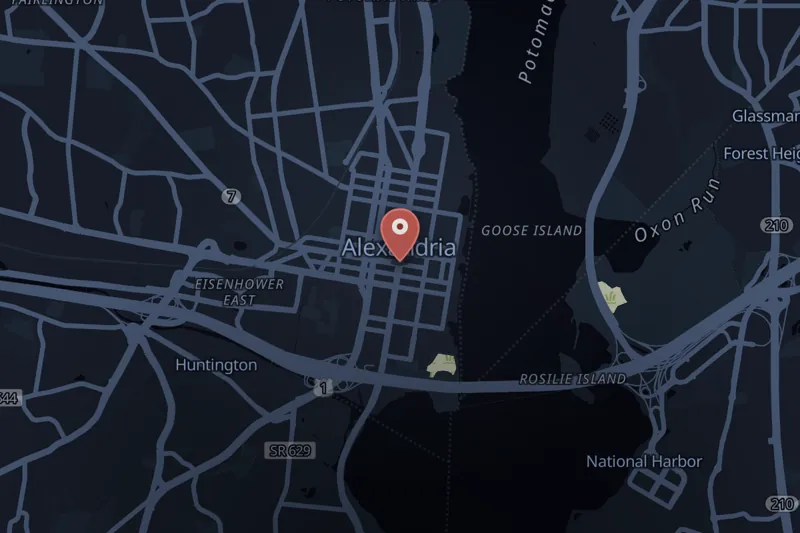
The city of Alexandria began annual remembrances of McCoy in 2020 and installed a historic marker at the lynching site, the corner of Lee and Cameron Streets, in 2021. In 2022, the community collected soil from sites connected to McCoy's life to send to the Equal Justice Initiative in Montgomery, Alabama.

 Credit: U.S. Air Force Technical Sergeant Louis Briscese, Forensic Photography, Office of the…Public domainSourceSOLVEDListen