Casepin
Back to cases

Active case

Lynching of Frazier B. Baker and Julia Baker

UNSOLVED1898Lake City, South Carolina, United States3 SOURCESUPDATED JUL 2026

Documents violence · crimes against children — written to inform, not to shock.

Illustrative

Frazier B. Baker, an African-American schoolteacher and father of six, was appointed postmaster of Lake City, South Carolina, in 1897 during the William McKinley administration. His appointment drew fierce opposition from local white residents, who boycotted the post office, circulated petitions demanding his removal, and eventually burned down the original post office building. Threats against Baker's life continued, which he reported to his superiors in Washington. A lessening of tensions led him to bring his family to Lake City in February 1898.

At around 1:00 a.m. on February 22, 1898, the Baker family's home, which also served as the post office, was set on fire by a white mob. When Baker's son Lincoln opened the door to seek help, he was met with gunfire. As the fire intensified, Frazier Baker attempted to lead his family out; a bullet that struck and killed his two-year-old daughter Julia also wounded his wife Lavinia, who was holding the child. Baker was then shot and killed as he opened the door. Lavinia and several of her children escaped the burning house and hid in nearby shrubbery before reaching a neighbor's home. Two of the children were wounded during the escape; two others escaped unscathed. The family received no medical treatment for three days while remaining in Lake City.

The killings drew widespread condemnation across the country, including in South Carolina newspapers, though the attack was defended by figures such as U.S. Senator Benjamin Tillman. Journalist Ida B. Wells-Barnett publicized the case, organized a protest meeting in Chicago, and met with President McKinley to press for federal action and support for the survivors. Congressional efforts to aid the Baker family failed due to opposition from Southern Democratic legislators.

A Williamsburg County grand jury returned no indictments. Following a federal investigation and a reward offer, prosecutors indicted seven men in July 1898, and ultimately thirteen men were indicted in U.S. Circuit Court in April 1899 on charges including murder, conspiracy, assault, and destruction of mail, after two men agreed to testify for the prosecution in exchange for dropped charges. The trial, held April 10–22, 1899, before an all-white jury, featured testimony implicating multiple defendants, including one witness who admitted to starting the fire. Witnesses faced intimidation, and one Black witness fled the area after threats. The jury deadlocked five to five and a mistrial was declared; the case was never retried.

Lavinia Baker and her surviving children eventually relocated to the Boston area with the help of activists and a fundraising effort. Four of her surviving children later died of tuberculosis between 1908 and 1920. Lavinia returned to South Carolina later in life and died in 1947. In 2013, a South Carolina historical marker was unveiled at the site of the former post office and Baker home in Lake City.

Key facts

Victims
Julia Baker, Frazier B. Baker
Date
1898
Location
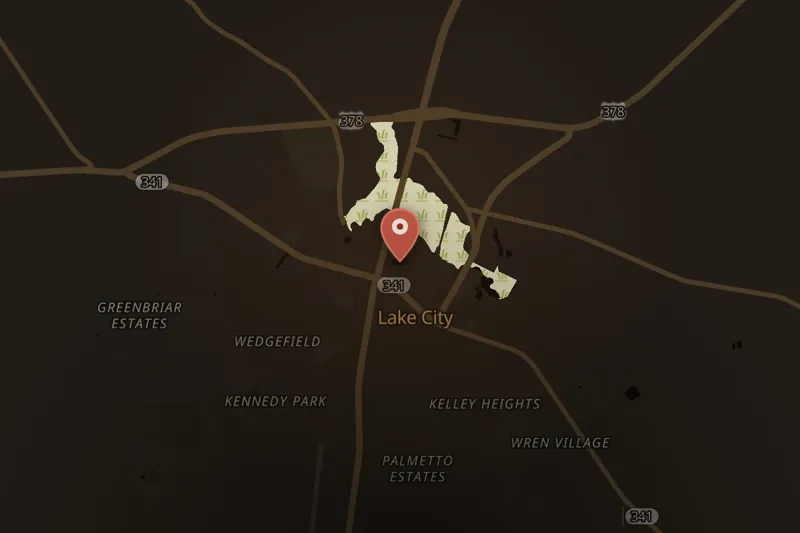
Lake City, South Carolina, United States
Case status
unsolved

Case timeline

  1. 1897

    Frazier B. Baker is appointed postmaster of Lake City, South Carolina, under the McKinley administration.

  2. 1898-02

    A lessening of racial tension leads Baker to send for his family to join him in Lake City.

  3. 1898-02-22

    A white mob sets fire to the Baker home/post office; Frazier Baker and his infant daughter Julia are shot and killed as the family tries to escape the burning building.

  4. 1898-05-02

    A mass meeting at Emmanuel AME Church in Charleston condemns the attack and raises funds for the Baker family.

  5. 1898-07-01

    Prosecutors indict seven men on charges of murdering Frazier Baker.

  6. 1899-04-07

    Thirteen men are indicted in U.S. Circuit Court on charges of murder, conspiracy, assault, and destruction of mail.

  7. 1899-04-10

    Federal trial of the accused begins.

  8. 1899-04-22

    Trial ends in a mistrial after the jury deadlocks five to five; the case is never retried.

  9. 1918

    St. James AME Church is constructed on the site of the burned post office and Baker home.

  10. 1955-10-05

    The St. James AME Church is burned down; locals suspect arson connected to civil rights activism.

  11. 2013-10

    A South Carolina historical marker commemorating the lynching is unveiled on South Church Street, Lake City.

  12. 1942

    Rosa Baker, Lavinia's last surviving child, dies.

  13. 1947

    Lavinia Baker dies in Cartersville, South Carolina.

Best coverage

No approved coverage links are attached yet.

People

  • Julia Baker

    VICTIM

    Two-year-old daughter of Frazier and Lavinia Baker, killed by gunfire during the mob attack on February 22, 1898.

    citation on file

  • Frazier B. Baker

    VICTIM

    African-American postmaster of Lake City, South Carolina, killed by gunfire during a mob attack and arson at his home on February 22, 1898.

    citation on file

Places

Common questions

What happened to the victim?
Frazier B. Baker, the Black postmaster of Lake City, South Carolina, and his infant daughter Julia were killed on February 22, 1898, when a white mob set fire to their home and shot at the family as they fled. A federal trial ended in a mistrial after a deadlocked jury, and no one was ever convicted.
Where did the crime happen?
Lake City, South Carolina, United States.
What is the current status of the case?
Status: unsolved. Last verified July 2026.

Sources

  1. Lynching of Frazier B. Baker and Julia Bakerwikipedia · Wikipedia · 2026-07-07
  2. Contemporaneous coverage — familysearch.orgnews · familysearch.org · 2026-07-07
  3. Contemporaneous coverage — americanantiquarian.orgnews · americanantiquarian.org · 2026-07-07

Last verified JUL 2026