
Start here
Rumors | "Murder in the Orange Grove" | "48 Hours" Podcast (Episode 2)
48 Hours's 32-minute breakdown of the whole case.
Watch on YouTubeSolved case · 1989
Also known as murder of Charles Flynn · Charles Flynn's murder
The short answer
Charles "Chip" Flynn, 22, was fatally shot in a Brevard County, Florida citrus grove in April 1989. Crosley Alexander Green was convicted of the killing based largely on the testimony of Flynn's ex-girlfriend Kim Hallock, but decades of appeals cited withheld evidence and inconsistencies, leading to his conviction being vacated in 2018 before being reinstated in 2022.
Rumors | "Murder in the Orange Grove" | "48 Hours" Podcast (Episode 2)48 Hours · 32 min2 pieces from 1 creator: ranked, with duplicates removed and short clips set aside.
Start here
48 Hours's 32-minute breakdown of the whole case.
Watch on YouTubeMurder in the Orange Grove: The Troubled Case Against Crosley Green | Full Podcast + Episode
 48 HoursVideo · YouTube · 6 hr 7 min · 2024
Titles and descriptions are the creators’ own and may not reflect current legal status. The sourced facts are in the file below. Players load only when you press play. Suggest coverage we’re missing.
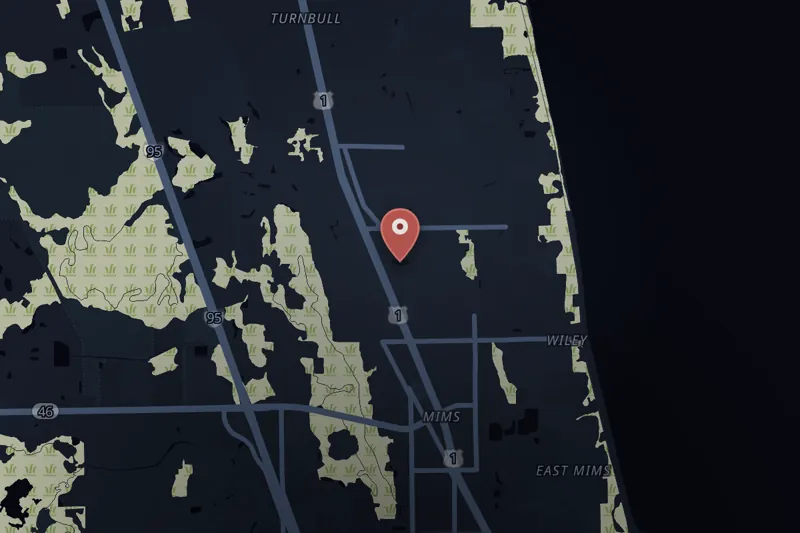
On April 3–4, 1989, 22-year-old Charles Lambert "Chip" Flynn was shot and killed in a citrus grove in Brevard County, Florida. Earlier that night, Flynn had met with his ex-girlfriend Kim Hallock, and the two smoked marijuana, had sex, and later sat in his truck at Holder Park in Mims, Florida. According to Hallock, a man she identified as Crosley Alexander Green approached them armed with a gun, tied Flynn's hands with a shoelace, robbed them, and drove them to a citrus grove. Hallock said Flynn managed to retrieve a gun and fire several shots before she fled on foot to call police. Officers arriving at the scene found Flynn with a single gunshot wound to the chest; his first words were reportedly "Get me outta here. I wanna go home," and he did not mention a robbery or an assailant. He died before an ambulance arrived. At the scene, only Hallock's and Flynn's fingerprints were found, no gunshot residue was found on Flynn's hands, and the only bullet recovered was the one that killed him.
Following a tip and a photo lineup that Green's later appellate attorneys described as suggestive, Green was arrested on June 8, 1989, and charged with kidnapping, robbery, and murder. At his 1989–1990 trial, prosecutors presented shoeprint evidence and three witnesses—including Green's sister, Sheila Green—who claimed Green had confessed. All three witnesses later recanted, with Sheila Green stating she was pressured by police. Green refused a plea deal and was found guilty of first-degree murder by an all-white jury on September 5, 1990, and sentenced to death.
Over the following decades, Green's case underwent extensive appeals. A 1993 motion for a new trial was denied, and the Florida Supreme Court upheld his conviction in 1994. Private investigators, working without pay from 1999, uncovered issues with the shoeprint evidence and testimony, and noted that the truck involved required manual transmission skills questioned in relation to the alleged crime. A 2000 state DNA investigation found no evidence connecting Green to the crime, according to a CBS report from that year, though later reports indicated weak DNA evidence in the truck that could have originated from Green or a family member. Green's death sentence was vacated in 2005, and after further appellate proceedings, he was resentenced to life in 2008. Additional appeals in 2010–2011, including new alibi witnesses, were unsuccessful.
In 2018, a federal court found that prosecutor Christopher White had withheld evidence from Green's defense, and Green was granted a new trial; this was appealed by the State of Florida. Green was released from prison to house arrest pending appellate review. In March 2022, Green's conviction was reinstated by the 11th Circuit Court of Appeals.
Throughout, Green has maintained his innocence, and questions have persisted about inconsistencies in Hallock's account, including changing descriptions of the alleged weapon and physical evidence. Investigators and officials, including responding officers Diane Clarke and Mark Rixey, have suggested Hallock may bear responsibility for Flynn's death, a claim denied by prosecutor Christopher White.
Kim Hallock and Charles Flynn spend the evening together; Hallock later says Crosley Green robbed and abducted them at Holder Park.
Charles Flynn is found shot in a Brevard County citrus grove and dies at the scene before an ambulance arrives.
Crosley Green is arrested and charged with kidnapping, robbery, and murder.
An all-white jury finds Green guilty of first-degree murder; he is later sentenced to death.
Defense attorney Rob Parker files a motion for a new trial.
Florida Supreme Court upholds Green's conviction.
Private investigators, led by Paul Ciolino, begin reviewing the case at the request of anti-death penalty activist Nan Webb.
State of Florida conducts DNA investigation; CBS reports no DNA evidence links Green to the murder.
Green's death sentence is thrown out.
Florida Supreme Court upholds conviction but orders resentencing.
Green is resentenced to life in prison.
Petition for new trial denied despite two new alibi witnesses.
Petition for new trial declined for allegedly missing a deadline.
Green's attorneys win appeal with the 11th Circuit Court of Appeals.
Federal court finds prosecutor Christopher White withheld evidence; Green is granted a new trial.
U.S. Middle District Court of Florida deems the 1990 conviction unconstitutional; Florida Today reports Green won a new trial, later appealed.
Green's and state attorneys argue before the U.S. Court of Appeals over whether the new trial order will be upheld.
Green's conviction is reinstated by the 11th Circuit Court of Appeals.
Victims first. Every legal label is set from public records and court outcomes, not from the prose.
22-year-old man fatally shot in a Brevard County citrus grove on April 4, 1989.[4]
Convicted of first-degree murder in 1990 and sentenced to death (later life imprisonment); conviction vacated in 2018, then reinstated by the 11th Circuit Court of Appeals in March 2022.[4]
Assistant State's Attorney who prosecuted Green; later found by federal courts to have withheld exculpatory evidence from the defense.[4]
Brevard County sergeant who responded to the scene and later suggested Kim Hallock may have been responsible for Flynn's death.[4]
Brevard County deputy who responded to the scene and later suggested Kim Hallock may have been responsible for Flynn's death.[4]
From the record
Coverage is not a source: every fact in this file rests on the records below.
Jul 13, 2026Correction
Catalog QA: Set the attack-to-death range and operative conviction posture, while retaining the contested-conviction caveat.
Are you family of someone named in this file? Corrections and removal requests from victims’ families are prioritized.
 Credit: State of FloridaPublic domainSourceCOLDListen
Mims, Florida, United States · 1950s
On Christmas night 1951, a dynamite bomb planted beneath the bedroom floor of civil rights activists Harry T. Moore and Harriette V.S. Moore's home in Mims, Florida, killed them both, making them the first martyrs of the Civil Rights Movement.
 Credit: Seminole County Sheriff's OfficePublic domainSourceSOLVEDListen
Chuluota, Florida · 2010s
Grant Amato was convicted of murdering his father, mother, and brother at their Chuluota, Florida home in January 2019 after his family confronted him over roughly $200,000 he had spent on a Bulgarian cam model, and he was sentenced to life in prison without parole.
 SOLVEDListen
Deltona, Florida · 2010s
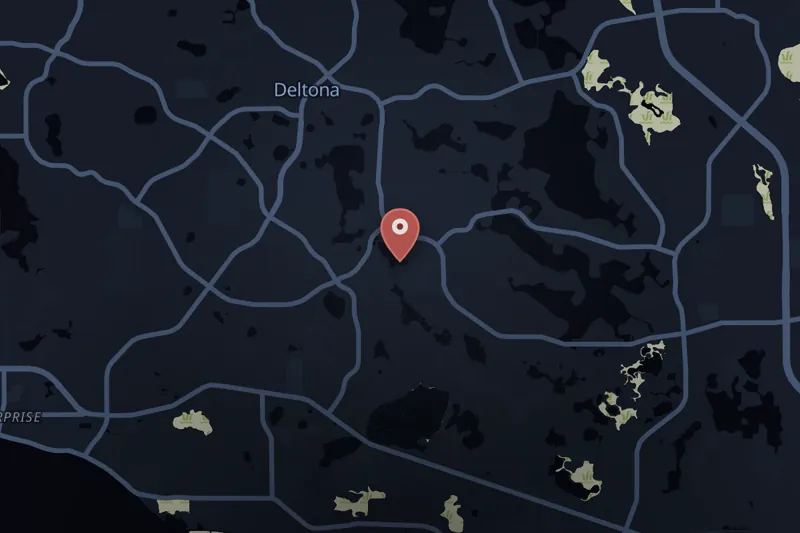
Patrick De La Cerda, 25, was fatally shot at his Deltona, Florida, home in February 2018 by his fiancée's jealous ex-boyfriend, who was later convicted of first-degree murder.
 Credit: Jgb23CC BY-SA 4.0SourceSOLVEDListen
Blacktown / Prospect, New South Wales, Australia · 1986
Anita Cobby, a 26-year-old nurse, was abducted while walking home from Blacktown railway station in Sydney on 2 February 1986, then raped, tortured and murdered by five men. Her body was found two days later; all five perpetrators were convicted in 1987 and sentenced to life imprisonment without parole.
 Credit: D4444n at en.wikipediaCC BY-SA 3.0SourceSOLVEDListen
Grand Hotel, Brighton, England · 1984
On 12 October 1984 the IRA detonated a long-delay bomb at the Grand Hotel in Brighton in an attempt to assassinate Prime Minister Margaret Thatcher and her cabinet during the Conservative Party Conference. Five people were killed and more than thirty injured; Thatcher was uninjured. IRA member Patrick Magee was convicted in 1986 and sentenced to eight concurrent life terms.
 Credit: English WikipediaEditorial useSourceSOLVEDListen
Mercy Road offramp, Interstate 15, San Diego County, California · 1986
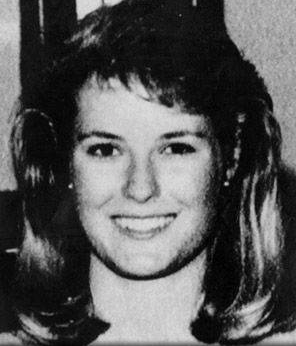
Cara Knott, a 20-year-old San Diego State University student, disappeared on December 27, 1986, while driving home from her boyfriend's house. Her body was found the next day below a bridge near an isolated freeway offramp. California Highway Patrol officer Craig Alan Peyer was convicted of her murder in 1988 after a second trial.
 Credit: Family/Instagram photograph, widely distributed in press coverageEditorial useSourceSOLVEDListen
Moscow, Idaho · 2022
Four University of Idaho students—Madison Mogen, Kaylee Goncalves, Ethan Chapin, and Xana Kernodle—were fatally stabbed inside an off-campus house in Moscow, Idaho, in the early morning hours of November 13, 2022. Bryan Kohberger, a criminology PhD student at nearby Washington State University, was arrested that December and pleaded guilty in 2025, receiving four consecutive life sentences.
 Image recordEditorial useSourceSOLVEDListen
New Canaan, Connecticut, United States · 2019
Jennifer Dulos, a mother of five in New Canaan, Connecticut, disappeared on May 24, 2019, after being attacked at her home; her body has never been found, and she was declared legally dead in 2023. Her estranged husband, Fotis Dulos, was charged with her murder but died by suicide in January 2020 before trial, while his girlfriend, Michelle Troconis, was convicted in 2024 of related charges.
 Credit: Instagram/@gabspetito, widely distributed in press coverageEditorial useSourceSOLVEDListen
Bridger–Teton National Forest, Wyoming · 2021
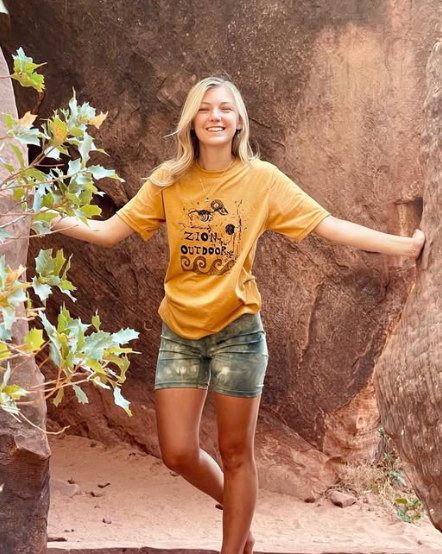
Gabby Petito, a 22-year-old travel vlogger, was killed by strangulation and blunt-force trauma in August 2021 while on a cross-country van trip with her fiancé, Brian Laundrie. Laundrie returned to Florida alone, was named a person of interest, and later died by suicide, leaving a note admitting he had killed her.
 Credit: Wikimedia Commons, photo by Glenn Francis (PacificProDigital.com)Editorial useSourceSOLVEDListen
Hollywood Hills, Los Angeles, California · 2014
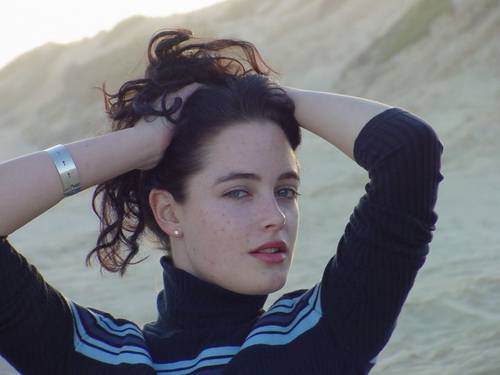
Amie Harwick, a Los Angeles marriage and family therapist and author, was strangled and thrown from her third-floor Hollywood Hills balcony on February 15, 2020, by an ex-boyfriend who had a history of stalking her. He was convicted of first-degree murder in 2023 and sentenced to life without parole.
 Credit: Courtesy Kerry Smith / CNNEditorial useSourceSOLVEDListen
Pretoria, South Africa · 2010s
Model Reeva Steenkamp was shot and killed by her boyfriend, Paralympic and Olympic runner Oscar Pistorius, at his Pretoria home in the early hours of 14 February 2013. After a highly publicized trial, Pistorius was initially convicted of culpable homicide, but South Africa's Supreme Court of Appeal later overturned that verdict and convicted him of murder, ultimately sentencing him to 15 years in prison.
 Image recordEditorial useSourceSOLVEDListen
Lakewood Ranch, Florida, United States · 2016
Ashley Benefield, a former ballerina, shot and killed her estranged husband Douglas Benefield at her mother's home in Lakewood Ranch, Florida, in September 2020; she was convicted of manslaughter with a firearm in 2024 after claiming self-defense.
