Start here
Witnesses and survivors on how horrors of the Brighton bombing changed Britain | ITV News
The creator's telling of the case, the strongest entry point on file.
Watch on YouTubeSolved case · 1984
Also known as Brighton bombing
 Close-up of the damage caused by the Brighton BombCredit: D4444n at en.wikipediaCC BY-SA 3.0Source
The short answer
On 12 October 1984 the IRA detonated a long-delay bomb at the Grand Hotel in Brighton in an attempt to assassinate Prime Minister Margaret Thatcher and her cabinet during the Conservative Party Conference. Five people were killed and more than thirty injured; Thatcher was uninjured. IRA member Patrick Magee was convicted in 1986 and sentenced to eight concurrent life terms.
Witnesses and survivors on how horrors of the Brighton bombing changed Britain | ITV News1 piece from 1 creator: ranked, with duplicates removed and short clips set aside.
Start here
The creator's telling of the case, the strongest entry point on file.
Watch on YouTubeTitles and descriptions are the creators’ own and may not reflect current legal status. The sourced facts are in the file below. Players load only when you press play. Suggest coverage we’re missing.
On 12 October 1984, the Provisional Irish Republican Army (IRA) attempted to assassinate members of the British government, including Prime Minister Margaret Thatcher, by bombing the Grand Hotel in Brighton, England, during the Conservative Party Conference. The explosion killed five people, including Conservative MP Sir Anthony Berry, and injured more than thirty others. Thatcher herself was uninjured.
The bombing followed the IRA leadership's decision, taken during the 1981 Irish hunger strike, to try to kill Thatcher because of her refusal to restore Special Category Status to republican prisoners, a stance that contributed to the deaths of ten hunger strikers. After roughly two years of planning and reconnaissance of the 1982 and 1983 Conservative Party conferences, IRA member Patrick Magee checked into the Grand Hotel under the false name "Roy Walsh" on 15 September 1984 and planted a long-delay bomb concealed behind a bath panel in room 629, weeks before the conference began.
The device exploded at 2:54 am on 12 October 1984, while most guests were asleep. The upward force of the blast dislodged a five-long-ton chimney stack, which crashed through several floors and caused much of the loss of life and injury. Those killed were Sir Anthony Berry MP; Eric Taylor, North-West Area chairman of the Conservative Party; Roberta Wakeham, wife of chief whip John Wakeham; Lady Jeanne Shattock, wife of Conservative official Sir Gordon Shattock; and Muriel Maclean, who died of her injuries about a month later. Norman Tebbit and his wife Margaret were seriously injured; Margaret Tebbit was left permanently paralysed. Thatcher continued with the conference as scheduled, receiving a standing ovation roughly six and a half hours after the explosion.
The police investigation lasted eight months. Forensic examination of hotel registration cards and rubble sent for analysis led investigators to a false registration under the name "Roy Walsh." A partial palm print on the card matched prints taken from Magee following an earlier 1967 arrest in Norwich. Rather than seek extradition, British authorities had Irish police keep Magee under surveillance until he returned to Britain. He was arrested in Glasgow on 22 June 1985 alongside other IRA members as part of a wider investigation into a planned 1985 bombing campaign.
Magee, along with co-defendants Peter Sherry, Gerry McDonnell, Martina Anderson and Ella O'Dwyer, was tried between May and June 1986. He was convicted and sentenced to eight concurrent life sentences, with a recommendation that he serve at least thirty-five years before parole. He was released under licence in June 1999 under the terms of the Good Friday Agreement.
The bombing occurred against the backdrop of ongoing negotiations between the British and Irish governments, which continued despite the attack and led to the 1985 Anglo-Irish Agreement. In 2000, Magee met Jo Berry, daughter of Sir Anthony Berry, at her request; the two later co-founded an organisation aimed at reconciliation dialogue.
Bobby Sands begins hunger strike at the Maze prison over Special Category Status; the IRA later decides to try to assassinate Thatcher during this period.
IRA volunteers reconnoitre the Conservative Party conference in Brighton as part of planning.
Patrick Magee and another IRA member visit Blackpool ahead of that year's Conservative Party conference.
An IRA arms and bomb-making cache, including long-delay timers, is found buried in Salcey Forest.
Patrick Magee checks into the Grand Hotel, Brighton, under the false name 'Roy Walsh' and books room 629.
Magee and accomplices finish assembling and concealing the bomb behind a bath panel in room 629.
The Conservative Party Conference begins in Brighton.
The bomb explodes at 2:54 am at the Grand Hotel, killing five people and injuring more than thirty; Thatcher is uninjured and the conference continues later that day.
A partial palm print on the hotel registration card is matched to Patrick Magee.
Magee is arrested in Glasgow along with Peter Sherry, Gerry McDonnell, Martina Anderson and Ella O'Dwyer.
The Anglo-Irish Agreement is signed between the British and Irish governments.
The trial of Magee and co-defendants opens.
The trial concludes; Magee is convicted and sentenced to eight concurrent life sentences with a minimum of thirty-five years recommended before parole; other defendants are also sentenced.
Magee is released under licence as part of the Good Friday Agreement.
Magee meets Jo Berry, daughter of victim Sir Anthony Berry, at her request.
Victims first. Every legal label is set from public records and court outcomes, not from the prose.
North-West Area chairman of the Conservative Party, killed in the bombing[3]
Wife of Conservative official Sir Gordon Shattock, killed in the bombing[3]
Injured in the bombing, left permanently paralysed[3]
Wife of Sir Donald Maclean, died of injuries from the bombing about a month later[3]
Secretary of state for trade and industry, seriously injured in the bombing[3]
Wife of chief whip John Wakeham, killed in the bombing[3]
Conservative MP and deputy chief whip, killed in the bombing[3]
IRA member convicted in 1986 and sentenced to life imprisonment in connection with the related 1985 bombing campaign[3]
IRA member convicted in 1986 and sentenced to life imprisonment in connection with the related 1985 bombing campaign[3]
IRA member convicted in 1986 and sentenced to life imprisonment in connection with the related 1985 bombing campaign[3]
IRA bomb maker convicted in 1986 of planting the device; sentenced to eight concurrent life sentences[3]
IRA member convicted in 1986 and sentenced to life imprisonment in connection with the related 1985 bombing campaign[3]
IRA sympathiser convicted of aiding and abetting by providing premises; sentenced to eight years, reduced to six on appeal[3]
From the record
Coverage is not a source: every fact in this file rests on the records below.
Are you family of someone named in this file? Corrections and removal requests from victims’ families are prioritized.
 Credit: Unknown author Unknown authorPublic domainSourceCOLDListen
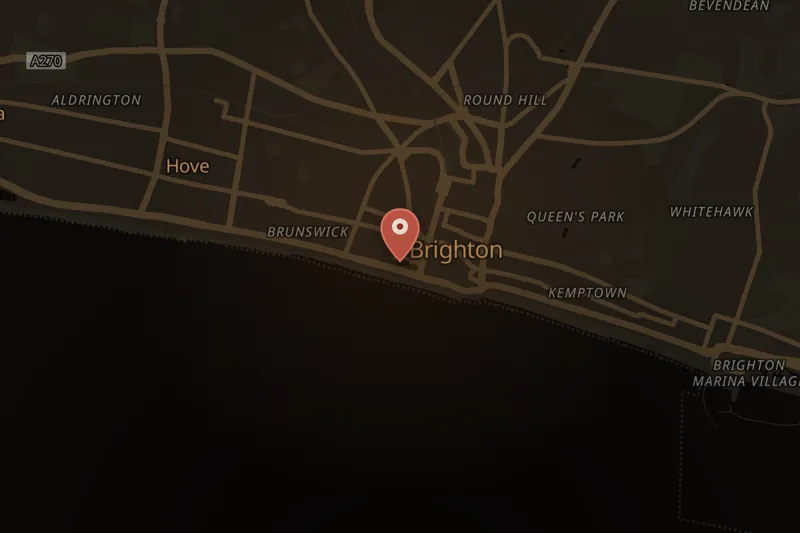
Brighton, England · 1930s
In 1934, two separate murders in Brighton, England involved women's bodies being found in trunks. The first victim remains unidentified and her killer was never found. The second victim, Violette Kaye, was found in her partner Toni Mancini's lodgings; Mancini was tried for her murder and acquitted, but confessed to killing her decades later, shortly before his death.
Happy Valley bridleway between Ovingdean and Woodingdean, near Brighton · 1960s
In May 1967, 12-year-old Keith Lyon was stabbed to death while walking alone on a bridleway near Brighton, England. Despite one of the largest murder investigations in Sussex history, no one has ever been charged, and the case remains unsolved.
 SOLVEDListen
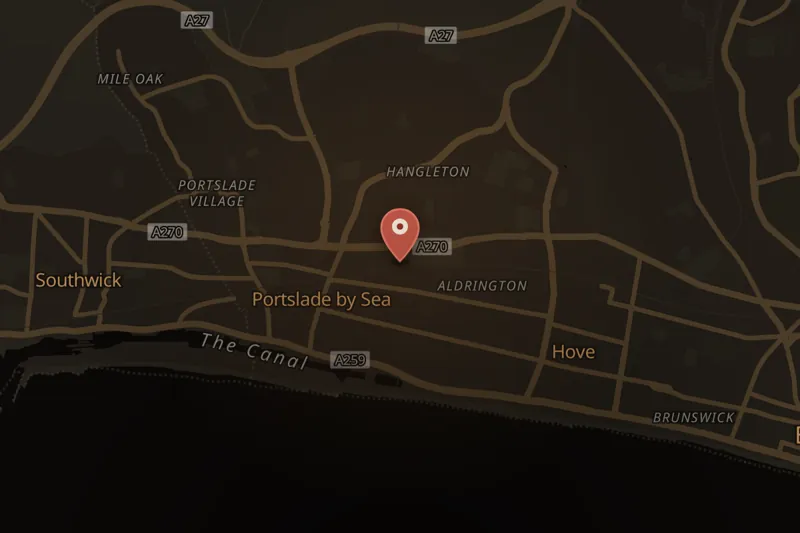
Portslade, East Sussex, England · 2010s
Shana Grice, 19, was murdered in 2016 by former friend Michael Lane, who had stalked her for months; Sussex Police faced widespread criticism for failing to act on her repeated complaints before her death.
 Credit: Sam KushnerPublic domainSourceUNSOLVEDListen
6221 Osage Avenue, Cobbs Creek, Philadelphia, Pennsylvania · 1985
On May 13, 1985, Philadelphia police dropped two bombs on a house occupied by the MOVE organization in the Cobbs Creek neighborhood; the resulting fire, which police allowed to burn for 90 minutes, killed eleven people — six adults and five children — and destroyed 61 homes.
 Credit: Randy Gaddo, Marine Staff Sgt.Public domainSourceUNSOLVEDListen
Beirut International Airport and Ramlet al Baida, Beirut, Lebanon · 1983
On October 23, 1983, two truck bombs struck buildings housing U.S. and French peacekeepers in Beirut, Lebanon, killing 307 people — 241 U.S. and 58 French military personnel, six civilians, and two attackers — in one of the deadliest single-day losses for the U.S. military since World War II.
 Credit: Nick SmithCC BY-SA 2.0SourceUNSOLVEDListen
Royal Marine Depot, Deal, Kent, England · 1989
On 22 September 1989, the Provisional IRA detonated a time bomb at the Royal Marines School of Music in Deal, England, collapsing the recreational and accommodation buildings and killing 11 Royal Marines Band Service musicians, with 21 more injured. No one has ever been arrested or convicted.