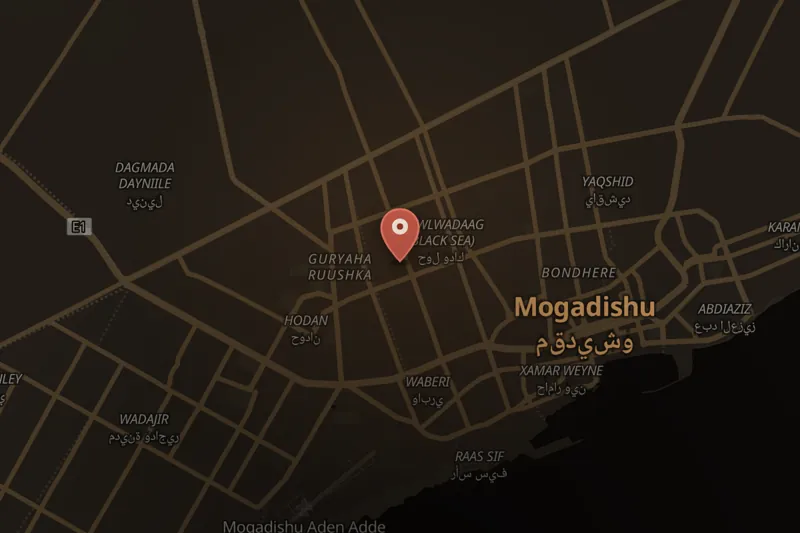
On 4 October 2011, a suicide bomber drove a truck laden with explosives into the gate of a security checkpoint leading to the Transitional Federal Government's (TFG) ministerial complex in Mogadishu, Somalia. The complex, located in the K4 (Kilometre Four) district, housed the Ministry of Education building. The resulting explosion killed 100 people and injured more than 110 others. Eyewitnesses reported the blast was audible for several miles.
Reports indicated that the intended target may have been roughly 150 young Somalis scheduled to be flown to Sudan for training as intelligence operatives. Instead, the bombing struck a crowd that included students and parents waiting outside the Ministry of Higher Education for news of scholarships to study in Sudan and Turkey. Some accounts stated students were taking an exam at the time of the blast. Turkey's Foreign Ministry clarified that students had been queuing for the results of Turkish-offered scholarships when the explosion occurred. While many casualties were students and their parents, other victims were non-student civilians caught in the attack.
The bombing occurred against the backdrop of a severe regional drought in East Africa during summer 2011, which had displaced tens of thousands of Somalis into Ethiopia and Kenya. Al-Shabaab, an Islamist insurgent group, had threatened to expel aid organizations operating in the famine-affected region before African Union Mission in Somalia (AMISOM) troops intervened to secure aid access, prompting Al-Shabaab's withdrawal from the area in August 2011. The attack is reported to be the largest carried out by Al-Shabaab since it launched its insurgency in early 2007, and followed the group's earlier claim of responsibility for a July 2010 bombing in Kampala, Uganda, targeting Ugandan support for AMISOM. On the day of the Mogadishu attack, Al-Shabaab also launched simultaneous attacks in the south and west of Somalia.
Al-Shabaab publicly claimed responsibility, stating that a "mujahideen made the sacrifice to kill TFG officials, the African Union troops and other informers who were in the compound." A spokesman for the group, Ali Mohamud Rage, warned Somalis to "keep away from government buildings and the bases of their soldiers," saying "more serious blasts are coming."
Somali President Sharif Sheikh Ahmed condemned the attack as a "cruel and inhumane act of violence against the most vulnerable in our society." His communications director, Suldan Sarah, called it a "cowardly act" and noted that security services had foiled other planned attacks in the preceding month. International reaction included condemnation from UN Secretary-General Ban Ki-moon's spokesman, who called it a "vicious suicide bomb attack," Turkish Prime Minister Recep Tayyip Erdoğan, who offered to bring wounded victims to Turkey for medical treatment, and the White House, which condemned the "despicable and cowardly act" targeting students seeking scholarships abroad. AMISOM and TFG forces cordoned off the area following the blast.

 Credit: Office of Boston MayorPublic domainSourceSOLVEDListen