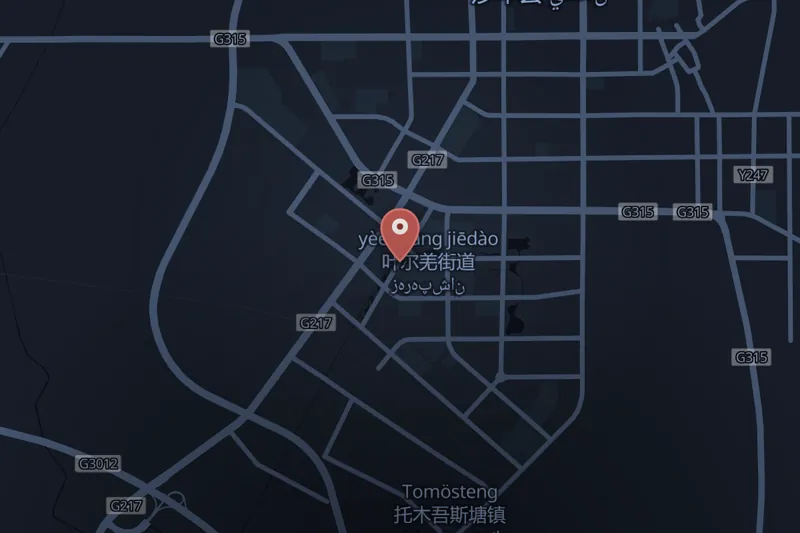
On 28 July 2014, violence broke out in Yarkand County (officially Yarkant) in Kashgar Prefecture, Xinjiang, China, and continued for several days as Chinese police worked to suppress local unrest. According to Chinese authorities, who reported the incident on 2 August 2014, it was an "organized, premeditated, well-planned, and vicious" terrorist attack against local police stations and government offices, allegedly organized by a group with ties to the East Turkestan Islamic Movement (ETIM), also known as the Turkistan Islamic Party (TIP).
Independent media and the World Uyghur Congress (WUC), citing interviews with residents, presented a different account. They reported that the unrest began with a protest march following the extrajudicial killing of a Uyghur family of five during house-to-house searches in Bashkent Township (also called Beshkent or Huangdi), which were prompted by reports of illegal prayer gatherings. The protests were reportedly peaceful at first but escalated after Chinese authorities used excessive force. According to an Agence France-Presse report citing local residents, in nearby Elishku Township about 500 people — including some who had fled Bashkent Township — marched through the streets on 28 July armed with knives, axes, and farming tools, and were confronted by military police armed with assault rifles. One resident, identified as Mahmouti, said police shouted for the crowd to back off before opening continuous gunfire, followed by roughly an hour of intermittent gunfire. Another resident, Yusup, said none of the demonstrators who left for the protest returned, and he estimated that about 1,000 people went missing. Additional fatalities were reported during house-to-house searches over the following days in four villages in the region, though accounts differ as to whether most deaths occurred on the first day or afterward.
The official casualty count was 96 dead, comprising 59 alleged attackers and 37 bystanders (35 Han Chinese and 2 Uyghurs). The Hong Kong–based Apple Daily reported that sources close to military intelligence described the events as a massacre in which between 3,000 and 5,000 people from four villages were killed with no survivors. The WUC's exiled president claimed more than 2,000 people died.
Investigation into the events has been hampered by Chinese government restrictions on reporting and censorship of independent and social media. Foreign journalists who tried to investigate were denied access and later reported being unable to find local residents willing to speak without fear of intimidation. Internet and mobile access in the region was severely restricted afterward. Activists in China who shared information about the incident with international organizations were arrested and sentenced for revealing "state secrets." Authorities officially named Nuramat Sawut as the alleged ringleader, accusing him of close links to the TIP. In 2016 the WUC described the incident as the deadliest in the region since the 2009 Urumqi unrest. In 2018, Apple Daily reported that several officials involved had been detained on bribery accusations.

 ONGOINGListen