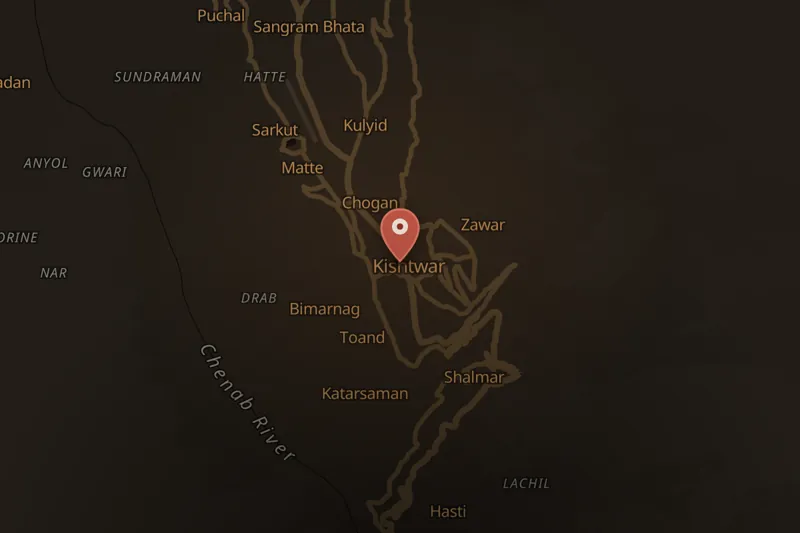
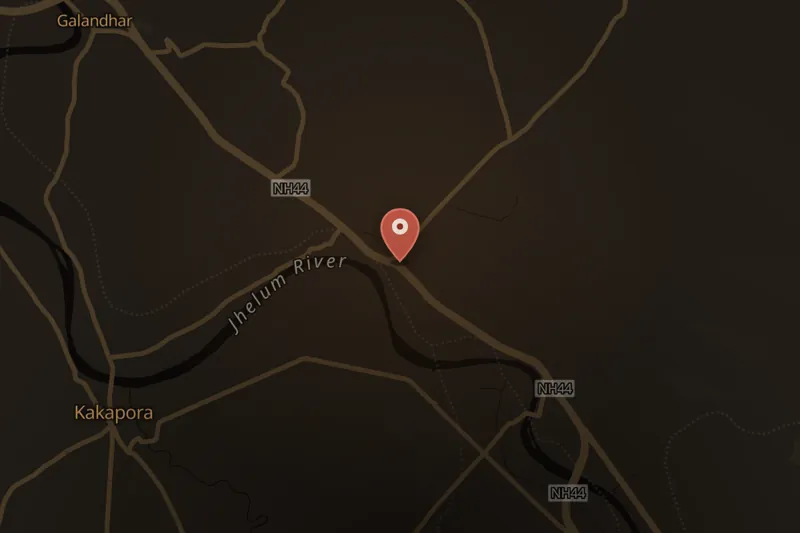
On 14 February 2019, a convoy of 78 vehicles carrying more than 2,500 Central Reserve Police Force (CRPF) personnel was travelling from Jammu to Srinagar on National Highway 44. Around 15:15 IST, near Lethapora in the Pulwama district of the then state of Jammu and Kashmir, a car loaded with explosives rammed a bus in the convoy. The resulting blast killed 40 CRPF personnel of the 76th Battalion and injured others, who were taken to the army base hospital in Srinagar. It was described as the deadliest attack on India's state security personnel in Kashmir since 1989.
The Pakistan-based militant group Jaish-e-Mohammed claimed responsibility and released a video of the man identified as the bomber, Adil Ahmad Dar, a 22-year-old from Kakapora in Pulwama district who had joined the group roughly a year earlier. According to his parents, Dar had been arrested by Indian authorities several times between 2016 and 2018 without charge and was radicalized after being beaten by police. Pakistan denied any connection to the attack, though Jaish-e-Mohammed's leader, Masood Azhar, is known to operate from Pakistani territory.
The Indian government had reportedly received multiple intelligence inputs in the days before the attack, and the convoy travelled by road rather than air after a request for CRPF aircraft was not granted. The National Investigation Agency (NIA) led the investigation, working with Jammu and Kashmir Police. Investigators said the vehicle used in the attack carried more than 300 kilograms of explosives, including RDX and ammonium nitrate; DNA analysis of car fragments matched Dar's father, confirming his identity as the bomber. An NIA charge-sheet filed in August 2020 named 19 accused; by August 2021, the main accused and six others had reportedly been killed and seven arrested.
The attack triggered a rapid deterioration in India–Pakistan relations. India revoked Pakistan's most-favoured-nation trade status and raised customs duties on Pakistani goods, and pushed for Pakistan's blacklisting by the Financial Action Task Force, which instead kept Pakistan on its "grey list." Domestically, the attack prompted protests, a curfew in Jammu, and reports of harassment and eviction of Kashmiri students in other parts of India. Internationally, the United States, United Nations, and numerous countries condemned the attack, while China blocked a UN Security Council move to designate Masood Azhar a global terrorist.
The crisis escalated further on 26 February 2019, when Indian Mirage 2000 jets struck a site in Balakot, Pakistan, which India described as a Jaish-e-Mohammed training camp. This was followed by an aerial engagement in which an Indian MiG-21 was shot down over Pakistan and its pilot captured; the pilot was released on 1 March 2019. Pakistan subsequently arrested dozens of individuals linked to militant groups, including relatives of Masood Azhar.

 UNSOLVEDListen