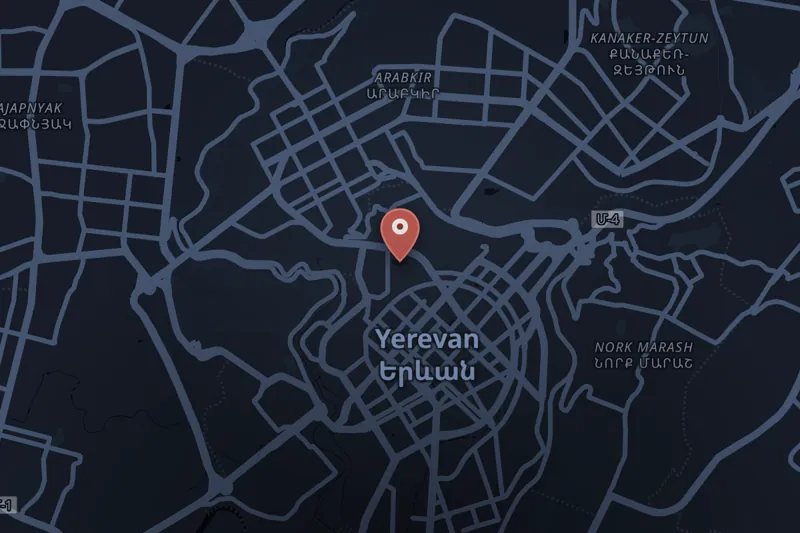
On 27 October 1999, at around 5:15 p.m., five armed men led by former journalist Nairi Hunanyan entered the National Assembly building in Yerevan, Armenia, with Kalashnikov rifles concealed under long coats. The attack occurred while the government was holding a question-and-answer session in parliament. The gunmen fatally shot eight people: Prime Minister Vazgen Sargsyan, National Assembly Speaker Karen Demirchyan, Deputy Speakers Yuri Bakhshyan and Ruben Miroyan, Minister of Urgent Affairs Leonard Petrosyan, and Members of Parliament Henrik Abrahamyan, Armenak Armenakyan, and Mikayel Kotanyan. At least 30 others were injured. Hunanyan was accompanied by his brother Karen Hunanyan, his uncle Vram Galstyan, and two others, Derenik Ejanyan and Eduard Grigoryan. The group described their actions as a "patriotic" act intended to punish the political leadership, and said the killing of Sargsyan—identified as the primary target—was intentional, while describing the other deaths as unintended.
Following the shooting, security forces, including armored personnel carriers, surrounded the parliament building, and the gunmen held roughly 50 hostages while demanding a helicopter and television airtime for a political statement. President Robert Kocharyan directed the security response and negotiated overnight with the attackers, guaranteeing their personal security and a fair trial. The hostages were released and the gunmen surrendered on the morning of 28 October, after a standoff lasting 17–18 hours. Kocharyan declared a three-day period of mourning, and a state funeral for the victims was held from 30 to 31 October 1999 at the Yerevan Opera Theater.
The five men were charged with terrorism aimed at undermining state authority on 29 October 1999. The Chief Military Prosecutor, Gagik Jhangiryan, led an investigation that considered more than a dozen theories, including possible links to figures close to President Kocharyan; several individuals in Kocharyan's circle were arrested in early 2000 but later released, and no evidence tying Kocharyan to the shooting was found. The case was transferred to the jurisdiction of the Prosecutor General, and the broader investigation into possible masterminds was eventually closed for lack of evidence. The case went to trial in Yerevan's Kentron and Nork-Marash District Court beginning 15 February 2001. On 2 December 2003, Nairi Hunanyan, Karen Hunanyan, Vram Galstyan, Derenik Ejanyan, and Eduard Grigoryan were convicted and sentenced to life in prison.
The shooting has remained the subject of extensive conspiracy theories, most involving allegations against President Kocharyan and National Security Minister Serzh Sargsyan, as well as claims of Russian or other foreign involvement, including allegations made by former Russian intelligence officer Alexander Litvinenko. No conclusive evidence has substantiated these theories. The killings eliminated the "Demirchyan-Sargsyan tandem" that had controlled Armenia's legislative branch, leading to a consolidation of power around President Kocharyan and lasting political consequences in the country.

 Credit: GardmanahayCC BY-SA 4.0SourceSOLVEDListen