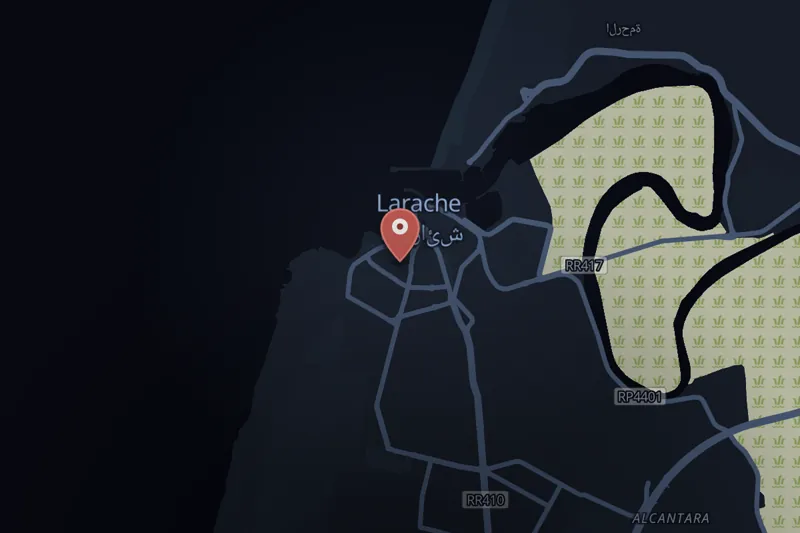
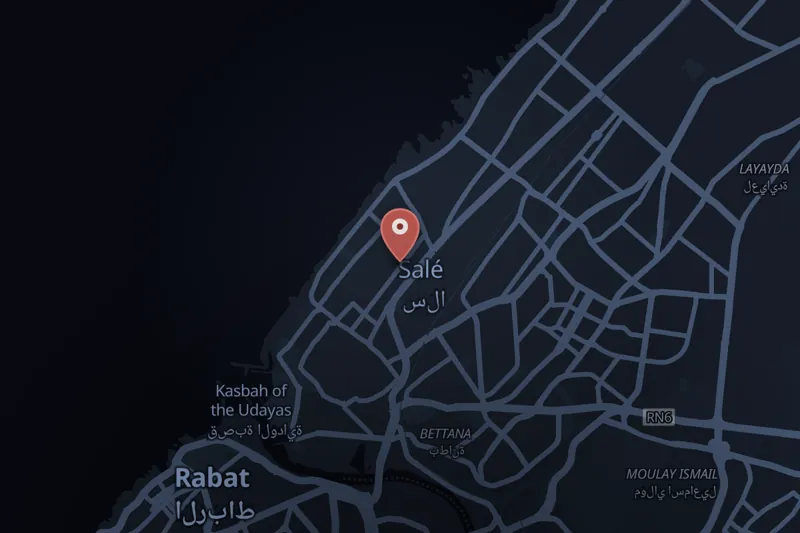
The Battle of Salé was a raid carried out in 1260 against the Moroccan city of Salé, then governed by the Marinid dynasty, by forces under King Alfonso X of Castile. According to historian Ibn Khaldun, the raid was connected to internal Marinid politics: Yacoub ben Abdellah Marinid rebelled against his uncle, Abu Yusuf Yaqub ibn Abd Al-Haqq, and sought assistance from Alfonso X. Ruy López de Mendoza, Admiral of Castile, assembled an armada to support Castilian military activity along the North African coast. Salé held significant strategic and commercial value at the time, serving as a gateway to the northern Moroccan region of Azghar.
The attack took place around September 1260, corresponding to the day before Eid al-Fitr in the year 658 of the Hijra. Thirty-seven Castilian warships were dispatched to Salé, and on 2 Shawwal, Castilian forces landed in the city. With residents occupied in Eid al-Fitr celebrations, the attackers killed a large number of people in what is described as the largest massacre in the city's history to that point. Castilian forces plundered property and caused widespread destruction throughout the city. Women, children, and elderly residents were gathered into the Great Mosque of Salé, and approximately 3,000 people were taken as captives and transported to Seville as slaves.
Salé remained under Castilian occupation for approximately two weeks. Sultan Yacoub ben Abdelhaq then moved to relieve the city, ordering Marinid troops to march to its gates with instructions to kill all Castilian soldiers present. Some Castilian soldiers managed to escape after looting and burning homes and shops during the retreat. Following the liberation of Salé, the Sultan ordered construction of the Borj Adoumoue fortification and a wall facing the Bou Regreg river, apparently as defensive measures against further incursions. After the failure of the campaign, Ruy López de Mendoza fled to Portugal, reportedly out of fear of King Alfonso X's reaction.
The episode is recorded primarily through the account of medieval historian Ibn Khaldun, and is documented today as part of the history of Salé and of Castilian-Marinid conflict in the thirteenth century.

 SOLVEDListen