Background
Beginning in 1942, German occupation authorities in Norway brought in roughly 5,000 Yugoslav political prisoners and prisoners-of-war, alongside prisoners of other nationalities, to perform forced labor on infrastructure projects including roads, railways, and fortifications. Many of these prisoners were Serbs transferred from the Independent State of Croatia to German custody. Camp guard duties in North Norway were carried out by Hirdvaktbataljonen, a battalion of the Norwegian paramilitary organization Hirden, which supplied guards to four main camps—Lager 1 Beisfjord, Lager 2 Elsfjord, Lager 3 Rognan, and Lager 4 Karasjok—between June 1942 and April 1943. SS-Kommandant Hermann Dolp oversaw operations that, together with German and Norwegian subordinates, are estimated to have victimized as many as 3,000–4,000 individuals across these camps.
The Massacre
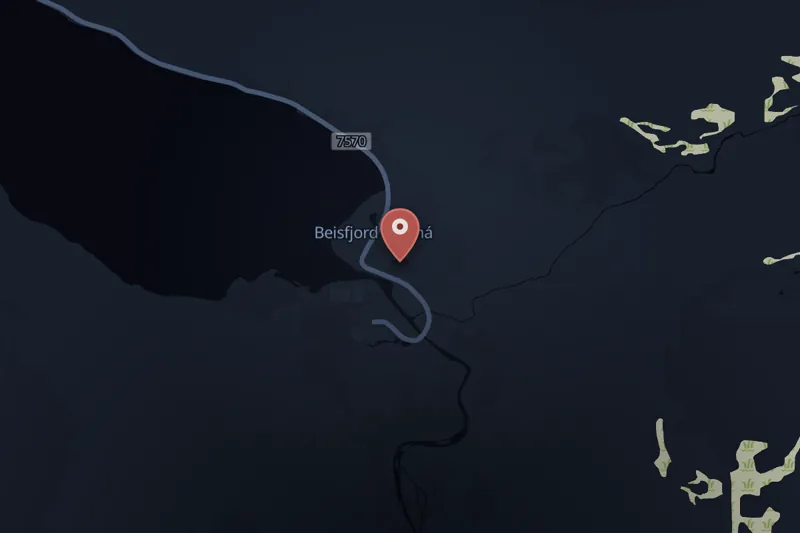
On 24 June 1942, roughly 900 Yugoslav prisoners arrived at the Fagernes Pier in Narvik and were marched roughly ten kilometers to Beisfjord; several were killed or died along the route. On 12 July 1942, German officers and a German and Norwegian physician inspected the camp; a Norwegian doctor selected 85 prisoners suspected of typhoid fever without conducting blood or stool tests, reportedly choosing them based on their frail appearance. The camp was quarantined by the SS on 15 July 1942, citing fears of a typhus outbreak; a former prisoner's later account confirmed unhealthy conditions and an actual typhus outbreak.
On the evening of 17 July 1942, the 588 prisoners deemed "healthy" were marched out of the camp toward Bjørnfjell by nearly all Norwegian guards and some German superiors. The remaining "weak and exhausted" prisoners at Beisfjord were then ordered to dig their own graves and were shot in groups of twenty, a total of 288 people. Prisoners unable to stand were left in two barracks that were doused in gasoline and set alight; those attempting to flee the fire were shot, including by machine gun fire from a watchtower. Seventeen Norwegian guards were reported present and to have played a role in the killings. The order for the massacre had reportedly been given by Reichskommissar Josef Terboven days earlier.
At Bjørnfjell, the marched-out prisoners were also subjected to fatal mistreatment, including forced runs around the camp with those unable to complete them being shot. Over roughly five weeks, 242 of these prisoners died; 43 more classified as sick were shot during the return march to Beisfjord.
Legacy
In spring 1946, seven of approximately twenty SS officers who had served at the Beisfjord and Øvre Jernvann camps were arrested, transported to Belgrade, and sentenced to death; Norwegian guards implicated in killings or abuse were also arrested and convicted after the war. A monument to the Yugoslav victims was erected at Beisfjord in 1949, with a further monument unveiled in 2011. Subsequent commentary, including from Norwegian researchers and Efraim Zuroff of the Simon Wiesenthal Center, has raised concerns about limited historical attention in Norway to the role of Norwegian paramilitary guards in the atrocities.

 Credit: Unknown authorPublic domainSourceSOLVEDListen


