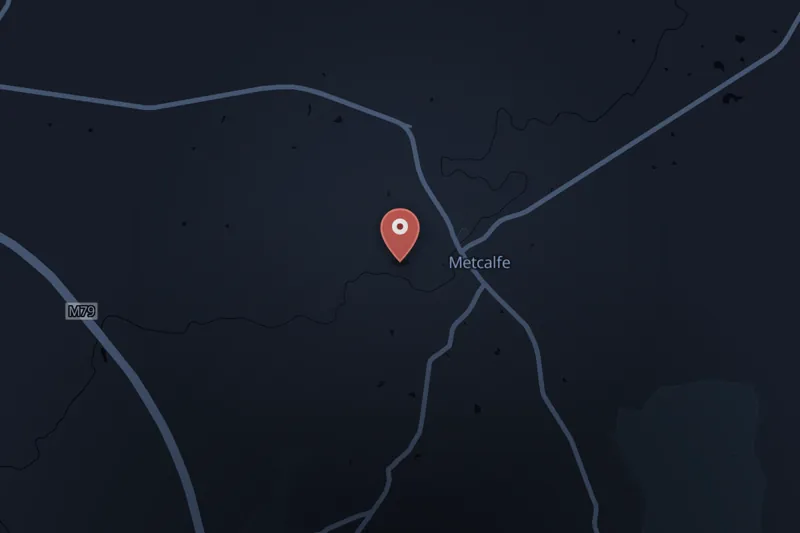
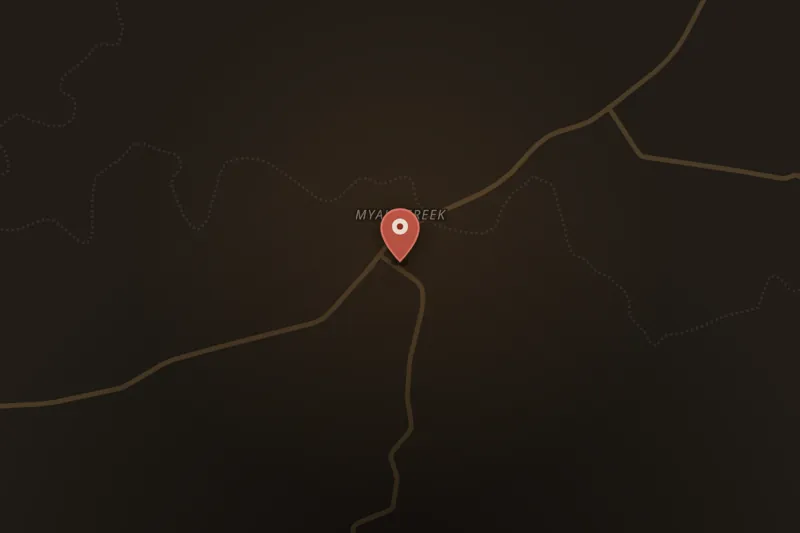
The Blood Hole massacre took place at Middle Creek, located 10–11 kilometres from Glengower Station between Clunes and Newstead in what is now the Australian state of Victoria. The killings occurred at the end of 1839 or in early 1840 and resulted in the deaths of an unknown number of Aboriginal people from the Grampians district.
According to the historical account, the victims were part of a group traveling home after trading goods for green stone axe blanks obtained near what is now Lancefield, at a quarry site known as Mount William near the Greenstone quarry. Their trading route took them through Middle Creek, a known camping place on the journey between the Grampians and the quarry.
Glengower Station had been established by Captain Dugald McLachlan, who at times employed local Aboriginal people from the Dja Dja Wurrung (Jaara people). Station employees also periodically distributed flour and sugar rations to Aboriginal people in the area. The account states that a cook at the station distributed flour that had been laced with plaster of Paris. In response, the Aboriginal party killed the cook and consumed meat that was hanging in the station kitchen.
Subsequently, the Aboriginal travelers who had passed through the station on their way home were located at Middle Creek, at the waterhole that became known as Blood Hole, west of Glengower Station. When confronted, they attempted to escape by diving into the waterhole. They were shot one at a time as they surfaced for air.
The precise number of people killed in this incident is unknown. No victims or perpetrators are identified by name, and no legal proceedings, charges, or convictions arising from the incident are documented. The massacre is referenced in broader public discussion of Australia's colonial-era frontier violence and has been cited in connection with efforts, such as Victoria's truth-telling process, to document and address historical injustices against Aboriginal communities.

 SOLVEDListen