Case file
Bulhoek massacre

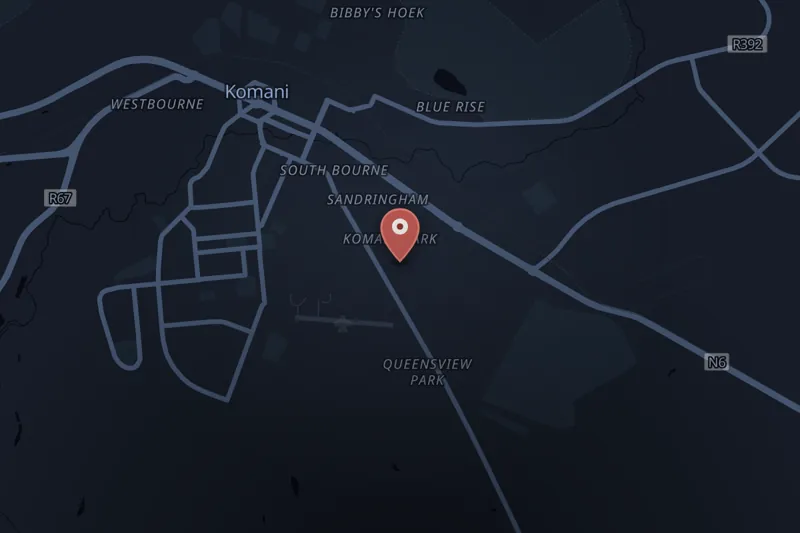
The Bulhoek massacre took place on 24 May 1921 in the village of Ntabelanga, in the Bulhoek valley of the Cape Province (now Eastern Cape), South Africa. An 800-strong police force of the Union of South Africa, led by Colonel Johan Davey and General Koos van der Venter, confronted around 500 members of a religious community known as the "Israelites," led by lay preacher Enoch Mgijima. The Israelites were armed with spears and knobkerries; the police were equipped with machine guns, a cannon, and artillery. After final negotiations failed, a battle lasting approximately 20 minutes resulted in an estimated 163 Israelites killed, 129 wounded, and 95 taken prisoner, including Mgijima himself.
The confrontation had its roots in events dating to 1912, when Mgijima broke away from the Wesleyan Methodist Church and later the Church of God and Saints of Christ, forming a following that took the name "Israelites." Mgijima's community began occupying land at Ntabelanga in 1919 following a Passover festival, and despite government efforts—including a census attempt in December 1920, mediation by a group of prominent Africans, and a Native Affairs Commission convened by Prime Minister Jan Smuts in April 1921—the Israelites refused to vacate the land. On 21 May 1921, Colonel Truter issued an ultimatum demanding evacuation by 23 May; Mgijima responded on 22 May reaffirming his refusal to move.
Those killed in the massacre were buried at Bulhoek on 25 May 1921. Mgijima, his brother Charles, and Gilbert Matshoba were sentenced to five years' hard labour at DeBeer's Convict Station in Kimberley; other Israelites received sentences ranging from suspended terms to 12–18 months hard labour. Mgijima was released in 1924 and continued leading the Israelites until his death on 5 March 1929.
The massacre drew significant public response. The South African Native National Congress (SANNC, later the ANC), meeting in Bloemfontein on the day of the massacre, condemned the government's actions and linked the Israelites' plight to the Natives Land Act of 1913. The Industrial and Commercial Workers Union also expressed support for the Israelites. A Vigilance Committee of Queenstown formed in defense of the government's response, joined by local English-descendant organizations. Newspaper coverage was divided, with some publications criticizing the Israelites and others criticizing the government's handling of the situation.
In the aftermath, the state altered its approach to prophetic religious movements, including the 1922 arrest and subsequent institutionalization of prophet Nontetha, reportedly motivated in part by fears of a repeat of Bulhoek. Contemporary Israelite adherents continue an annual pilgrimage to the Bulhoek gravesite on 24 May. In 2016, several local municipalities were amalgamated to form the Enoch Mgijima Local Municipality in his honour.

Key facts
- Victims
- On file
- Date
- 1921
- Location
- Ntabelanga, Bulhoek valley, Cape Province (present-day Eastern Cape)
- Case status
- solved
Case timeline
1912-11
Enoch Mgijima begins baptising followers in the Black Kei River after breaking from the Wesleyan Methodist Church and joining the Church of God and Saints of Christ.
1914
The South African Church of God and Saints of Christ splits; Mgijima's followers adopt the name "Israelites."
1919
Mgijima is granted permission to hold a Passover festival at Ntabelanga in the Bulhoek sub-section; some followers remain and begin settling on the land afterward.
1920-12
Senior Magistrate ECA Welsh visits Ntabelanga with 100 police officers to conduct a census; the Israelites refuse to participate.
1920-12-17
High-ranking government officials meet with Israelite leaders in Queenstown; the meeting is unsuccessful.
1921-04
The Native Affairs Commission, sent by Prime Minister Jan Smuts, holds meetings with Israelite representatives between 6 and 8 April 1921; the Israelites continue to occupy the land.
1921-05-21
Colonel Truter sends Mgijima an ultimatum to evacuate the land by 23 May 1921.
1921-05-22
Mgijima sends representatives with a letter reaffirming his refusal to leave the land.
1921-05-24
The Bulhoek massacre occurs: an 800-strong police force and roughly 500 Israelites clash; an estimated 163 Israelites are killed, 129 wounded, and 95 taken prisoner.
1921-05-25
The 163 Israelites killed in the massacre are buried at Bulhoek.
1922
Prophet Nontetha is arrested by authorities reportedly fearful of a repeat of the Bulhoek massacre.
1924
Enoch Mgijima is released from prison and returns to leading the Israelites.
1929-03-05
Enoch Mgijima dies.
2016-08-03
Tsolwana, Inkwanca and Lukhanji local municipalities are amalgamated to form the Enoch Mgijima Local Municipality in his honour.
Best coverage
No approved coverage links are attached yet.
People
Gilbert Matshoba
CONVICTEDSentenced to five years' hard labour at DeBeer's Convict Station in Kimberley.
Enoch Mgijima
CONVICTEDLeader of the Israelites; sentenced to five years' hard labour at DeBeer's Convict Station in Kimberley following the massacre.
Johan Davey
LAW ENFORCEMENTColonel who led the 800-strong police force at Bulhoek.
Charles Mgijima
CONVICTEDEnoch Mgijima's elder brother; sentenced to five years' hard labour at DeBeer's Convict Station in Kimberley.
Koos van der Venter
LAW ENFORCEMENTGeneral who led the 800-strong police force at Bulhoek.
Roles reflect public records and court outcomes at the time of writing — supporting citations are on file under Sources.
Places
Common questions
- What happened to the victim?
- On 24 May 1921, an 800-strong white-led South African police force killed an estimated 163 Xhosa "Israelite" followers of Enoch Mgijima at Ntabelanga in the Bulhoek valley, Cape Province, after a prolonged land dispute.
- Where did the massacre happen?
- Ntabelanga, Bulhoek valley, Cape Province (present-day Eastern Cape).
- Who was convicted?
- Gilbert Matshoba (Sentenced to five years' hard labour at DeBeer's Convict Station in Kimberley.), Enoch Mgijima (Leader of the Israelites; sentenced to five years' hard labour at DeBeer's Convict Station in Kimberley following the massacre.), and Charles Mgijima (Enoch Mgijima's elder brother; sentenced to five years' hard labour at DeBeer's Convict Station in Kimberley.).
- What is the current status of the case?
- Status: solved.
Sources
- Contemporaneous coverage — scientiamilitaria.journals.ac.zanews · scientiamilitaria.journals.ac.za · 2026-07-07
- Bulhoek massacrewikipedia · Wikipedia · 2026-07-07
- Contemporaneous coverage — sthp.saha.org.zanews · sthp.saha.org.za · 2026-07-07