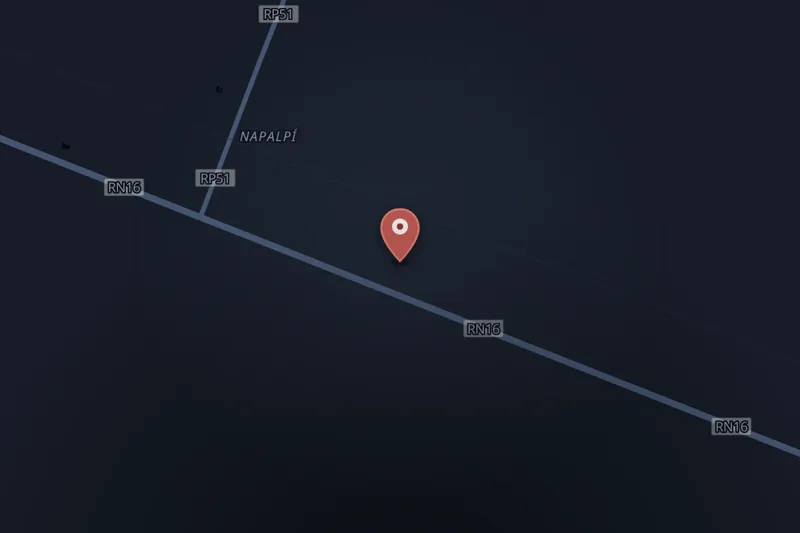
The Napalpí massacre took place on 19 July 1924 in Napalpí, a rural settlement in the Chaco Province of Northeast Argentina. It resulted in the killing of an estimated 400 Indigenous people of the Toba and Mocoví ethnicities by Argentine police and local ranchers.
The settlement of Napalpí, officially named "Colonia Aborigen Chaco," was established in 1911 following the earlier Conquest of Chaco, a decades-long military campaign that had subjugated and displaced Indigenous groups, including the Pilagá, Abipón, Toba, Charrúa, and Mocoví peoples, to make way for European settlers growing cotton. Residents of Napalpí, confined under exploitative conditions, had begun producing cotton themselves, but in 1924 Argentine authorities imposed a 15% tax on the cotton crop, provoking widespread discontent and a strike. In response, some Indigenous residents killed livestock and damaged settlers' crops. In June 1924, police killed a shaman named Sorai, and a French settler was later killed, reportedly in retaliation. Fernando Centeno, then Governor of Chaco, subsequently organized a violent repression.
On the morning of 19 July 1924, a force of roughly 130 armed men — comprising police, ranchers, and other white citizens equipped with Winchester and Mauser rifles — attacked Indigenous residents who were armed only with spears. The assault lasted approximately 45 minutes, after which wounded survivors, including women and children, were killed with machetes. Bodies were mutilated, with testicles, ears, and other body parts removed as trophies; the dead were burned or buried in mass graves. Repression against surviving Indigenous people continued for weeks afterward.
Contemporary and historical accounts—including a report from the journal Heraldo del Norte, a letter from former Napalpí compound director Enrique Lynch Arribálzaga read before the National Congress, testimony recorded by historian Mercedes Silva, and reporting by journalist Mario Vidal—describe indiscriminate killing of men, women, and children, and the deliberate destruction of potential witnesses in the massacre's aftermath. Oral history passed down among the Toba, including accounts attributed to chief Esteban Moreno, similarly describe the event as a one-sided massacre rather than a fight, noting no attacking soldier was injured.
The last known survivor of the massacre, Rosa Grillo, born 22 February 1908, died on 4 April 2023.
In 2019, a federal court in Argentina declared the Napalpí massacre a crime against humanity, exempting it from statutes of limitation. In 2022, Argentina opened a "truth trial" to document the events; because no perpetrators remain alive, no individual has faced prosecution. On 19 May, a judge in that proceeding declared the Argentine government responsible for the massacre, ordering that the massacre be taught in schools and that related investigative proceedings be broadcast on television, and recommending that Congress establish a national day of commemoration.

 SOLVEDListen