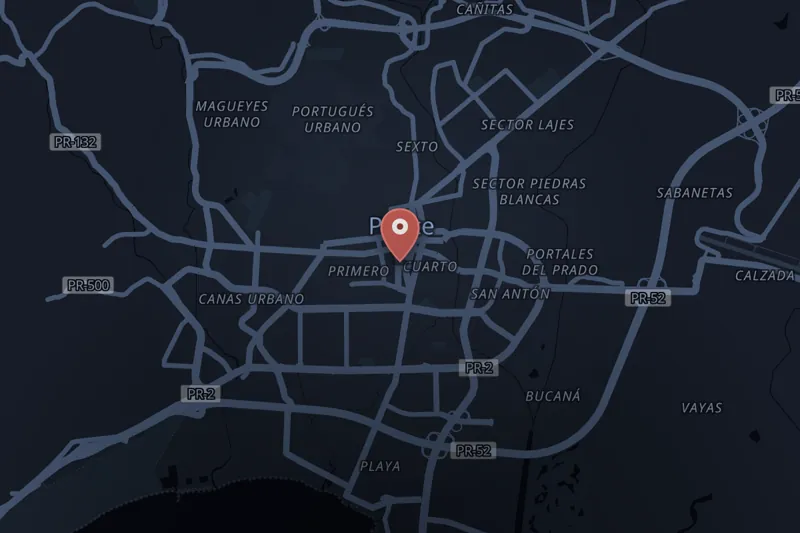
On July 25, 1978, Carlos Enrique Soto Arriví (18) and Arnaldo Darío Rosado Torres (24), members of the pro-independence Armed Revolutionary Movement, were killed at Cerro Maravilla, a mountain in Ponce, Puerto Rico, in what Puerto Rico Police initially described as a shootout following a terrorist attack on communication towers. An undercover police officer, posing as a fellow activist, had accompanied the two men and a taxi driver they had taken hostage in Villalba to drive them to the mountain, where police were waiting. Both activists were killed; the undercover officer suffered a minor wound and the taxi driver was largely unharmed.
Officers said they fired in self-defense after ordering the men to surrender. The taxi driver initially said he could not see who fired first, but in follow-up interviews with local media he described hearing the activists surrender and then being beaten by roughly ten armed men before a second round of gunfire. Then-Governor Carlos Romero Barceló publicly praised the officers as heroic. Successive investigations by the Puerto Rico Justice Department, the FBI, and the U.S. Justice Department's Civil Rights Division between 1978 and 1980 concluded the officers had acted properly, despite inconsistencies in testimony.
Beginning in 1981, new investigations by the Puerto Rico Legislature, journalists, and a renewed U.S. Justice Department inquiry produced testimony from officers granted immunity describing a plan to kill the activists and a subsequent falsification of events. Witnesses, including the taxi driver, revised earlier accounts to state that the two men had been alive and disarmed when police approached, and that a distinct second volley of gunfire followed. These revelations led to demotions, resignations, and public accusations of a cover-up involving local and federal officials.
Ten Puerto Rico Police officers were indicted; in 1985 all ten were convicted in federal court on 45 counts of perjury, receiving sentences from six to 30 years (one conviction was later overturned on appeal). Eight officers were subsequently tried on murder charges in Puerto Rico state courts; most pleaded guilty to second-degree murder and related charges and received sentences up to 30 years, one was acquitted, and one was convicted of second-degree murder. All convicted officers were eventually paroled, the last in 2013, though the Parole Board's failure to notify victims' families of that release was only discovered in 2015.
The undercover officer who had accompanied the activists, granted immunity for his testimony, was acquitted in February 1986 of kidnapping the taxi driver but was not reinstated to the police force. He was fatally shot in front of his mother's house in April 1986; a group calling itself the "Volunteer Organization for the Revolution" claimed responsibility, vowing to kill other officers involved. That killing remains unsolved.
In 1990 and 1992, federal officials, including former FBI Director William S. Sessions and former Civil Rights Division chief Drew S. Days III, acknowledged that the original federal investigations had been conducted negligently. In 2003, Romero Barceló acknowledged it had been an error to publicly praise the officers, while continuing to deny any personal role in a cover-up.


 UNSOLVEDListen


