
Start here
The Mad Butcher, Cleveland Torso Killer - Still Unsolved ?? Mystery and Makeup | Bailey Sarian

Bailey Sarian's 38-minute breakdown, the fullest single telling on file.
Watch on YouTubeUnsolved case · 1930s
Also known as Kingsbury Run murders · Mad Butcher of Kingsbury Run
 Rose WallaceCredit: gargantuenCC BY-SA 2.0Source
The short answer
Between 1935 and 1938, at least twelve people were killed and dismembered in Cleveland, Ohio, with remains left in the Kingsbury Run area; the case remains unsolved despite an investigation once led by Eliot Ness.
The Mad Butcher, Cleveland Torso Killer - Still Unsolved ?? Mystery and Makeup | Bailey SarianBailey Sarian · 38 min1 piece from 1 creator: ranked, with duplicates removed and short clips set aside.
Start here
Bailey Sarian's 38-minute breakdown, the fullest single telling on file.
Watch on YouTubeTitles and descriptions are the creators’ own and may not reflect current legal status. The sourced facts are in the file below. Players load only when you press play. Suggest coverage we’re missing.
Between 1935 and 1938, an unidentified perpetrator killed and dismembered at least twelve people whose remains were left in and around Kingsbury Run, an impoverished area of Cleveland, Ohio, known locally as "The Roaring Third" or "Hobo Jungle." Most victims were drifters, transient laborers, or "working poor" people living in nearby shantytowns during the Great Depression; only three of the twelve official victims were ever positively identified. Some researchers believe the true number of victims could be higher, potentially including a woman known as the "Lady of the Lake" (found 1934) and Robert Robertson (found 1950), as well as additional unsolved dismemberment cases near Pittsburgh and New Castle, Pennsylvania.
Victims were typically decapitated, and many were further dismembered, with male victims often castrated. Some remains showed evidence of chemical treatment that altered the skin's texture and color. Bodies were frequently found long after death, sometimes over a year later, which along with the limited forensic science of the era made identification difficult. Identified victims included Edward Andrassy and Florence Polillo, confirmed through fingerprints, and a tentative identification of Rose Wallace via dental records.
Eliot Ness, then Cleveland's Public Safety Director, became involved in the investigation and privately questioned a leading suspect, a local physician, who reportedly failed two polygraph examinations administered by Leonarde Keeler. Ness ultimately did not pursue prosecution, in part due to the suspect's family connection to a political rival. The suspect later committed himself to an institution and allegedly sent Ness threatening postcards for years afterward. A second suspect, Frank Dolezal, was arrested in connection with Polillo's death; he initially confessed, then retracted the confession, alleging it was coerced. Dolezal died by hanging in custody at the Cuyahoga County jail, a death officially ruled a suicide; he was later posthumously exonerated regarding the Torso killings. Detective Peter Merylo led a separate line of inquiry, including going undercover, and considered links to similar dismemberment killings found near Pittsburgh and New Castle, Pennsylvania.
Investigators also considered Willie Johnson, who was tried and convicted for a separate 1942 killing with alleged links to two identified Torso victims, though he was never conclusively tied to the Torso murders; he was executed in 1944.
The case remains officially unsolved. Approximately 9,100 people were interviewed during the original investigation. In 2024, the Cuyahoga County Medical Examiner's Office began working with the DNA Doe Project to exhume unidentified victims for genetic genealogy analysis in an effort to determine their identities.
Select a moment to place it on the map and light up the source behind it.
7 located events on this case. Browse them in the timeline list; selecting an event moves the map to its place and highlights its source.
Victims first. Every legal label is set from public records and court outcomes, not from the prose.
Identified via fingerprints; found decapitated and emasculated near Kingsbury Run on September 23, 1935.[3]
Identified via fingerprints; found dismembered on January 26, 1936.[3]
Tentatively identified via dental records as the victim found beneath the Lorain-Carnegie Bridge on June 6, 1937.[3]
Convicted and executed for the 1942 murder of Margaret Frances Wilson; alleged but unconfirmed links to Torso victims.[3]
Arrested as a suspect in Florence Polillo's murder; confessed then retracted, died in custody, and was later posthumously exonerated of involvement in the Torso killings.[3]
Served as Cleveland's Public Safety Director and led aspects of the investigation, including the interrogation of suspect Francis Sweeney.[3]
Lead Cleveland detective on the case who investigated possible links to similar killings in Pennsylvania and went undercover as part of the inquiry.[3]
From the record
Coverage is not a source: every fact in this file rests on the records below.
Are you family of someone named in this file? Corrections and removal requests from victims’ families are prioritized.
 SOLVEDListen
Higbee's department store, Public Square, Cleveland, Ohio · 1970s
On December 21, 1971, a line dispute at a Higbee's department store Santa display in Cleveland, Ohio, escalated into a physical altercation between Tyrone Howard and Jack Fitzpatrick; Fitzpatrick was fatally stabbed and Howard was later convicted of manslaughter.
 ONGOINGListen
Erieview Plaza, Downtown Cleveland, Ohio · 2010s
A Cleveland Clinic fertility nurse was fatally stabbed outside a downtown Cleveland office building in 2013, and in 2025 her divorce attorney was charged in the killing after a twelve-year cold case investigation.
 Credit: Michael A. OrlandoCC BY-SA 3.0SourceSOLVEDListen
2207 Seymour Avenue, Tremont, Cleveland, Ohio · 2000s
Ariel Castro abducted Michelle Knight, Amanda Berry, and Gina DeJesus separately between 2002 and 2004 and held them captive for about a decade at his Cleveland home before Berry's 2013 escape led to their rescue and his arrest.
 Credit: Family/Instagram photograph, widely distributed in press coverageEditorial useSourceSOLVEDListen
Moscow, Idaho · 2022
Four University of Idaho students—Madison Mogen, Kaylee Goncalves, Ethan Chapin, and Xana Kernodle—were fatally stabbed inside an off-campus house in Moscow, Idaho, in the early morning hours of November 13, 2022. Bryan Kohberger, a criminology PhD student at nearby Washington State University, was arrested that December and pleaded guilty in 2025, receiving four consecutive life sentences.
 Credit: Mona EshaikerCC BY-SA 3.0SourceSOLVEDListen
Holmby Hills, Los Angeles, California · 2009
Singer Michael Jackson died on June 25, 2009, in Los Angeles from acute propofol intoxication administered by his personal physician, Conrad Murray. The Los Angeles County coroner ruled the death a homicide, and Murray was convicted of involuntary manslaughter in November 2011.
 Credit: RaptacCC BY-SA 4.0SourceSOLVEDListen
Bardstown, Kentucky · 2015
Crystal Rogers, a 35-year-old Bardstown, Kentucky, mother of five, disappeared in July 2015 and has never been found; in 2025, her former boyfriend, Brooks Houck, was found guilty of her murder, and two other men were convicted of related conspiracy and evidence-tampering charges.
 Credit: CBS News / Travis Alexander (personal photo)Editorial useSourceSOLVEDListen
Mesa, Arizona, United States · 2000s
Travis Alexander, 30, was stabbed, slashed, and shot to death in his Mesa, Arizona home on June 4, 2008. His ex-girlfriend, Jodi Arias, was convicted of first-degree murder in 2013 and sentenced to life without parole in 2015 after two juries deadlocked on the death penalty.
 Credit: English WikipediaEditorial useSourceSOLVEDListen
Modesto, California · 2002
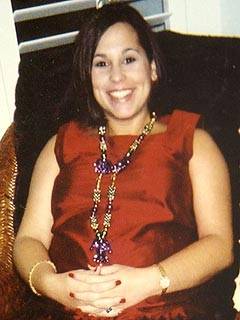
Laci Peterson, 27 and eight months pregnant, disappeared from her Modesto, California home on December 24, 2002; her body and that of her unborn son Conner were found in San Francisco Bay in April 2003, and her husband Scott Peterson was convicted in 2004 of murdering both.
 COLDListen
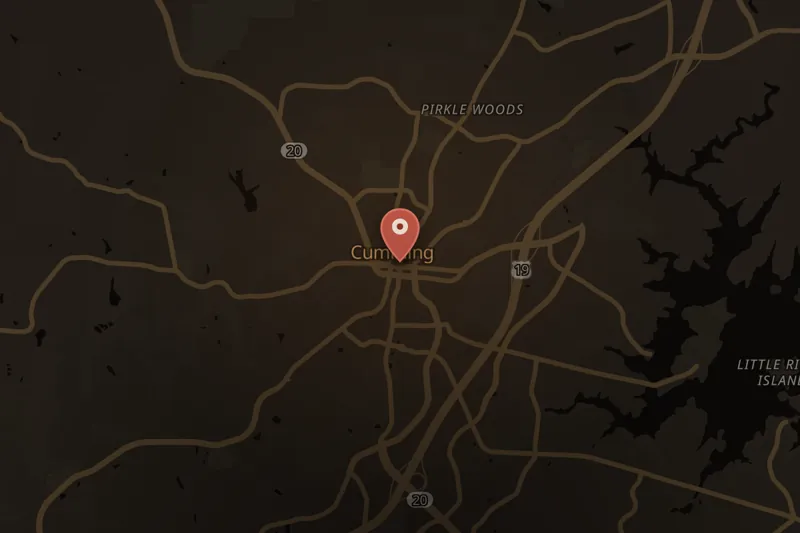
Cumming, Georgia · 2018
Tamla Horsford, a 40-year-old mother of five, died from a fall at a home in Cumming, Georgia, during a gathering on November 3-4, 2018; two separate investigations ruled her death accidental, though her family has disputed that finding and pushed for further inquiry.
 Credit: Los Angeles Police DepartmentPublic domainSourceUNSOLVEDListen
Leimert Park, Los Angeles, California, USA · 1940s
Elizabeth Short, known posthumously as the Black Dahlia, was found murdered in Los Angeles in January 1947 in a case that remains unsolved.
 Credit: Ted Van ZylEditorial useSourceSOLVEDListen
Albuquerque, New Mexico, United States · 1993
Girly Chew Hossencofft, a Malaysian-born bank teller living in Albuquerque, New Mexico, disappeared on September 9, 1999, shortly after filing for divorce from her husband Diazien Hossencofft. He and his girlfriend Linda Henning were later convicted of her murder. Her body has never been found.
 Credit: Argonne National Laboratory / Wikimedia Commons, c.1922–23Public domainSourceSOLVEDListen
Orange, New Jersey · 1917
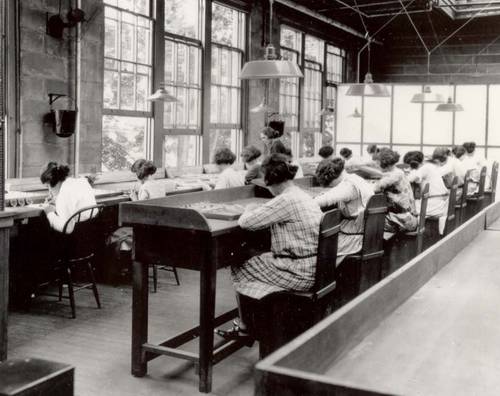
Beginning in 1917, factory workers who came to be known as the Radium Girls were poisoned after being instructed to shape radium-paint brushes with their lips; the resulting illnesses, deaths, and lawsuits against the United States Radium Corporation and the Radium Dial Company reshaped U.S. occupational health and labor law.