
Start here
what REALLY happened in the Spreckels Mansion? Rebecca Zahau Case MurderMystery&Makeup|Bailey Sarian

Bailey Sarian's 33-minute breakdown, the fullest single telling on file.
Watch on YouTubeBefore you continue
This case involves sexual violence and crimes against children. Casepin presents the record in neutral, non-graphic language. Choose whether to continue.
Unsolved case · 2011
Also known as Rebecca Nalepa · Rebecca Mawii Zahau
The short answer
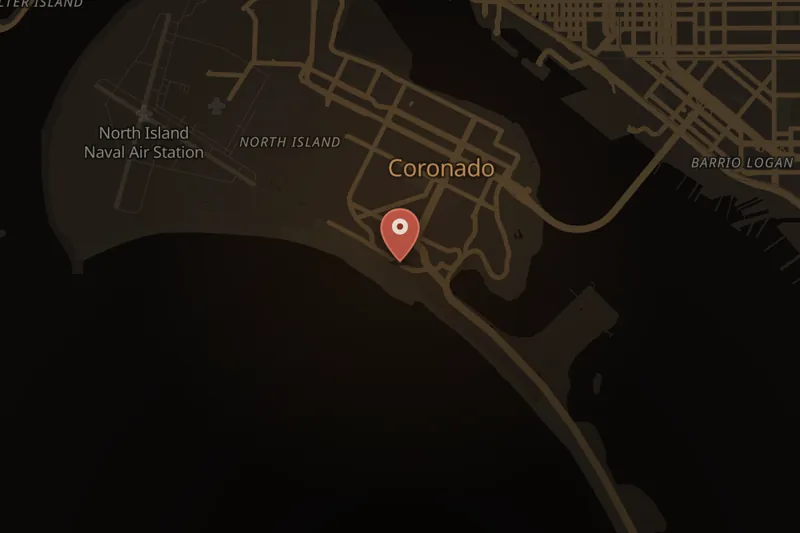
Rebecca Zahau was found hanging at her boyfriend's Coronado, California, home in July 2011, two days after his young son fell from a staircase in the same house; her death was ruled a suicide, a finding her family has publicly disputed.
Start herewhat REALLY happened in the Spreckels Mansion? Rebecca Zahau Case MurderMystery&Makeup|Bailey SarianBailey Sarian · 33 minThe coverage index
3 pieces from 3 creators: ranked, with duplicates removed and short clips set aside.
Start here
Video · YouTube · 33 min · 2019
Bailey Sarian's 33-minute breakdown, the fullest single telling on file.
Watch on YouTubeRebecca Zahau Case Analysis | Two Mysterious Deaths in One Mansion
 Dr. Todd GrandeVideo · YouTube · 15 min · 2021
The 911 Call Made After Rebecca Zahau’s Body Was Found
 Annie EliseVideo · YouTube · 2 min · 2025
Titles and descriptions are the creators’ own and may not reflect current legal status. The sourced facts are in the file below. Players load only when you press play. Suggest coverage we’re missing.
The case file
Rebecca Mawii Zahau, also known as Rebecca Nalepa, was a Burmese American woman born in Falam, Chin State, in what was then Burma. Raised in a Protestant family of Chin ethnicity, she lived in Nepal and Germany before moving to the United States about a decade before her death; by 2011 most of her family lived in Saint Joseph, Missouri. She worked as an ophthalmic technician until December 2010 and divorced her first husband in February 2011. From 2008 she was in a relationship with her boyfriend, a pharmaceutical-company executive, and by July 2011 the couple were staying at a beach house he used as a summer home in Coronado, California.
On July 11, 2011, the boyfriend's six-year-old son, Max Shacknai, fell from a second-floor banister at the Coronado house while Zahau and the boy's teenage aunt were the only other people present; he suffered severe spinal and facial injuries and was hospitalized in critical condition. Investigators later ruled the fall accidental, though a treating trauma doctor told police the boy's injuries seemed inconsistent with the cardiac arrest and brain swelling he experienced, raising the possibility that he stopped breathing before he fell. He died of his injuries on July 16, 2011. Two days after the fall, on the morning of July 13, Zahau's boyfriend's brother, who had arrived from out of state and was staying at the house, reported finding her nude body hanging from a second-floor balcony, her wrists and ankles bound with her hands behind her back; he said he cut the body down before police arrived. She was pronounced dead at the scene.
On September 2, 2011, the San Diego County Sheriff's Department announced that its investigation had found no evidence of foul play in either death, ruling Zahau's death a suicide and Max's fall an accident; investigators said they found no DNA at the scene besides Zahau's own. Zahau's autopsy identified four areas of head trauma, which the county medical examiner attributed to her striking the balcony as she fell. A second autopsy commissioned by her family concluded that fractures in her throat indicated manual strangulation rather than hanging, and that her death was a homicide. An attorney for Zahau's family said the investigation had overlooked other evidence, including signs that she had been sexually assaulted before her death. Investigators also found a painted message on a door near the balcony that read, according to Zahau's ex-husband, 'She saved him, can he save her,' which they treated as further evidence of suicide; Zahau's siblings said the handwriting did not match hers. Zahau's family, saying she had shown no signs of depression and held religious objections to suicide, publicly rejected the ruling and raised funds for an independent investigation.
The family filed a $10 million wrongful-death lawsuit naming numerous defendants before narrowing its focus to the boyfriend's brother. In April 2018, a civil jury, applying the lower burden of proof used in civil cases, found him responsible for Zahau's death and awarded her family a $5.2 million judgment. The Sheriff's Office and the County Medical Examiner's Department then reopened their review of the case; in November 2018, the Chief Medical Examiner reported that the original findings had been correctly reached and reaffirmed that Zahau's death was a suicide. In February 2019, before an appeal of the civil verdict was decided, the Zahau family agreed to a $600,000 settlement, and the $5.2 million judgment was vacated with prejudice.
9 dated entries · 1979–2019
Rebecca Zahau was born in Falam, Chin State, Burma.
Max Shacknai, the six-year-old son of Zahau's boyfriend, fell from a second-floor banister at the Coronado, California home.
Zahau was found hanging, nude, from a second-floor balcony at the same home, with her wrists and ankles bound; she was pronounced dead at the scene.
Max Shacknai died of the injuries from his fall.
Investigators ruled Max Shacknai's death an accident.
The San Diego County Sheriff's Department announced that Zahau's death was ruled a suicide, finding no evidence of foul play in either death.
A civil jury found Zahau's boyfriend's brother responsible for her death in a wrongful-death lawsuit and awarded her family a $5.2 million judgment.
The San Diego County Chief Medical Examiner reaffirmed, after a review, that Zahau's death was correctly ruled a suicide.
The Zahau family settled the civil case for $600,000, vacating the $5.2 million judgment.
3 named in this file
Victims first. Every legal label is set from public records and court outcomes, not from the prose.
Six-year-old who fell at the same Coronado home on July 11, 2011, and died of his injuries on July 16, 2011; his death was ruled an accident.[3]
Found dead at a Coronado, California, home on July 13, 2011; her death was ruled a suicide.[3]
San Diego County Sheriff who announced on September 2, 2011, that Zahau's death was ruled a suicide and Max Shacknai's death an accident.[3]
3 cited
Coverage is not a source: every fact in this file rests on the records below.
PressCBS NewsAccessed Jul 7, 2026
PressABC NewsAccessed Jul 7, 2026
EncyclopedicWikipediaAccessed Jul 7, 2026
Trust
Are you family of someone named in this file? Corrections and removal requests from victims’ families are prioritized.
Near this case
 Credit: Lo2013·CC BY-SA 3.0·SourceSOLVEDListen
San Diego State University Engineering Building · 1990s
On August 15, 1996, mechanical engineering graduate student Frederick Martin Davidson shot and killed three faculty members during his master's thesis defense at San Diego State University.
 Credit: Leonard Ignelzi. 18 July 1984.·Public domain·SourceSOLVEDListen
San Ysidro McDonald's site, San Ysidro Boulevard, San Diego, California · 1980s
On July 18, 1984, James Huberty entered a McDonald's restaurant in the San Ysidro neighborhood of San Diego, California, and fatally shot 21 people (including an unborn baby) and wounded 19 others over 77 minutes before being killed by a police sniper.
 SOLVEDListen
Chula Vista, California · 2020s
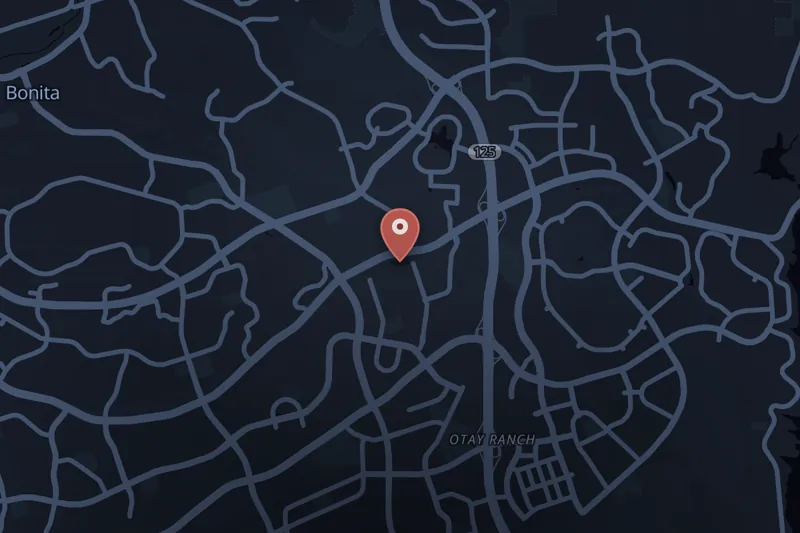
Maya Millete, a Filipino American Navy contract specialist and mother of three, disappeared from her Chula Vista, California home on January 7, 2021. Her husband, Larry Millete, was charged with her murder in October 2021 and convicted of first-degree murder on July 9, 2026, though her body has never been found.
 COLDListen
Cumming, Georgia · 2018
Tamla Horsford, a 40-year-old mother of five, died from a fall at a home in Cumming, Georgia, during a gathering on November 3-4, 2018; two separate investigations ruled her death accidental, though her family has disputed that finding and pushed for further inquiry.
 Credit: Unknown·Editorial use·SourceUNSOLVEDListen
Pimlico, London, England · 2010
Gareth Williams, a GCHQ mathematician on secondment to MI6, was found dead padlocked inside a bag in his London flat in August 2010; a coroner ruled the death unnatural and likely criminally mediated, but no one has been charged and a Metropolitan Police re-investigation later called it probably an accident.
El Pianista trail, near Boquete, Panama · 2014
Two Dutch students, Kris Kremers and Lisanne Froon, disappeared while hiking a jungle trail in Panama in April 2014, and their remains were recovered along a riverbank months later, but no official cause of death has ever been established.
Also covered by
 Credit: English Wikipedia·Editorial use·SourceSOLVEDListen
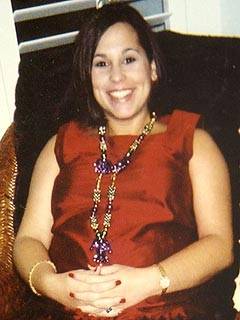
Modesto, California · 2002
Laci Peterson, 27 and eight months pregnant, disappeared from her Modesto, California home on December 24, 2002; her body and that of her unborn son Conner were found in San Francisco Bay in April 2003, and her husband Scott Peterson was convicted in 2004 of murdering both.
 Credit: CBS News / Travis Alexander (personal photo)·Editorial use·SourceSOLVEDListen
Mesa, Arizona, United States · 2000s
Travis Alexander, 30, was stabbed, slashed, and shot to death in his Mesa, Arizona home on June 4, 2008. His ex-girlfriend, Jodi Arias, was convicted of first-degree murder in 2013 and sentenced to life without parole in 2015 after two juries deadlocked on the death penalty.
COLDListenCumming, Georgia · 2018
Tamla Horsford, a 40-year-old mother of five, died from a fall at a home in Cumming, Georgia, during a gathering on November 3-4, 2018; two separate investigations ruled her death accidental, though her family has disputed that finding and pushed for further inquiry.
 Credit: Los Angeles Police Department·Public domain·SourceUNSOLVEDListen
Leimert Park, Los Angeles, California, USA · 1940s
Elizabeth Short, known posthumously as the Black Dahlia, was found murdered in Los Angeles in January 1947 in a case that remains unsolved.
 Credit: Ted Van Zyl·Editorial use·SourceSOLVEDListen
Albuquerque, New Mexico, United States · 1993
Girly Chew Hossencofft, a Malaysian-born bank teller living in Albuquerque, New Mexico, disappeared on September 9, 1999, shortly after filing for divorce from her husband Diazien Hossencofft. He and his girlfriend Linda Henning were later convicted of her murder. Her body has never been found.
 Credit: Argonne National Laboratory / Wikimedia Commons, c.1922–23·Public domain·SourceSOLVEDListen
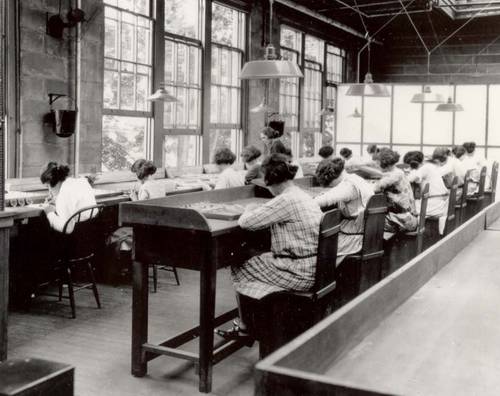
Orange, New Jersey · 1917
Beginning in 1917, factory workers who came to be known as the Radium Girls were poisoned after being instructed to shape radium-paint brushes with their lips; the resulting illnesses, deaths, and lawsuits against the United States Radium Corporation and the Radium Dial Company reshaped U.S. occupational health and labor law.
