

Start here
LOST IN THE JUNGLE • KRIS KREMERS AND LISANNE FROON | MIDWEEK MYSTERY

Georgia Marie's 38-minute breakdown, the fullest single telling on file.
Watch on YouTubeThe short answer
Two Dutch students, Kris Kremers and Lisanne Froon, disappeared while hiking a jungle trail in Panama in April 2014, and their remains were recovered along a riverbank months later, but no official cause of death has ever been established.
LOST IN THE JUNGLE • KRIS KREMERS AND LISANNE FROON | MIDWEEK MYSTERYGeorgia Marie · 38 min5 pieces from 5 creators: ranked, with duplicates removed and short clips set aside.
Start here
Georgia Marie's 38-minute breakdown, the fullest single telling on file.
Watch on YouTubeThe Disappearance Of Lisanne Froon and Kris Kremers
 That ChapterVideo · YouTube · 12 min · 2018
Murdered in a Jungle? | The Case of Kris Kremers and Lisanne Froon
 Coffeehouse CrimeVideo · YouTube · 20 min · 2021
The disturbing jungle photos no one can explain
 MrBallenVideo · YouTube · 19 min · 2020
Lisanne Froon and Kris Kremers Case Analysis
 Dr. Todd GrandeVideo · YouTube · 18 min · 2021
Titles and descriptions are the creators’ own and may not reflect current legal status. The sourced facts are in the file below. Players load only when you press play. Suggest coverage we’re missing.
Kris Kremers, 21, and Lisanne Froon, 22, grew up in Amersfoort, in the Netherlands' Utrecht province. Kremers had completed a degree in cultural social education, specializing in art education, at the University of Utrecht, and was described as open, creative, and responsible; Froon, described as aspiring, optimistic, and a passionate volleyball player, had graduated in applied psychology from Deventer. A few weeks before the trip, Froon moved into Kremers' dorm room in Amersfoort, and the two worked together at a café and restaurant, In den Kleinen Hap. After saving for six months, they planned a Panama trip to learn Spanish and volunteer with children, partly as a graduation present for Froon.
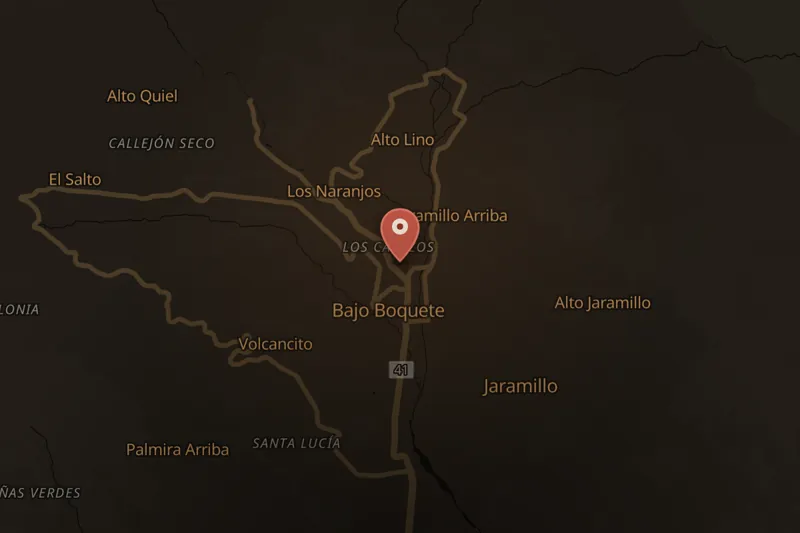
Kremers and Froon arrived in Panama on 15 March 2014, touring for two weeks before reaching Boquete, in Chiriquí Province, on 29 March to live with a local family while volunteering with children. On 1 April, around 11 a.m., they set out to hike the El Pianista trail near Boquete, in cloud forest surrounding the Baru volcano, and were reported to have had brunch with two young Dutch men beforehand. They were never seen again. That afternoon, unsuccessful emergency calls were attempted from both phones — Kremers' iPhone at 16:39 and Froon's Samsung Galaxy S III at 16:51 — neither reaching emergency services for lack of reception. On 2 April the women missed a scheduled appointment with a local guide. On 6 April their parents arrived in Panama with Dutch police, dog units, and detectives for a ten-day search, offering a US$30,000 reward for information.
Froon's phone battery died after 05:00 on 4 April and was never used again. Kremers' iPhone made no more calls but was turned on intermittently, searching for signal; between 5 and 11 April it was switched on repeatedly without the correct PIN entered again, and it powered on for the last time at 10:51 a.m. on 11 April before switching off at 11:56 a.m. On 8 April, ninety flash photographs were taken on the pair's digital camera between 19:00 and 22:00, deep in the jungle in near-complete darkness; the images appear to show the women near a river or ravine, a twig with plastic bags on a rock, a backpack strap and mirror on another rock, and the back of Kremers' head.
Ten weeks later, on 14 June, a local woman turned in Froon's blue backpack, found by a riverbank near her village of Alto Romero, in Bocas del Toro Province. It held sunglasses, US$88 in cash, Froon's insurance card, a water bottle, her digital camera, and both women's phones, all in good condition. The find prompted new searches along the Culubre River; Kremers' denim shorts turned up on a rock a few kilometres away. Two months later, nearer the backpack site, a pelvis and a boot containing a foot were found, and at least 33 scattered bones were recovered along the riverbank. DNA testing confirmed the remains as Kremers' and Froon's, though only around 5% of Kremers' skeleton and 10% of Froon's was found.
No official cause of death has ever been established. A Panamanian forensic anthropologist examined the bones under magnification and found no scratches or marks of any kind, arguing against animal scavenging. A forensic pathologist leading a research team working with the Kremers family told Dutch media that violence appeared implausible, and that the most likely explanation was that the women became lost or disoriented and fell from one of the area's many cliffs. Panamanian authorities faced criticism over their handling of the search, and the case has since drawn public speculation about Kremers and Froon's final days, without resolution.
Kris Kremers and Lisanne Froon arrived in Panama at the start of a planned trip to learn Spanish and volunteer with children.
The pair reached Boquete, Chiriquí Province, to live with a local family for a month while volunteering with children.
Around 11 a.m., Kremers and Froon set out to hike the El Pianista trail near Boquete and were not seen again; that afternoon, unsuccessful emergency calls were attempted from both of their phones.
The women missed a scheduled appointment with a local hiking guide.
The women's parents arrived in Panama with Dutch police, dog units, and detectives to join a ten-day search, offering a US$30,000 reward for information.
Ninety flash photographs were taken on the pair's digital camera between 19:00 and 22:00, apparently deep in the jungle in near-complete darkness.
Kremers' iPhone, which had been turning on intermittently without the correct PIN being entered, was switched on for the last time at 10:51 a.m. and off by 11:56 a.m.
A local woman turned in Froon's backpack, found near a riverbank by her village of Alto Romero, Bocas del Toro Province; it contained cash, sunglasses, Froon's insurance card, her camera, and both women's phones, all in good condition.
Victims first. Every legal label is set from public records and court outcomes, not from the prose.
Dutch student, 21, who disappeared while hiking in Panama on 1 April 2014; her remains were later identified through DNA testing, and no official cause of death has been established.[3]
Dutch student, 22, who disappeared alongside Kris Kremers while hiking in Panama on 1 April 2014; her remains were later identified through DNA testing, and no official cause of death has been established.[3]
Coverage is not a source: every fact in this file rests on the records below.
Are you family of someone named in this file? Corrections and removal requests from victims’ families are prioritized.
 UNSOLVEDListen
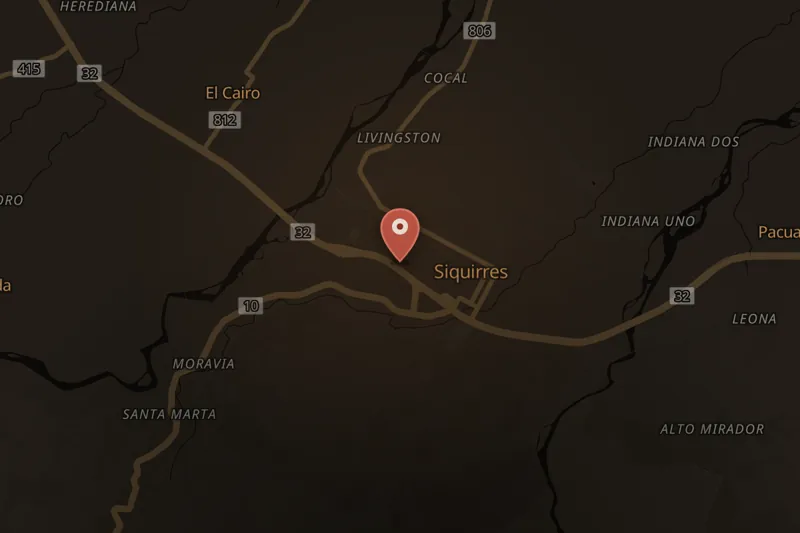
El Codo del Diablo, Siquirres, Limón Province, Costa Rica · 1940s
On December 19, 1948, six political prisoners linked to Costa Rica's Communist Party were extrajudicially killed near Siquirres, Limón Province, in an area known as "Codo del Diablo," by men associated with the government that had won the 1948 civil war.
 Credit: RaptacCC BY-SA 4.0SourceSOLVEDListen
Bardstown, Kentucky · 2015
Crystal Rogers, a 35-year-old Bardstown, Kentucky, mother of five, disappeared in July 2015 and has never been found; in 2025, her former boyfriend, Brooks Houck, was found guilty of her murder, and two other men were convicted of related conspiracy and evidence-tampering charges.
 Credit: ABC News (Australia), via English WikipediaEditorial useSourceSOLVEDListen
Logan City, Queensland, Australia · 2015
Tiahleigh Palmer, a 12-year-old girl from Logan City, Queensland, was murdered by her foster father in October 2015; he pleaded guilty in 2018 and was sentenced to life imprisonment.
 Credit: Family handout via Suffolk NewsEditorial useSourceCOLDListen
Bury St Edmunds, Suffolk, England · 2016
Royal Air Force gunner Corrie McKeague disappeared after a night out in Bury St Edmunds in September 2016, and a 2022 inquest concluded he died after climbing into a waste bin that was tipped into a bin lorry, though his remains were never found.
 Credit: Jose Rafael Luna Lop…CC BY-SA 3.0SourceSOLVEDListen
Panama City area (historical Panama Viejo), Panama · 1667
In December 1670–March 1671, English privateer commander Henry Morgan led roughly 1,400 men across the Isthmus of Panama, defeated a Spanish defense force outside the city, and captured, sacked, and burned Panama — one of the largest privateer operations in Caribbean history, occurring after a peace treaty between England and Spain had already been signed but not yet known to the expedition.
 SOLVEDListen
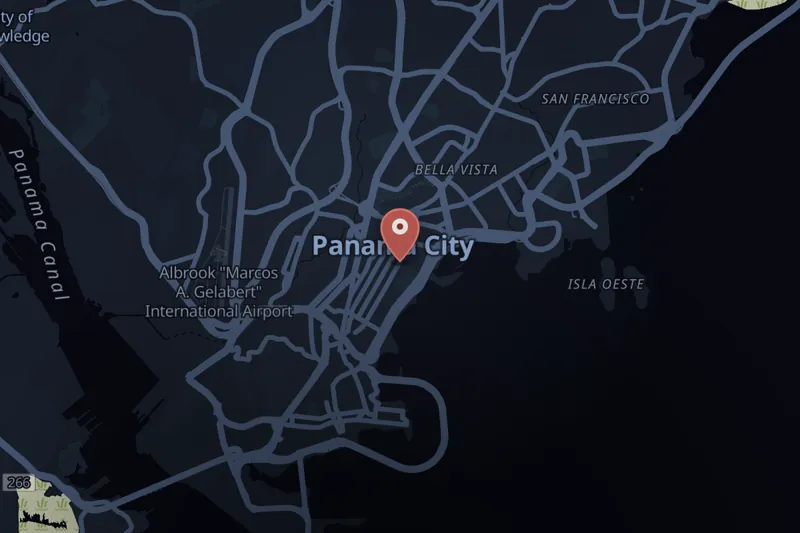
Albrook, Panama City, Panama · 1989
A failed October 1989 coup against Panamanian dictator Manuel Noriega, led by Major Moisés Giroldi, resulted in the torture and killing of eleven Panamanian Defense Forces participants in what became known as the Albrook massacre.
Credit: Family handout via Suffolk NewsEditorial useSourceCOLDListenBury St Edmunds, Suffolk, England · 2016
Royal Air Force gunner Corrie McKeague disappeared after a night out in Bury St Edmunds in September 2016, and a 2022 inquest concluded he died after climbing into a waste bin that was tipped into a bin lorry, though his remains were never found.
 Credit: Argonne National Laboratory / Wikimedia Commons, c.1922–23Public domainSourceSOLVEDListen
Orange, New Jersey · 1917
Beginning in 1917, factory workers who came to be known as the Radium Girls were poisoned after being instructed to shape radium-paint brushes with their lips; the resulting illnesses, deaths, and lawsuits against the United States Radium Corporation and the Radium Dial Company reshaped U.S. occupational health and labor law.


