Casepin
Back to cases

Case file

Henry Morgan's Panama Expedition (Sack of Panama)

SOLVED1667Panama City area (historical Panama Viejo), Panama3 SOURCESUPDATED JUL 2026
AMH-6725-KB Map of the Caribbean region
AMH-6725-KB Map of the Caribbean region — Credit: Jacob van Meurs · Public domain

Overview

Henry Morgan's Panama expedition, also called the Sack of Panama, was a military campaign carried out between 16 December 1670 and 5 March 1671 during the later stage of the Anglo-Spanish War. English privateers under Welsh-born commander Henry Morgan, joined by French and Dutch volunteers, assembled a force of roughly 1,400 men with the goal of capturing the wealthy Spanish city of Panama on the Pacific coast.

Planning and Approach

Planning began in April 1670. The expedition set out from Tortuga in December, first capturing Old Providence Island and the fortified Santa Catalina through a ruse that secured a bloodless surrender. A detachment then captured Fort San Lorenzo at the mouth of the Río Chagres after a costly assault in which the fort's Spanish commander, Don Pedro de Lisardo, was killed; of 314 Spanish defenders, only 14 survived as prisoners, while the privateers suffered roughly 30 killed and 160 wounded, including Captain Joseph Bradley, who later died of his wounds.

From the fort, Morgan's force marched roughly fifty miles across the isthmus over about a week, facing starvation, difficult terrain, and repeated Spanish ambushes organized under Panama's governor, Don Juan Pérez de Guzmán y Gonzaga, who employed scorched-earth tactics to deny the privateers food and shelter.

Battle and Sack

Outside Panama, on 28 January 1671, Morgan's force met a larger but less experienced Spanish militia and cavalry force at the Battle of Mata Asnillos. Spanish attempts to disrupt the privateers using stampeding cattle failed, and after roughly two hours the Spanish line collapsed, with an estimated 400 to 600 Spanish dead and wounded. Morgan's forces then swept into Panama, where fires (reportedly set on the governor's orders) spread through the city as looting began. Over the following weeks, privateers searched the city and swept nearby islands in the Gulf of Panama for hidden wealth and fleeing residents, reportedly taking as many as 3,000 prisoners in total, many later ransomed. Panama's fleet surgeon Richard Browne wrote that Morgan "was noble enough to the vanquished enemy," although Vice Admiral Edward Collier is described as having supervised the torture of some residents to locate hidden valuables.

Return and Aftermath

The privateers withdrew in late February 1671, destroying Fort San Lorenzo on their way back before returning to Jamaica. Total plunder was estimated between 140,000 and 400,000 pesos, but with so large a force the payout per man was comparatively low, causing discontent among the privateers. On arrival in Jamaica, Morgan learned that England and Spain had signed the Treaty of Madrid the previous July, ending the war; he maintained he had been unaware of it. Morgan and Jamaica's governor, Thomas Modyford, were subsequently ordered arrested and sent to London. Morgan was not formally charged with an offense, was received favorably in London, was later knighted, and became Deputy Governor of Jamaica in 1675. Guzmán, blamed by Spanish authorities for the defeat, was imprisoned in Lima, later exonerated, and died in Madrid three years afterward. The original city of Panama was never rebuilt; a new settlement was constructed several miles away in 1673, an area now known as Casco Viejo, a UNESCO World Heritage Site since 1997.

Key facts

Victims
Don Pedro de Lisardo
Date
1667
Location
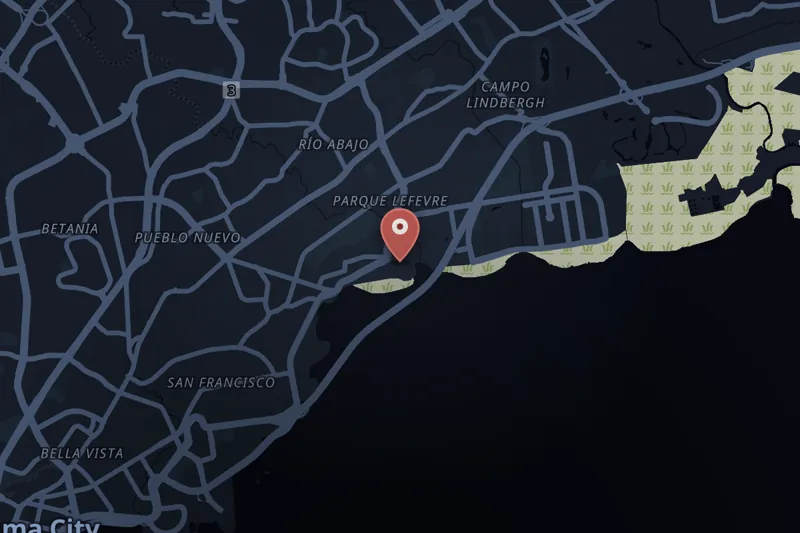
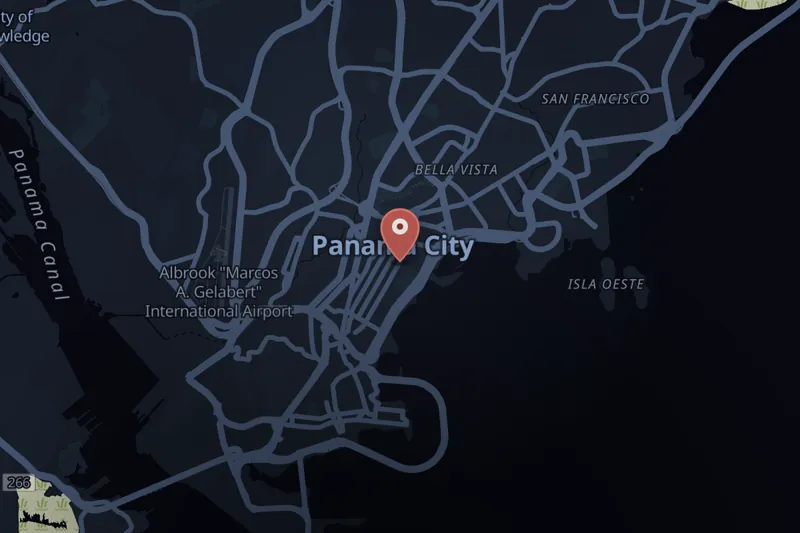
Panama City area (historical Panama Viejo), Panama
Case status
solved

Case timeline

  1. 1654

    Oliver Cromwell declares war on Spain and launches the Western Design against Spanish Caribbean colonies, later capturing Jamaica.

  2. 1667-03

    Thomas Modyford grants Henry Morgan a letter of marque and the HMS Oxford; Morgan begins commanding privateering expeditions.

  3. 1668

    Morgan raids Maracaibo and Gibraltar on Lake Maracaibo, destroying a Spanish naval squadron.

  4. 1670-03

    Spanish privateers under letter of marque begin attacking English trade ships in the Caribbean.

  5. 1670-04

    Morgan begins planning a major new expedition.

  6. 1670-10-24

    Morgan holds a council of war; Panama is chosen as the target over Cartagena de Indias and Veracruz.

  7. 1670-12-16

    Morgan's fleet departs Hispaniola, divided into two squadrons.

  8. 1670-12-20

    Morgan lands on Old Providence Island, which is captured with light resistance; Santa Catalina is subsequently taken via a ruse.

  9. 1671-01-19

    Morgan's force of about 1,400 men begins ascending the Río Chagres toward Panama.

  10. 1671-01-28

    Battle of Mata Asnillos: Morgan's privateers rout a larger Spanish defense force outside Panama.

  11. 1671-01-29

    Privateers enter and begin sacking Panama amid widespread fires.

  12. 1671-02-24

    Morgan's forces begin the return march from Panama with looted treasure and prisoners.

  13. 1671-03

    Morgan and remaining ships arrive back in Port Royal, Jamaica, and learn of the ratified peace treaty between England and Spain.

  14. 1673

    A new settlement for Panama is built roughly five miles from the ruined original city, later known as Casco Viejo.

  15. 1997

    The ruins of Panama Viejo are designated a UNESCO World Heritage Site.

Best coverage

No approved coverage links are attached yet.

People

  • Joseph Bradley

    LAW ENFORCEMENT

    Privateer captain who led the assault force on Fort San Lorenzo and died of wounds sustained in the attack.

  • Don Pedro de Lisardo

    VICTIM

    Spanish commander of Fort San Lorenzo, killed while refusing to surrender during the privateer assault on the fort.

  • Thomas Modyford

    LAW ENFORCEMENT

    Governor of Jamaica who commissioned Morgan's privateering activities and was ordered arrested alongside Morgan by English authorities, though not tried.

  • Henry Morgan

    LAW ENFORCEMENT

    Commander of the privateer expedition; commissioned under English letters of marque; later investigated by English authorities but not charged with an offense and subsequently knighted.

  • Juan Pérez de Guzmán y Gonzaga

    EXONERATED

    Governor of the Real Audiencia of Panama who organized the Spanish defense; later imprisoned in Lima and blamed for the defeat, but exonerated following a residencia inquiry.

Roles reflect public records and court outcomes at the time of writing — supporting citations are on file under Sources.

Archival records

  • AMH-6725-KB Map of the Caribbean region

    archival location

    AMH-6725-KB Map of the Caribbean region

    Credit: Jacob van Meurs · Public domain · Source

  • Colombia relief location map

    archival location

    Colombia relief location map

    Credit: Grundkarte Milenioscuro, Relief Alexrk2 · CC BY-SA 3.0 · Source

  • Edward Gennys Fanshawe, Ruined tower on the site of the old town of Panama, destroyed by Morgan the Buccaneer in 1670, March 1850

    archival location

    Edward Gennys Fanshawe, Ruined tower on the site of the old town of Panama, destroyed by Morgan the Buccaneer in 1670, March 1850

    Credit: Admiral Edward Gennys Fanshawe (27 November 1814 – 21 October 1906). · Public domain · Source

  • England and Wales-A treaty for the composing of differences-Wing-

    other document

    England and Wales-A treaty for the composing of differences-Wing-

    Credit: Unknown authorUnknown author · Public domain · Source

  • Fort San Lorenzo, Chagres River, Colon, Former Panama Canal Zone, CZ HABS CZ,1-COLON.V,1- (sheet 2 of 2)

    archival location

    Fort San Lorenzo, Chagres River, Colon, Former Panama Canal Zone, CZ HABS CZ,1-COLON.V,1- (sheet 2 of 2)

    Credit: https://www.loc.gov/pictures/item/cz0001.sheet.00002a · Public domain · Source

  • Panama isthmus 1702

    other document

    Panama isthmus 1702

    Credit: Bibliothèque nationale de France · Public domain · Source

  • Providencia, Colombia - panoramio (44)

    archival location

    Providencia, Colombia - panoramio (44)

    Credit: Jose Rafael Luna Lop… · CC BY-SA 3.0 · Source

  • Toma aérea del Fuerte San Lorenzo

    archival location

    Toma aérea del Fuerte San Lorenzo

    Credit: Garcia.dennis · CC BY-SA 4.0 · Source

  • Tramo del Camino Real de Cruces - Panamá

    archival location

    Tramo del Camino Real de Cruces - Panamá

    Credit: Ciorraga · CC BY-SA 4.0 · Source

Places

Common questions

What happened to the victim?
In December 1670–March 1671, English privateer commander Henry Morgan led roughly 1,400 men across the Isthmus of Panama, defeated a Spanish defense force outside the city, and captured, sacked, and burned Panama — one of the largest privateer operations in Caribbean history, occurring after a peace treaty between England and Spain had already been signed but not yet known to the expedition.
Where did the crime happen?
Panama City area (historical Panama Viejo), Panama.
What is the current status of the case?
Status: solved.

Sources

  1. ENCYCLOPEDICHenry Morgan's Panama expeditionWikipedia · 2026-07-07
  2. PRESSWhat lies beneath: Captain Morgan's final adventureThe Independent · 2026-07-07
  3. PRESSHenry Morgan (Oxford Dictionary of National Biography entry)oxforddnb.com · 2026-07-07

Record history

First published
JUL 07, 2026