
Ongoing case
Ethnic Violence in South Sudan
Since South Sudan's 2011 independence, recurring ethnic and inter-communal violence — including cattle raids, mass killings, and civil-war-era massacres among Dinka, Nuer, Murle, Shilluk, and other groups — has killed thousands and displaced hundreds of thousands of people.
South Sudan, home to roughly 64 ethnic groups, has experienced recurring cycles of ethnic and inter-communal violence before and after its 2011 independence. The Dinka, the largest group at about 35% of the population, dominate government and the Sudan People's Liberation Army (SPLA), a dynamic some describe as "Dinkocracy." The second-largest group, the Nuer, along with the Murle, Shilluk, Fertit, Jur, and other communities, have been involved in cycles of violence often centered on cattle raiding, land and water disputes, and political rivalry. In 2010, then-US Director of National Intelligence Dennis Blair warned of a likely "mass killing or genocide" in southern Sudan within five years; in April 2017 UK International Development Secretary Priti Patel described the ongoing violence in South Sudan as genocide.
Among the most severe episodes documented is the Murle-Nuer fighting in Jonglei state. On 18 August 2011, an attack attributed to Murle tribesmen in Uror County killed at least 640 people, destroyed over 3,400 houses and a Médecins Sans Frontières hospital, and resulted in the theft of an estimated 38,000 cattle and the abduction of 208 children — reportedly in revenge for an earlier attack on the Murle. This was followed by the Pibor massacre of December 2011–January 2012, in which the Nuer White Army mobilized thousands of armed youths, prompting UN peacekeeper deployment and international warnings of genocide from groups including Minority Rights Group International. Local officials estimated over 3,000 killed and hundreds of thousands of cattle stolen, though the United Nations put the total death toll at around 900 between December 2011 and February 2012.
Subsequent violence included a 2013 Akobo county attack killing more than 100 civilians and 14 SPLA soldiers, and repeated cross-border Murle raids into Ethiopia's Gambela region in 2016 and 2017 involving killings and child abductions. In 2020, further Murle-Nuer clashes in Jonglei killed at least 287 people amid abductions and the destruction of villages.
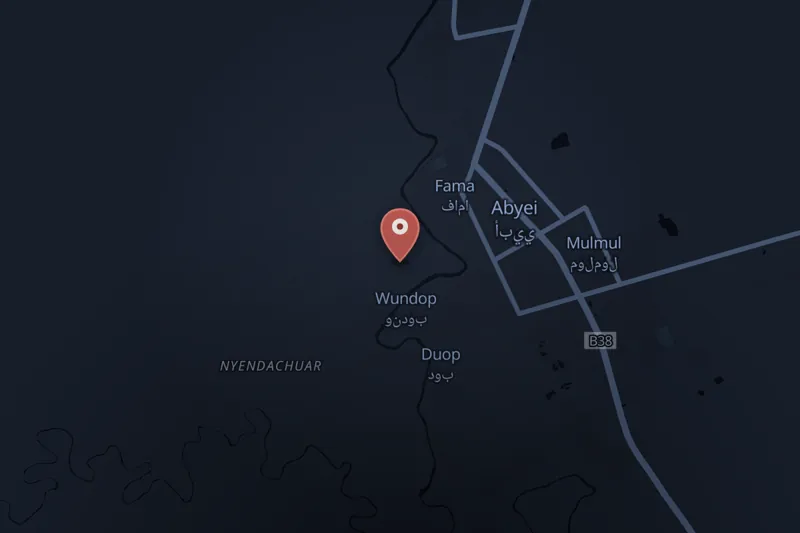
Separately, Dinka-Nuer violence escalated sharply with the outbreak of the South Sudanese civil war in December 2013, when fighting between Nuer and Dinka SPLA soldiers in Juba triggered targeted killings of Nuer civilians, including mass detention and shooting of men in the Gudele neighborhood, with death toll estimates ranging up to 15,000–20,000. Further massacres occurred in Bentiu (2014) and Mapel (2014). Additional documented conflicts include Shilluk-Dinka violence tied to a 2010 disarmament campaign and subsequent civil-war clashes, Murle-Dinka fighting including the Cobra faction rebellion, Fertit-Jur-Dinka clashes in Wau, Equatorian-Dinka violence including a 2017 attack in Pajok, Dinka-Arab clashes in Abyei in 2011, and intra-Dinka and intra-Nuer clan fighting. These events reflect an ongoing pattern of inter-communal and politically linked violence across South Sudan since 2011.
Key facts
- Victims
- On file
- Date
- 2011
- Location
- South Sudan
- Case status
- ongoing
Case timeline
2010
US Director of National Intelligence Dennis Blair warns of a likely mass killing or genocide in southern Sudan within five years.
2011-01
Clashes between Misseriya Arabs and Dinka kill dozens in Abyei ahead of the independence referendum.
2011-03
Armed clash over land dispute in Twic East County, Jonglei, between Ayuel and Dachuek Dinka kills 22 people.
2011-08-18
Uror massacre: attack in Uror County, Jonglei, kills at least 640 people, burns over 3,400 houses and an MSF hospital.
2011-12-25
Nuer White Army issues statement threatening to attack the Murle tribe.
2011-12-31
Lou Nuer fighters attack Pibor, setting fires and occupying much of the town.
2012-01-05
Pibor county commissioner estimates over 3,000 killed and 375,186 cattle stolen in Nuer-Murle clashes.
2012-05
Peace deal signed by representatives of six ethnic communities in Jonglei state.
2013-02
Akobo county attack: armed Murle youth kill more than 100 civilians at Walgak and 14 SPLA soldiers.
2013-12
Fighting between Nuer and Dinka SPLA soldiers breaks out in Juba, igniting the South Sudanese Civil War and triggering anti-Nuer killings.
2014-04
Bentiu massacre: forces identified as SPLM-IO kill about 200 mostly non-Nuer civilians.
2014-04-25
Mapel massacre: Dinka soldiers of the SPLA's 5th Division kill between 40 and 200 Nuer trainees.
2016-04-15
Murle fighters raid the Gambela region of Ethiopia, killing at least 208 people and abducting at least 108 women and children.
2017-03
About 1,000 Murle gunmen raid Gambela region again, abducting 43 children.
2017-04-04
Attack in Pajok reportedly kills 200 civilians, mostly Acholi, according to SPLA-IO.
2020-02
Over 200 women and children believed abducted in Jonglei ahead of renewed violence.
2020-05-16
Murle-Nuer clashes beginning around this date kill at least 287 people.
Best coverage
No coverage has been attached to this file yet.
People
No public people records are attached yet.
Places
Common questions
- What happened to the victim?
- Since South Sudan's 2011 independence, recurring ethnic and inter-communal violence — including cattle raids, mass killings, and civil-war-era massacres among Dinka, Nuer, Murle, Shilluk, and other groups — has killed thousands and displaced hundreds of thousands of people.
- Where did the crime happen?
- South Sudan.
- What is the current status of the case?
- Status: ongoing.
Related cases
View all cases
Sources
- ENCYCLOPEDICEthnic violence in South SudanWikipedia · 2026-07-07
- PRESSContemporaneous coverage of South Sudan security and UN responseReuters · 2026-07-07
- PRESSSouth Sudan: 'horrific attacks' prompt communities to take up armsThe Guardian · 2026-07-07
Record history
- First published
- JUL 10, 2026
When a file you follow changes — a new development, a correction, fresh coverage — the Dispatch is how you hear about it.
The Casepin Dispatch
A calm weekly briefing from the archive — one case worth understanding, meaningful updates to files you follow, and the best new coverage. You’ll also get the one-time note when the apps land. No gore, no rumor, no drip.