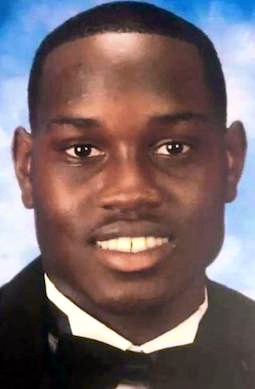
Joe Nathan James Jr. (born July 25, 1972) had been in a relationship with Faith Hall, lasting roughly a year and a half to two years according to her brother. Prosecutors said James became obsessed with Hall after she rejected him, stalking and harassing her for months. In the year before her death, Hall and her grandmother filed three harassment reports and one burglary report against James, documenting threats to kill Hall, unauthorized entry into their home, property damage, window-banging, repeated calling, and James sitting in their driveway.
On August 15, 1994, Hall went shopping with a friend and returned to the friend's apartment. The two women and the friend's children attempted to barricade themselves inside after realizing James had followed them. James forced his way in; Hall tried to calm him and divert the confrontation from the children, but he shot at her three times as she fled and fired again after she had collapsed.
A Jefferson County jury convicted James of capital murder in 1996 and recommended the death penalty, which a judge imposed. That conviction was overturned when the Alabama Court of Criminal Appeals found that a judge had wrongly admitted certain police reports into evidence. James was retried, and in 1999 was again convicted and sentenced to death after jurors rejected a defense argument that he had acted under emotional duress. While on death row, James converted to Islam.
In the weeks before his execution, James filed lawsuits in the U.S. District Court for the Southern District of Alabama, arguing he had not been given the opportunity to elect execution by nitrogen hypoxia and that this violated his equal-protection rights; a requested delay was denied by U.S. District Judge Terry F. Moorer. Separately, Hall's daughters, Toni Hall Melton and Terryln Hall (ages 3 and 6 at the time of the murder), and her brother, Helvetius Hall, publicly stated they had forgiven James and asked that his sentence be commuted to life without parole.
James was executed on July 28, 2022. Though scheduled for 6 p.m., he was not pronounced dead until 9:27 p.m., a delay reported as possibly the longest execution in U.S. history. Hall's daughters had planned to attend and leave after hearing any final words, but were told by Alabama Department of Corrections officials that departing early would not be possible under prison protocol; the family ultimately did not attend. According to Associated Press reporting, James did not open his eyes, made no deliberate movements, and did not respond when asked for final words; witnesses could not confirm he was conscious. State Corrections Commissioner John Hamm said James had not been sedated. A private autopsy later found puncture wounds and bruising on James's knuckles, wrists, and musculature, which doctors said suggested unsuccessful attempts to insert IV lines in multiple locations.
Hall's family released a statement saying they had forgiven James and had hoped the state would not take a life. Alabama Attorney General Steve Marshall said justice had been served, and Governor Kay Ivey said the execution sent a message that Alabama stands with domestic violence victims. James's sister, Yvette Craig, called for an investigation into the execution's circumstances. Following James's execution and subsequent botched execution attempts involving two other inmates, Ivey ordered a temporary halt to executions in Alabama; executions resumed on July 21, 2023.

 Credit: DrmiesCC BY-SA 4.0SourceUNSOLVEDListen