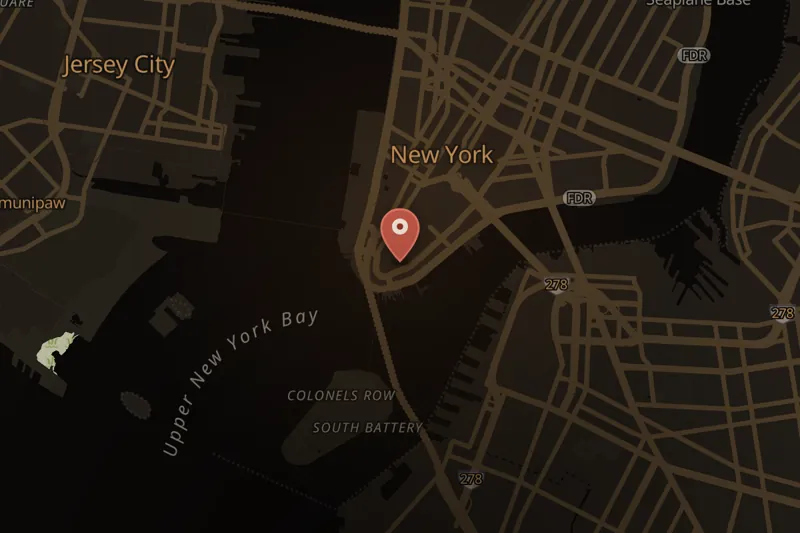
On January 24, 1975, a bomb detonated in the entrance vestibule of the Anglers' Club of New York at 101 Broad Street, immediately adjacent to the historic Fraunces Tavern at 54 Pearl Street in the Financial District of Lower Manhattan. The explosion killed four people and injured more than 50 others.
The bomb consisted of roughly 10 pounds of dynamite that had been packed into an attaché case and left in the entrance hallway of the building. Responsibility for the attack was claimed by Fuerzas Armadas de Liberación Nacional Puertorriqueña (FALN), a clandestine Puerto Rican paramilitary organization that had carried out other bombings in New York City during the 1970s. Police recovered a note in a nearby phone booth in which the group wrote that it took "full responsibility for the especially detornated (sic) bomb that exploded today at Fraunces Tavern, with reactionary corporate executives inside." The note characterized the bombing as retaliation for what it described as a "CIA ordered bomb" that had killed three people and injured eleven others in a restaurant in Mayagüez, Puerto Rico, two weeks earlier.
Fraunces Tavern itself, a museum, bar, and restaurant with origins as a 1719 house built by Étienne DeLancey and later converted into a tavern by Samuel Fraunces in 1762, has long been recognized for its role in American Revolutionary history, including hosting George Washington's farewell to his officers in December 1783. The building and the surrounding block have been designated a New York City landmark, a landmark historic district, and are listed on the National Register of Historic Places. The 1975 bombing occurred at the adjacent Anglers' Club building rather than within the tavern's own structure, but the attack is closely associated with the Fraunces Tavern site and is commonly referred to as the Fraunces Tavern bombing.
As of 2026, no one has been prosecuted for the bombing. The case remains formally unresolved in terms of criminal accountability, despite the FALN's public claim of responsibility at the time.


 Credit: Jeremy KempPublic domainSourceSOLVEDListen


