Skip to content
Casepin

Solved case · 1979

1979 Greensboro Killings

Also known as Greensboro massacre

SOLVEDCONVICTEDACQUITTED
Updated
Updated Jul 6, 2026
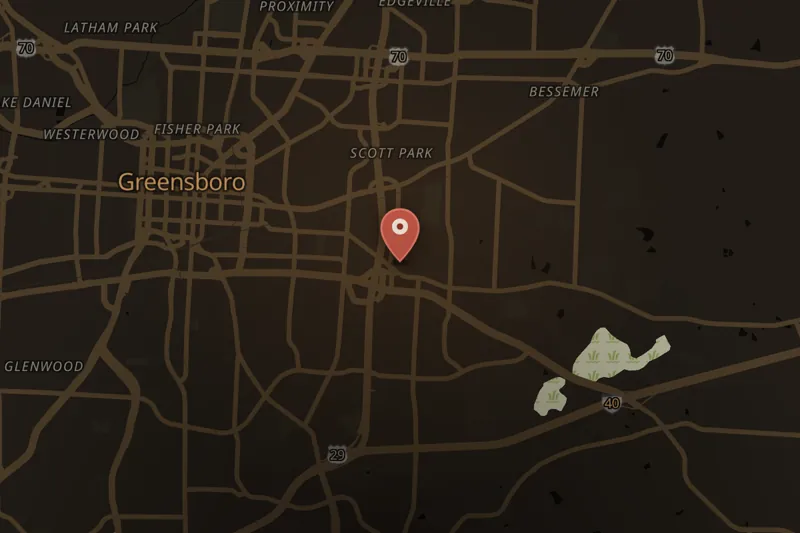
Morningside Homes, Greensboro, North CarolinaView on the map

The short answer

1979 Greensboro Killings in brief

On November 3, 1979, Ku Klux Klan and National Socialist Party of America members shot and killed five anti-Klan demonstrators at a march in Greensboro, North Carolina, and the criminal defendants were later acquitted.

Key facts

Year
1979
Place
Morningside Homes, Greensboro, North Carolina
Status
SOLVEDSolved
Victims
James Waller, Sandra Neely Smith, Michael Nathan, Cesar Cauce and William Evan Sampson
Outcome
Convicted: Mark Sherer; Acquitted: Edward Dawson, Jack Wilson Fowler, Rayford Milano Caudle, Jerry Paul Smith, Coleman Blair Pridmore, Roland Wayne Wood, Harold Dean Flowers, David Wayne Matthews, Virgil Lee Griffin Sr., Billy Joe Franklin and Roy Clinton Toney

The coverage index

Where to watch & listen

No one's coverage is attached to this file yet.

Know great coverage of this case?

A documentary, a podcast episode, a careful long-form video. Suggest it and an editor will review it before it appears here.

Suggest coverage for 1979 Greensboro Killings

The case file

What happened

On November 3, 1979, members of the Ku Klux Klan (KKK) and the National Socialist Party of America (NSPA) opened fire on participants in a "Death to the Klan" march in Greensboro, North Carolina, killing five demonstrators and wounding twelve other people. The march had been organized by the Communist Workers Party (CWP), whose members had spent years organizing textile and hospital workers and campaigning for racial justice in the Carolina Piedmont. Four of those killed were CWP members; the fifth, Michael Nathan, was a physician supporting his wife, a CWP member.

The confrontation grew out of months of escalating hostility. The CWP, formerly the Workers Viewpoint Organization, had recruited Black and white workers in Greensboro and Durham since 1976 and came into conflict with a local Klan chapter and the NSPA. After activists disrupted a screening of The Birth of a Nation, a 1915 film that portrayed the Klan in heroic terms, in China Grove in July 1979, both sides exchanged threats. CWP flyers called for the Klan to be driven out of town, and organizers publicly challenged the Klan to appear at the march.

As marchers gathered at the Morningside Homes housing project around 11:20 a.m., a caravan of cars carrying an estimated 40 Klan and NSPA members drove past. After heckling and a brief physical clash, a Klansman fired the first shot; caravan members then retrieved long guns and fired on the marchers, some of whom returned fire with handguns. Four demonstrators died at the scene, and Nathan died of his wounds two days later. Four television news crews filmed the shooting, and the footage was broadcast nationally and internationally.

The criminal cases ended without murder convictions. In November 1980, an all-white state jury acquitted the accused Klansmen after they claimed self-defense. A 1983 federal grand jury indicted nine men on civil rights charges, and on April 15, 1984, all were acquitted by another all-white jury. Mark Sherer, who admitted firing the first shot, pleaded guilty to a federal conspiracy charge and was the only person found guilty of a crime in the case. In a 1985 civil suit, Waller v. Butkovich, a federal jury found two Klansmen, three neo-Nazis, two Greensboro police officers, and a police informant liable for one wrongful death, and the city of Greensboro paid the judgment.

Investigations later established that undercover agents had infiltrated both the Klan and the NSPA and that a police informant riding in the lead caravan car had warned officers of possible armed violence that morning; no police were present when the shooting began. In 2004, private citizens formed the Greensboro Truth and Reconciliation Commission, which reported in 2006 that the Klan and NSPA had intended a violent confrontation and that police bore significant responsibility. The city issued a statement of regret in 2009, unveiled a historical marker in 2015, and approved a formal apology in 2020.

16 dated entries · 1973–2020

Timeline

  1. The Workers Viewpoint Organization, which later became the Communist Workers Party, was founded in New York.

  2. Organization members came to North Carolina and began recruiting Black and white textile and healthcare workers in Greensboro and Durham.

  3. Activists disrupted a screening of The Birth of a Nation in China Grove, North Carolina, escalating tensions with the Ku Klux Klan.

  4. The Workers Viewpoint Organization renamed itself the Communist Workers Organization and planned a 'Death to the Klan' march in Greensboro.

  5. Ku Klux Klan and National Socialist Party of America members shot and killed four demonstrators at the Morningside Homes housing project; twelve others were wounded.

  6. Michael Nathan, wounded in the shooting, died of his injuries at the hospital two days after the attack, bringing the death toll to five.

  7. A funeral march for the five victims was held in Greensboro under National Guard protection.

  8. An all-white state jury acquitted the accused Klansmen of murder, finding they had acted in self-defense.

  9. A federal grand jury indicted nine men on civil rights charges; Mark Sherer later pleaded guilty to a federal conspiracy charge for firing the first shot.

  10. All nine defendants were acquitted in the federal criminal civil rights trial.

  11. In the civil suit Waller v. Butkovich, a federal jury found several defendants liable for one wrongful death and levied a $351,000 judgment.

  12. Private citizens founded the Greensboro Truth and Reconciliation Commission to investigate the events of November 1979.

  13. The Commission reported its findings, concluding the Klan and NSPA intended a violent confrontation and that police bore significant responsibility.

  14. The Greensboro City Council issued a statement of regret about the 1979 incident.

  15. The City of Greensboro unveiled a historical marker acknowledging the 1979 events.

  16. The Greensboro City Council approved a resolution apologizing for the incident.

18 named in this file

People

Victims first. Every legal label is set from public records and court outcomes, not from the prose.

  • Cesar Cauce

    VICTIM

    Communist Workers Party member and union organizer at Duke Hospital; killed at the scene on November 3, 1979.[3]

  • James Waller

    VICTIM

    Physician and president of a local textile workers union; killed at the scene on November 3, 1979.[3]

  • Michael Nathan

    VICTIM

    Pediatrician supporting his wife, a CWP member; died of his wounds two days after the shooting.[3]

  • Sandra Neely Smith

    VICTIM

    Civil rights activist and Bennett College graduate organizing textile workers; killed at the scene on November 3, 1979.[3]

  • William Evan Sampson

    VICTIM

    Harvard Divinity graduate and medical student who organized textile workers; killed at the scene on November 3, 1979.[3]

  • Mark Sherer

    CONVICTED

    Klansman who admitted firing the first shot; pleaded guilty to a federal conspiracy charge and was the only person found guilty of a crime in the case.[3]

  • Billy Joe Franklin

    ACQUITTED

    Charged with murder in the 1980 state trial; acquitted.[3]

  • Coleman Blair Pridmore

    ACQUITTED

    Charged with conspiracy to violate the demonstrators' civil rights in the 1984 federal trial; acquitted.[3]

  • David Wayne Matthews

    ACQUITTED

    Charged with murder in the 1980 state trial and with civil rights violations in the 1984 federal trial; acquitted in both.[3]

  • Edward Dawson

    ACQUITTED

    Klansman and paid FBI and Greensboro police informant who rode in the lead caravan car; charged with conspiracy in the 1984 federal trial and acquitted.[3]

  • Harold Dean Flowers

    ACQUITTED

    Klansman charged with murder in the 1980 state trial; acquitted.[3]

  • Jack Wilson Fowler

    ACQUITTED

    Charged with murder in the 1980 state trial and with civil rights violations in the 1984 federal trial; acquitted in both.[3]

  • Jerry Paul Smith

    ACQUITTED

    Charged with murder in the 1980 state trial and with civil rights violations in the 1984 federal trial; acquitted in both.[3]

  • Rayford Milano Caudle

    ACQUITTED

    Charged with conspiracy to violate the demonstrators' civil rights in the 1984 federal trial; acquitted.[3]

  • Roland Wayne Wood

    ACQUITTED

    NSPA member charged with conspiracy to violate the demonstrators' civil rights in the 1984 federal trial; acquitted.[3]

  • Roy Clinton Toney

    ACQUITTED

    Charged with conspiracy to violate the demonstrators' civil rights in the 1984 federal trial; acquitted.[3]

  • Virgil Lee Griffin Sr.

    ACQUITTED

    Charged with conspiracy to violate the demonstrators' civil rights in the 1984 federal trial; acquitted.[3]

  • Bernard Butkovich

    LAW ENFORCEMENT

    Undercover agent for the U.S. Bureau of Alcohol, Tobacco and Firearms who infiltrated the NSPA before the march and testified at the 1985 civil trial.[3]

From the record

Quick answers

Who was convicted?
Mark Sherer: Klansman who admitted firing the first shot; pleaded guilty to a federal conspiracy charge and was the only person found guilty of a crime in the case.

3 cited

Sources

Coverage is not a source: every fact in this file rests on the records below.

  • 2 Press
  • 1 Encyclopedic
  1. Agent Tells of '79 Threats by Klan and Nazis

    PressThe New York TimesAccessed Jul 5, 2026

  2. Washington Post coverage of the Greensboro massacre

    PressThe Washington PostAccessed Jul 5, 2026

  3. Greensboro massacre

    EncyclopedicWikipediaAccessed Jul 5, 2026

Trust

Record history

First published
Jul 6, 2026
Last verified against sources
Jul 6, 2026
Corrections
None

Are you family of someone named in this file? Corrections and removal requests from victims’ families are prioritized.