
Start here
The BIZARRE case of The Hammersmith Ghost

MrBallen's 17-minute overview: the quickest complete way into the case.
Watch on YouTubeSolved case · 1803
The short answer
In 1804, London excise officer Francis Smith shot and killed bricklayer Thomas Millwood after mistaking him for a rumoured Hammersmith ghost, in a trial whose legal reasoning on mistaken belief was not resolved until a 1984 Court of Appeal decision.
The BIZARRE case of The Hammersmith GhostMrBallen · 17 min1 piece from 1 creator: ranked, with duplicates removed and short clips set aside.
Start here
MrBallen's 17-minute overview: the quickest complete way into the case.
Watch on YouTubeTitles and descriptions are the creators’ own and may not reflect current legal status. The sourced facts are in the file below. Players load only when you press play. Suggest coverage we’re missing.
On 3 January 1804, Francis Smith, a 29-year-old excise officer serving on an armed citizen patrol in the Hammersmith area of London, shot and killed Thomas Millwood, a local bricklayer. Smith mistook Millwood's white work clothing, described as white linen trousers, a new flannel waistcoat, and an apron, for the shroud of a reported ghost that had frightened the area for weeks. The shooting followed ghost sightings that began in November 1803, when residents described seeing, and in some cases being attacked by, an apparition near Hammersmith churchyard; local belief held that the ghost was the spirit of a man who had died by suicide the previous year and, because suicide victims were thought unfit for consecrated ground, could not rest. Reports grew serious enough that two women were said to have died of shock days after separate encounters with the apparition, and on 29 December 1803 a night watchman, William Girdler, chased the ghost near Beavor Lane before it escaped. In response, local citizens organized armed patrols to search for the ghost; Smith, on one such patrol, encountered Millwood walking home from a visit to his parents just after 11:00 pm and shot him in the jaw after a brief, shouted challenge. A surgeon who examined Millwood's body on 6 January attributed his death to the gunshot wound, which had damaged his spinal cord.
Smith was tried for willful murder. Witnesses testified that Millwood's family had already warned him to cover his white work clothes with a coat, because he had been mistaken for the ghost once before. At trial, the presiding judge instructed the jury that Smith had not acted in self-defence, had not been provoked, and had not been attempting a lawful arrest, and that his mistaken belief that Millwood was a ghost could not excuse the killing; the judge told the jury they could return only a verdict of murder or an acquittal, not manslaughter. The jury convicted Smith of murder; he was sentenced to death, a sentence the Crown later commuted to one year of hard labour. The publicity surrounding the trial led the person who had been staging the original ghost sightings to come forward; he was an elderly local shoemaker who had used a white sheet to frighten his own apprentice, and there is no indication that he faced any punishment for it.
The legal question raised by Smith's case, whether an honestly held but mistaken belief could support a defence to a criminal charge, was debated for 180 years before it was resolved by the Court of Appeal in 1984, in R v Williams (Gladstone). In that later, separate case, Gladstone Williams had been convicted of assault occasioning actual bodily harm after mistakenly intervening in what he believed was a violent assault. The Court of Appeal quashed his conviction, holding that a defendant's mistaken belief need only be honestly held, not objectively reasonable, to support a defence of self-defence or the prevention of crime. That reasoning was approved by the Privy Council in Beckford v The Queen in 1988 and was later written into statute in Section 76 of the Criminal Justice and Immigration Act 2008.
Ghost sightings began in the Hammersmith area of London; locals believed the apparition to be the spirit of a man who had died by suicide the previous year and was buried in Hammersmith churchyard.
Night watchman William Girdler saw the reported ghost near Beavor Lane and gave chase, but it escaped after throwing off its shroud; citizens subsequently formed armed patrols to search for it.
Excise officer Francis Smith, on an armed patrol searching for the ghost, shot and killed bricklayer Thomas Millwood near Beavor Lane after mistaking Millwood's white work clothes for the ghost's shroud.
A surgeon examined Thomas Millwood's body and attributed his death to a gunshot wound to the lower jaw that had damaged his spinal cord.
Francis Smith was tried for willful murder; the trial judge ruled that his mistaken belief the victim was a ghost was no defence, and the jury found him guilty of murder. He was sentenced to death, later commuted to one year of hard labour.
The Court of Appeal decided R v Williams (Gladstone), holding that a defendant's mistaken belief need only be honestly held, not reasonable, to support a defence of self-defence or crime prevention, resolving the legal question raised by Smith's case 180 years earlier.
The Privy Council approved the Williams reasoning in Beckford v The Queen.
The principle was written into statute in Section 76 of the Criminal Justice and Immigration Act 2008.
Victims first. Every legal label is set from public records and court outcomes, not from the prose.
Bricklayer shot and killed by Francis Smith near Beavor Lane, Hammersmith, on 3 January 1804 after being mistaken for the reported Hammersmith ghost.[3]
29-year-old excise officer and member of an armed citizen patrol; found guilty of the murder of Thomas Millwood and sentenced to death, later commuted to one year of hard labour.[3]
Convicted of assault occasioning actual bodily harm after mistakenly intervening in what he believed was a violent assault; the Court of Appeal quashed the conviction in 1984, holding his honestly held mistaken belief did not need to be reasonable to support a defence.[3]
Night watchman patrolling Hammersmith; saw and chased the reported ghost near Beavor Lane on 29 December 1803, and had arranged to patrol with Francis Smith on the night Thomas Millwood was killed.[3]
From the record
Coverage is not a source: every fact in this file rests on the records below.
Are you family of someone named in this file? Corrections and removal requests from victims’ families are prioritized.
 Credit: Blackpool GazetteEditorial useSourceUNSOLVEDListen
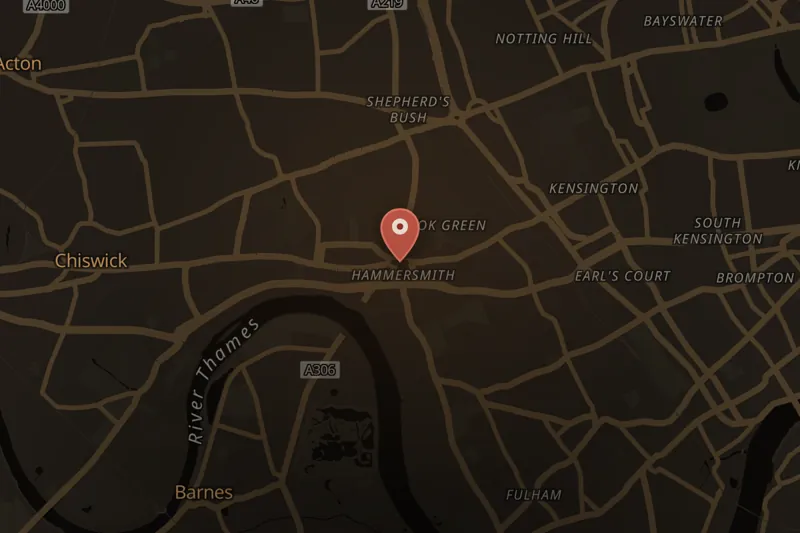
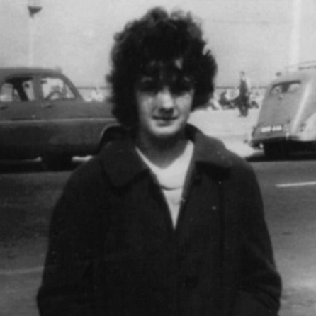
Hammersmith and surrounding areas, West London, England · 1960s
Between 1964 and 1965, six women, all believed to be sex workers, were found dead and undressed in or near the River Thames in West London; two earlier deaths in 1959 and 1963 have also been linked by some investigators. The case remains unsolved.
 SOLVEDListen
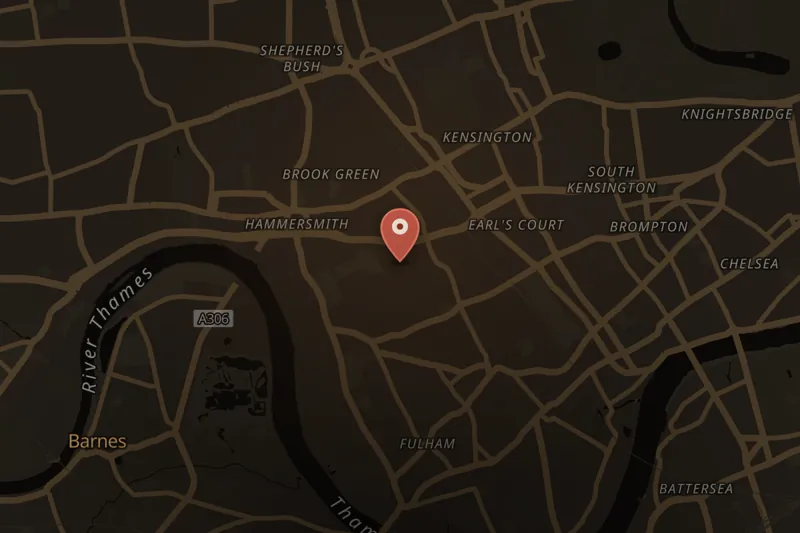
Junction of Charleville Road and Gledstanes Road, West Kensington, London · 1970s
Off-duty PC Stephen Tibble was fatally shot in West Kensington, London, on 26 February 1975 while trying to stop a fleeing suspect who turned out to be Provisional IRA member Liam Quinn. Quinn was convicted of murder in 1988 after a lengthy extradition battle and was released in 1999 under the Good Friday Agreement.
 Credit: Via WikipediaEditorial useSourceCOLDListen
Shorrolds Road, Fulham, West London · 1980s
Estate agent Suzy Lamplugh, 25, vanished in Fulham, West London, on 28 July 1986 after going to meet a client known only as "Mr Kipper." Despite an extensive investigation, her body has never been found; she was declared legally dead, presumed murdered, in 1993. Convicted murderer John Cannan was named by police as the prime suspect in 2002, but the Crown Prosecution Service concluded there was insufficient evidence to charge him.
 Credit: KAIDENBEARD10CC BY-SA 4.0SourceSOLVEDListen
New Strand Shopping Centre area, Bootle, Merseyside · 1990s
In February 1993, two-year-old James Bulger was abducted from a Bootle shopping centre by two 10-year-old boys, Robert Thompson and Jon Venables, who tortured and killed him before leaving his body on a railway line. Both were convicted of murder later that year, becoming the youngest convicted murderers in modern British history, and were released on life licence in 2001 after serving eight years.
 Credit: Family handout via Suffolk NewsEditorial useSourceCOLDListen
Bury St Edmunds, Suffolk, England · 2016
Royal Air Force gunner Corrie McKeague disappeared after a night out in Bury St Edmunds in September 2016, and a 2022 inquest concluded he died after climbing into a waste bin that was tipped into a bin lorry, though his remains were never found.
 Credit: UnknownEditorial useSourceUNSOLVEDListen
Pimlico, London, England · 2010
Gareth Williams, a GCHQ mathematician on secondment to MI6, was found dead padlocked inside a bag in his London flat in August 2010; a coroner ruled the death unnatural and likely criminally mediated, but no one has been charged and a Metropolitan Police re-investigation later called it probably an accident.
 Credit: Instagram/@gabspetito, widely distributed in press coverageEditorial useSourceSOLVEDListen
Bridger–Teton National Forest, Wyoming · 2021
Gabby Petito, a 22-year-old travel vlogger, was killed by strangulation and blunt-force trauma in August 2021 while on a cross-country van trip with her fiancé, Brian Laundrie. Laundrie returned to Florida alone, was named a person of interest, and later died by suicide, leaving a note admitting he had killed her.
 Credit: BKA Germany/ Federal Criminal Police Office (Germany)Public domainSourceUNSOLVEDListen
Varna Airport, Varna, Bulgaria · 2014
German tourist Lars Mittank vanished after fleeing Varna Airport in Bulgaria on 8 July 2014 and has not been seen since.
El Pianista trail, near Boquete, Panama · 2014
Two Dutch students, Kris Kremers and Lisanne Froon, disappeared while hiking a jungle trail in Panama in April 2014, and their remains were recovered along a riverbank months later, but no official cause of death has ever been established.
 Credit: Petr Bartolomey / Wikimedia CommonsCC BY-SA 2.0SourceCOLDListen
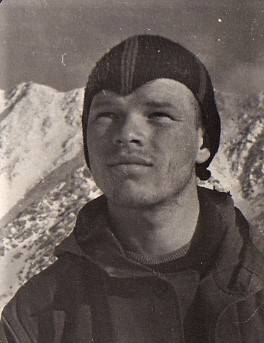
Dyatlov Pass, Ural Mountains, Sverdlovsk Oblast, Russia · 1959
Nine experienced Soviet ski hikers led by Igor Dyatlov died in the northern Ural Mountains on 1 or 2 February 1959 after cutting their way out of their tent and fleeing into a snowstorm inadequately dressed for the cold; Russian authorities reopened the case in 2019 and announced in 2020 that an avalanche was the most likely cause, though the deaths remain widely described as unexplained and some researchers dispute that conclusion.
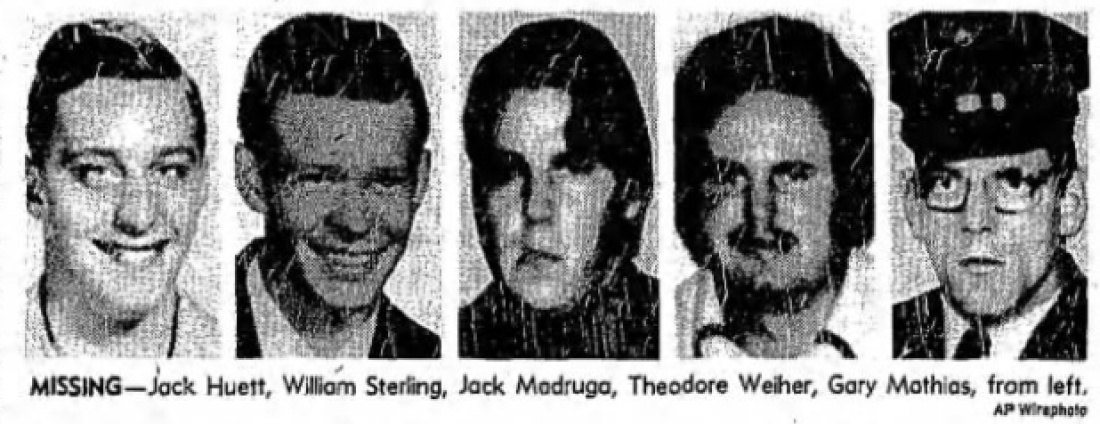 Credit: AP Wirephoto (1978) via dyatlovpass.comEditorial useSourceUNSOLVEDListen
Marysville, Yuba County, California · 1978
Four members of a Yuba County, California basketball team for people with disabilities were found dead in the Sierra Nevada mountains months after a February 1978 disappearance, and the fifth, Gary Mathias, has never been found.
 SOLVEDListen
Norfolk, Nebraska, United States · 2002
On September 26, 2002, three armed robbers shot and killed five people in under a minute during a botched bank robbery at a U.S. Bank branch in Norfolk, Nebraska. Three of the four men involved were sentenced to death; a fourth received five consecutive life sentences.
