Case file
Homicide Act 1957
Documents violence — written to inform, not to shock.
The Homicide Act 1957 (5 & 6 Eliz. 2. c. 11) was an Act of the Parliament of the United Kingdom that partially reformed the common law offence of murder in English law. It abolished the doctrine of constructive malice except in limited circumstances, reformed the partial defence of provocation, and introduced the partial defences of diminished responsibility and suicide pact. It also restricted the use of the death penalty for murder to a set of enumerated circumstances categorised as "capital murder."
The Act followed the Royal Commission on Capital Punishment of 1949–53 and was shaped by public controversy over cases such as the 1953 hanging of Derek Bentley — later found unsafe by the Court of Appeal in 1998 — and the 1955 hanging of Ruth Ellis, whose case raised questions about the absence of a diminished-responsibility defence. After Home Secretary Gwilym Lloyd George rejected some of the Royal Commission's proposals in November 1955, MP Sydney Silverman introduced an abolition bill; a February 1956 Commons debate produced an abolitionist amendment, and although Silverman's bill passed the Commons, it was vetoed by the House of Lords. The government then introduced the Homicide Act as a compromise reform.
Part I of the Act (applicable to England and Wales) abolished constructive malice under Section 1, except where an intention to kill or cause grievous bodily harm was implicit in the underlying felony. Section 2 introduced diminished responsibility, allowing a charge of murder to be reduced to manslaughter where the accused's mental responsibility was substantially impaired by an "abnormality of the mind." Section 3 altered the defence of provocation by making the question of whether provocation was sufficient to make a "reasonable man" act as the defendant did a matter for the jury rather than the judge. Section 4 created a partial defence for suicide pacts, reducing a charge to manslaughter where the accused had a settled intention of dying as part of the pact.
Part II addressed liability to the death penalty. Section 5 created the offence of "capital murder," covering murder in the course of theft, by shooting or explosion, in the course of resisting arrest or escaping custody, of a police officer, or of a prison officer by a prisoner. Section 6 required a mandatory death sentence for anyone convicted of two murders under specified conditions. Section 7 abolished the death penalty for all other forms of murder, which instead carried a mandatory life sentence.
Part III amended the form of the death sentence. Under the Act, there were 75 capital murder convictions — 66 in England and Wales and nine in Scotland — of which 32 people were reprieved and 32 were hanged. The death penalty for murder was suspended in 1965 under the Murder (Abolition of Death Penalty) Act 1965 and permanently abolished in 1969. The last executions in the United Kingdom took place on 13 August 1964, when two men were hanged for a murder committed during a theft, a capital offence under the 1957 Act.
Key facts
- Victims
- John Alan West
- Date
- 1957
- Location
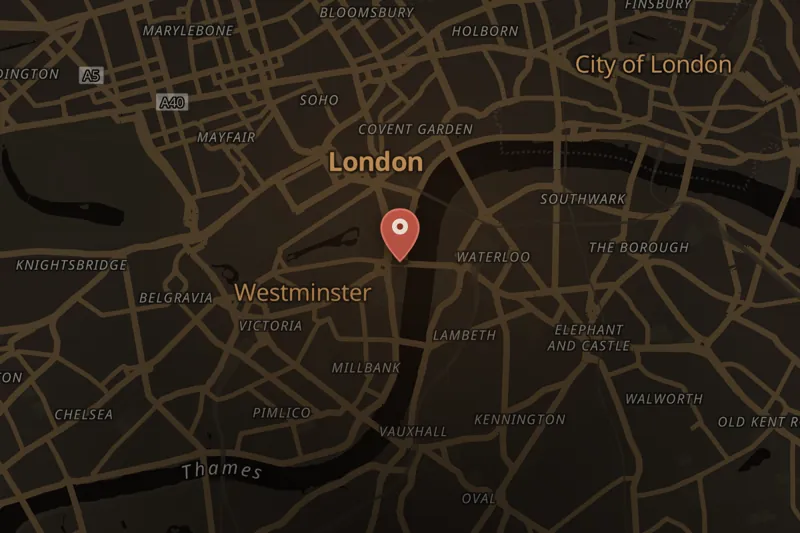
- Palace of Westminster, London, United Kingdom
- Case status
- solved
Case timeline
1949
Royal Commission on Capital Punishment established, sitting until 1953.
1953
Derek Bentley hanged for a murder committed by his 16-year-old co-defendant; conviction later found unsafe by the Court of Appeal in 1998.
1955-11
Ruth Ellis hanged; her case raised concerns about the lack of a diminished-responsibility defence.
1955-11
Home Secretary Gwilym Lloyd George announces government rejection of some Royal Commission proposals; MP Sydney Silverman introduces a bill to abolish capital punishment.
1956-02
Commons debate on a government motion results in an abolitionist amendment carried 293 to 262; Silverman's bill later vetoed by the House of Lords.
1957
Homicide Act 1957 enacted.
1964-08-13
Peter Allen and Gwynne Evans hanged for murdering John Alan West during a theft, the last executions in the United Kingdom.
1965
Murder (Abolition of Death Penalty) Act 1965 suspends the death penalty for murder for five years.
1969
Death penalty for murder permanently abolished.
1998
Derek Bentley's conviction found unsafe by the Court of Appeal.
2010-10-04
Section 3 (provocation) repealed by section 56(2)(a) of the Coroners and Justice Act 2009.
Best coverage
No approved coverage links are attached yet.
People
Derek Bentley
CONVICTEDConvicted and executed in 1953 for a murder committed by his 16-year-old co-defendant; conviction later found unsafe by the Court of Appeal in 1998.
citation on file
Peter Allen
CONVICTEDConvicted of the capital murder of John Alan West during a theft and hanged on 13 August 1964, among the last executions in the United Kingdom.
citation on file
Gwynne Evans
CONVICTEDConvicted of the capital murder of John Alan West during a theft and hanged on 13 August 1964, among the last executions in the United Kingdom.
citation on file
Ruth Ellis
CONVICTEDConvicted of murder and executed in 1955; case cited as a factor in reform due to absence of a diminished-responsibility defence.
citation on file
John Alan West
VICTIMMurder victim in the case for which Peter Allen and Gwynne Evans were convicted and hanged in 1964.
citation on file
Places
Common questions
- What happened to the victim?
- The Homicide Act 1957 was a UK law that partially reformed the offence of murder in England and Wales, introducing diminished responsibility and suicide pact as partial defences, reforming provocation, and restricting the death penalty to specific categories of "capital murder."
- Where did the homicide happen?
- Palace of Westminster, London, United Kingdom.
- Who was convicted?
- Derek Bentley (Convicted and executed in 1953 for a murder committed by his 16-year-old co-defendant; conviction later found unsafe by the Court of Appeal in 1998.), Peter Allen (Convicted of the capital murder of John Alan West during a theft and hanged on 13 August 1964, among the last executions in the United Kingdom.), Gwynne Evans (Convicted of the capital murder of John Alan West during a theft and hanged on 13 August 1964, among the last executions in the United Kingdom.), and Ruth Ellis (Convicted of murder and executed in 1955; case cited as a factor in reform due to absence of a diminished-responsibility defence.).
- What is the current status of the case?
- Status: solved.
Sources
- Homicide Act 1957wikipedia · Wikipedia · 2026-07-07
- Contemporaneous coverage — legislation.gov.uknews · legislation.gov.uk · 2026-07-07
- Contemporaneous coverage — find.galegroup.comnews · find.galegroup.com · 2026-07-07
Related cases
View all cases
Murder (Abolition of Death Penalty) Act 1965
Parliament of the United Kingdom, London
Corporate Manslaughter and Corporate Homicide Act 2007
Parliament of the United Kingdom, Westminster, London
2017 Westminster attack
Palace of Westminster, London, UK
Killing of Emmett Till
Money, Leflore County, Mississippi
Mulago hospital murders
Mulago Government African Hospital, Kampala, Uganda
Killing of Kelso Cochrane
Junction of Golborne Road and Southam Street, Notting Hill, London