
Start here
THE MURDER OF EMMETT TILL | MIDWEEK MYSTERY

Georgia Marie's 32-minute breakdown, the fullest single telling on file.
Watch on YouTubeBefore you continue
This case involves crimes against children. Casepin presents the record in neutral, non-graphic language. Choose whether to continue.
Cold case · 1955
Also known as Emmett Louis Till · Murder of Emmett Till
 Long-closed and now vine-covered site of Bryant's Grocery in the crossroads community of Money, MississippiCredit: highsmith, carol m.·Public domain·Source
The short answer
Emmett Till, a 14-year-old Black boy from Chicago, was abducted and lynched near Money, Mississippi, in August 1955 after being accused of offending a white woman. The two white men tried for the killing were acquitted by an all-white jury and later admitted their involvement in a paid magazine interview, but neither was ever convicted.
Start hereTHE MURDER OF EMMETT TILL | MIDWEEK MYSTERYGeorgia Marie · 32 minThe coverage index
1 piece from 1 creator: ranked, with duplicates removed and short clips set aside.
Start here
Video · YouTube · 32 min · 2020
Georgia Marie's 32-minute breakdown, the fullest single telling on file.
Watch on YouTubeTitles and descriptions are the creators’ own and may not reflect current legal status. The sourced facts are in the file below. Players load only when you press play. Suggest coverage we’re missing.
The case file
Emmett Louis Till was a 14-year-old African American boy from Chicago, Illinois. Born on July 25, 1941, he grew up in the North and, in August 1955, traveled to the Mississippi Delta to visit relatives near the small community of Money, in Leflore County. The rural, rigidly segregated society he was visiting operated under the racial codes of the Jim Crow South.
On August 24, 1955, Till entered a grocery store in Money where a young white woman was working. He was later accused of whistling at or behaving too familiarly toward her, accounts that shifted over time and that were, decades later, partly recanted. In that time and place, such an accusation against a Black youth carried serious danger.
In the early morning hours of August 28, 1955, two white men, the woman's husband and his half-brother, came to the home of Till's great-uncle, Moses Wright, and took the boy away at gunpoint. The men beat and shot Till and sank his body in the Tallahatchie River, weighted with a cotton-gin fan. It was recovered three days later.
Till's mother, Mamie Till-Mobley, brought her son's body back to Chicago and insisted on an open-casket funeral so the public could see what had been done to him. Photographs published in Jet magazine and the Chicago Defender drew national and international attention and helped galvanize the emerging civil rights movement.
The two men were indicted and tried for murder in September 1955 at the Tallahatchie County Courthouse in Sumner. Moses Wright identified them from the witness stand as the men who had taken his great-nephew, testifying despite the personal risk of doing so. After a five-day trial, an all-white, all-male jury deliberated for about an hour and acquitted both defendants. A grand jury later declined to indict them on kidnapping charges.
Because they had been acquitted, the men were protected by double jeopardy and could not be retried. In January 1956, they described their roles in the abduction and killing in a paid interview with journalist William Bradford Huie, published in Look magazine. Neither man was ever convicted of any crime connected to Till's death, and both later died of cancer.
The case has been re-examined many times since. The U.S. Department of Justice reopened it as a cold-case investigation in the 2000s, revisited it after new claims surfaced in the 2010s, and formally closed the matter in 2021 without new charges. Till's death remains one of the most consequential events of the twentieth-century American civil rights movement. In 2022, the Emmett Till Antilynching Act was signed into federal law, and Till and his mother were posthumously awarded the Congressional Gold Medal.
13 dated entries · 1941–2022
Emmett Louis Till is born in Chicago, Illinois.
Till arrives in the Mississippi Delta to visit relatives near Money, Mississippi.
Till has an encounter with a young white woman at a grocery store in Money.
Two white men abduct Till from his great-uncle's home at gunpoint and kill him.
Till's body is recovered from the Tallahatchie River.
An open-casket funeral is held in Chicago; photographs of Till's body are published in the Black press and draw national attention.
The murder trial of the two men begins in Sumner, Mississippi.
An all-white, all-male jury acquits both men after about an hour of deliberation.
A grand jury declines to indict the men on kidnapping charges.
The two men describe their involvement in the killing in a paid interview published in Look magazine.
The U.S. Department of Justice reopens the case as a cold-case investigation.
The Department of Justice formally closes its re-investigation without new charges.
The Emmett Till Antilynching Act is signed into federal law.
3 named in this file
Victims first. Every legal label is set from public records and court outcomes, not from the prose.
14-year-old African American boy from Chicago who was abducted and lynched while visiting relatives near Money, Mississippi, in August 1955.[3]
One of two white men tried for Till's killing. Acquitted of murder by an all-white jury in September 1955 and, protected by double jeopardy, never retried; he described his involvement in the same paid 1956 Look magazine interview. Never convicted of any crime connected to the death; died in 1980.[2]
One of two white men tried for Till's killing. Acquitted of murder by an all-white jury in September 1955 and, protected by double jeopardy, never retried; he described his involvement in a paid 1956 Look magazine interview. Never convicted of any crime connected to the death; died in 1994.[2]
3 cited
Coverage is not a source: every fact in this file rests on the records below.
Official / agencyFederal Bureau of InvestigationAccessed Jul 6, 2026
PressHISTORYAccessed Jul 6, 2026
EncyclopedicWikipediaAccessed Jul 6, 2026
Trust
Are you family of someone named in this file? Corrections and removal requests from victims’ families are prioritized.
Near this case
 Credit: anonymous·Public domain·SourceUNSOLVEDListen
Duck Hill, Mississippi, United States · 1930s
On April 13, 1937, Roosevelt Townes and Robert McDaniels, two Black men, were seized by a white mob from the courthouse in Winona, Mississippi, minutes after being arraigned for the murder of storekeeper George Windham, then tortured with a blowtorch; McDaniels was shot to death and Townes was burned alive near Duck Hill, Mississippi.
 UNSOLVEDListen
Courtland, Mississippi, United States · 2010s
Jessica Chambers died after being set on fire near Courtland, Mississippi, in 2014, and two trials of the man charged ended without a verdict.
 SOLVEDListen
Elaine and Hoop Spur, Phillips County, Arkansas · 1910s
Over three days in late September and early October 1919, white mobs aided by federal troops killed as many as several hundred Black residents of rural Phillips County, Arkansas, after Black sharecroppers organized to demand fair payment for their cotton crops. Five white men also died. In the aftermath, 122 Black men were indicted and twelve were sentenced to death; their convictions were eventually overturned by the U.S. Supreme Court in Moore v. Dempsey (1923).
 UNSOLVEDListen
Crittenden County, Arkansas, United States · 1954
Isadore Banks, a wealthy African-American landowner and World War I veteran, disappeared in Crittenden County, Arkansas, on June 4, 1954, and was found dead four days later, tied to a tree, burned, and mutilated. No one was ever charged, and the case remains unsolved.
 Credit: Family/Instagram photograph, widely distributed in press coverage·Editorial use·SourceSOLVEDListen
Moscow, Idaho · 2022
Four University of Idaho students—Madison Mogen, Kaylee Goncalves, Ethan Chapin, and Xana Kernodle—were fatally stabbed inside an off-campus house in Moscow, Idaho, in the early morning hours of November 13, 2022. Bryan Kohberger, a criminology PhD student at nearby Washington State University, was arrested that December and pleaded guilty in 2025, receiving four consecutive life sentences.
 Credit: Mona Eshaiker·CC BY-SA 3.0·SourceSOLVEDListen
Holmby Hills, Los Angeles, California · 2009
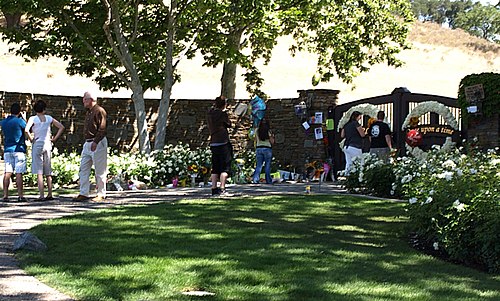
Singer Michael Jackson died on June 25, 2009, in Los Angeles from acute propofol intoxication administered by his personal physician, Conrad Murray. The Los Angeles County coroner ruled the death a homicide, and Murray was convicted of involuntary manslaughter in November 2011.
Also covered by
 Credit: Family handout via Suffolk News·Editorial use·SourceCOLDListen
Bury St Edmunds, Suffolk, England · 2016
Royal Air Force gunner Corrie McKeague disappeared after a night out in Bury St Edmunds in September 2016, and a 2022 inquest concluded he died after climbing into a waste bin that was tipped into a bin lorry, though his remains were never found.
El Pianista trail, near Boquete, Panama · 2014
Two Dutch students, Kris Kremers and Lisanne Froon, disappeared while hiking a jungle trail in Panama in April 2014, and their remains were recovered along a riverbank months later, but no official cause of death has ever been established.
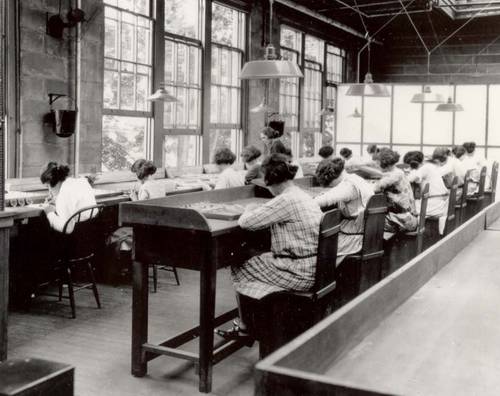 Credit: Argonne National Laboratory / Wikimedia Commons, c.1922–23·Public domain·SourceSOLVEDListen
Orange, New Jersey · 1917
Beginning in 1917, factory workers who came to be known as the Radium Girls were poisoned after being instructed to shape radium-paint brushes with their lips; the resulting illnesses, deaths, and lawsuits against the United States Radium Corporation and the Radium Dial Company reshaped U.S. occupational health and labor law.
